How to tell a largemouth from a smallmouth bass
It’s a classic scenario for any angler in Connecticut: you’ve just reeled in a beautiful bass, it’s fighting hard, splashing at the surface, and your heart is pounding. You get it to the boat or shore, and then the question hits you – is this a largemouth or a smallmouth? The distinction isn't just for bragging rights; it can be crucial for understanding regulations, identifying prime habitat for future success, and even choosing the right lures. This comprehensive guide is here to unravel the mystery and equip you with the knowledge to confidently identify Connecticut's two most popular bass species every single time.
The Tale of Two Bass: Key Distinguishing Features
While both largemouth and smallmouth bass belong to the black bass family and are often found in similar waters, they have distinct physical characteristics that, once you know what to look for, make identification surprisingly straightforward. These aren't just minor differences; they’re tell-tale signs etched into their very anatomy.
Mouth Size and Jawline
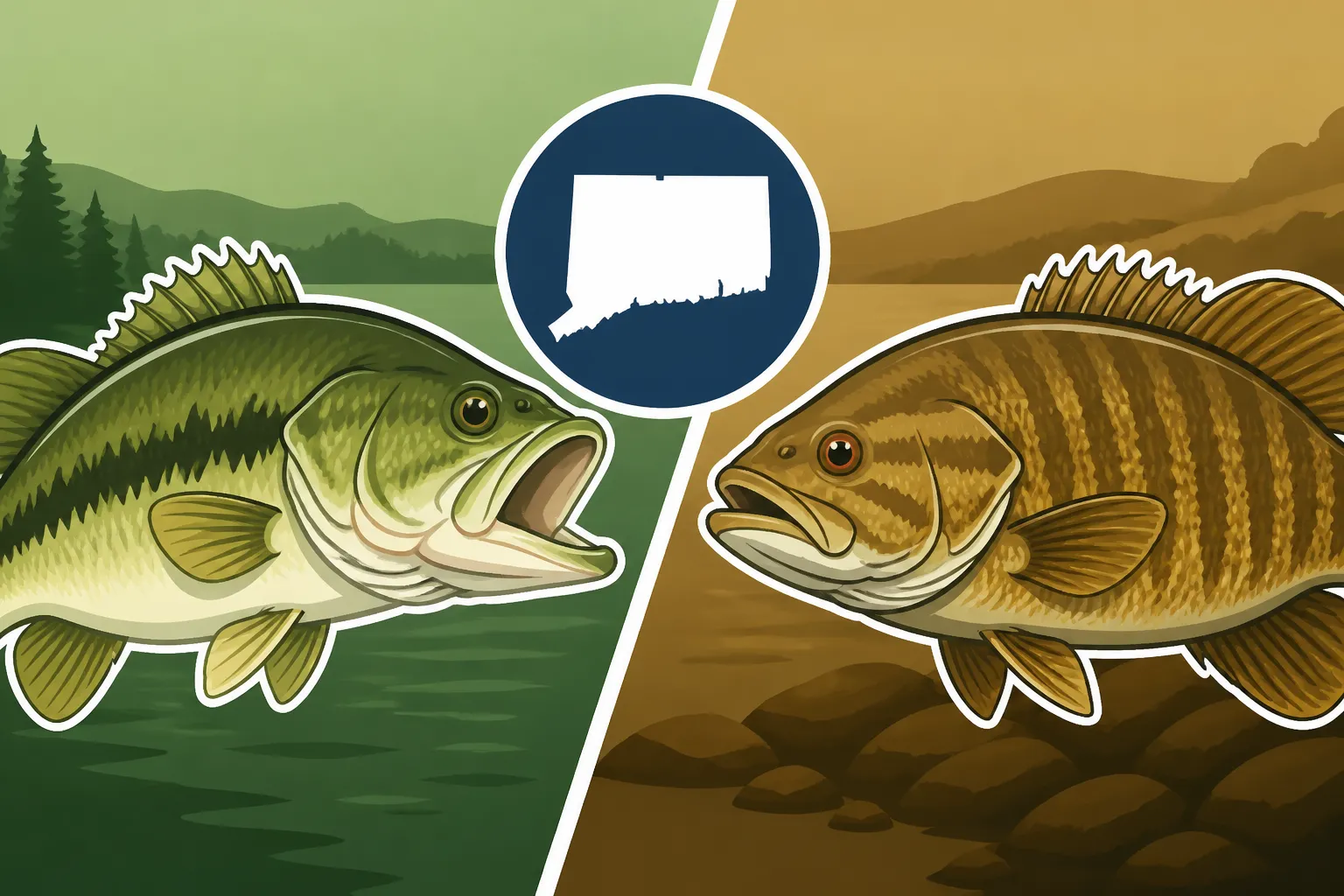
This is arguably the most famous and easiest way to tell the two apart, hence their names! The largemouth bass is characterized by a significantly larger mouth. If you gently close the fish's mouth and extend the upper jaw back, the end of its jaw (the maxillary bone) will extend beyond the rear edge of its eye. Think of it as a fish with a perpetually wide grin. They’re built to swallow big prey.
On the other hand, the smallmouth bass lives up to its name with a noticeably smaller mouth. When you perform the same jawline test, the maxillary bone of a smallmouth will typically not extend beyond the rear edge of its eye. It often stops directly under the eye or even slightly in front of it. This seemingly minor difference is a colossal clue. If you're struggling to eyeball it, you might even find specialized fish identification rulers on Amazon to help you quickly measure the jawline relative to the eye.
Dorsal Fin Separation
Another critical anatomical difference lies in their dorsal fins – those spiny fins running along their backs. The largemouth bass has two distinct dorsal fins that are almost completely separated by a deep notch. It looks like two entirely different fins, one spiny and one soft-rayed, connected only by a very low membrane. This deep division is very noticeable, giving the fish a somewhat disjointed appearance along its back.
Conversely, the smallmouth bass has dorsal fins that are clearly connected, forming a continuous, albeit notched, fin. The spiny front section and the softer rear section are joined much higher up, creating a more uniform curve along the fish's back. While there is still a noticeable indentation, it’s not the deep, almost complete split you see on a largemouth. This single feature alone can often settle any debate right away.
Coloration and Patterning
While coloration can vary wildly depending on water clarity, habitat, and even the fish's mood, there are some general patterns to look for. Largemouth bass typically exhibit a horizontal, dark stripe or series of blotches running along their lateral line, from gill plate to tail. This stripe can be very prominent in some fish, almost like a racing stripe, while in others, it might be more broken or faded. Their overall body color tends to be a mottled green or olive, often lighter on the belly. Largemouth Bass Fishing in Connecticut often involves fishing in areas where this camouflage helps them blend in.
Smallmouth bass, however, usually sport vertical bars or blotches along their sides, rather than a horizontal stripe. These bars are often dark brown or bronze against a lighter, more golden-brown background. This gives them a "tiger" or "camouflage" pattern, particularly pronounced when they are in clear, rocky waters. Their coloration helps them disappear against the varied bottom of rivers and deep lakes. Their eyes are also often a distinct reddish-brown, which can be another subtle cue.
Habitat Preferences: Where You'll Find Them
Knowing where each species prefers to live in Connecticut can often give you a strong hint even before you make a cast. While there's always overlap, and you might catch both in the same general area, their primary comfort zones are quite different. This understanding is key to successful Best Bass Fishing Lakes in Connecticut and Best Fishing Rivers in Connecticut trips.
Largemouth: The Cover Lover
Largemouth bass are the masters of ambush, preferring still or slow-moving water with plenty of cover. Think of them as the stealth predators of the underwater jungle. In Connecticut, you'll find them abundant in ponds, lakes, and the quieter backwaters of larger rivers. They gravitate towards structure like lily pads, submerged timber (laydowns), weed beds, docks, brush piles, and cattail edges. These environments offer them both shelter from predators and prime ambush points for unsuspecting prey.
If you're casting a weedless frog or a Texas-rigged soft plastic into heavy cover, you're almost certainly targeting largemouth. They thrive in warmer water and will often hug the shoreline or shallow flats where vegetation is thick. Places like Candlewood Lake, for instance, are renowned for their largemouth populations, especially in coves with plenty of structure. Learning Best Techniques for Largemouth Bass in Connecticut Ponds will naturally lead you to these types of spots.
Smallmouth: The Rocky River Dweller
Smallmouth bass, often affectionately called "bronze-backs," prefer cooler, clearer, and often moving water. They are typically found in rivers, larger streams, and deep, clear lakes with rocky bottoms. In Connecticut, iconic smallmouth fisheries like the Housatonic River or sections of the Connecticut River are prime examples. They love current, gravel beds, rock piles, ledges, and steep drop-offs. These environments provide them with plenty of hiding spots among the rocks and access to flowing water that brings food.
When you're drifting a tube jig or a small crankbait through a river riffle, or targeting deep rock piles in a clear lake, you're likely after smallmouth. They are more active in cooler temperatures than largemouth and will often hold in transition zones where current meets slack water. Smallmouth Bass Fishing in Connecticut almost always means seeking out these specific types of rocky, often current-swept, habitats. If you’re fishing the Housatonic, knowing Best Baits for Smallmouth Bass on the Housatonic will point you towards lures effective in such conditions.
Subtler Clues and Angling Context
Beyond the primary visual identifiers and habitat, there are other, more nuanced characteristics and behaviors that can help you distinguish between largemouth and smallmouth bass, especially when you're still learning or have a borderline fish. For those who want to dig deeper into the science of bass fishing, there are excellent field guides available on Amazon that dive into their biology and habitat.
Body Shape and Fin Characteristics
While both are stout, powerful fish, there are slight differences in their overall build. Largemouth bass tend to have a slightly more elongated, football-shaped body, particularly when they get large. Their bodies can seem a bit deeper from back to belly. Their fins are generally robust. The soft-rayed portion of their dorsal fin and their anal fin (the fin on the underside behind the vent) are typically rounded.
Smallmouth bass often have a more compact, torpedo-like or even football-shaped body, but often appear a bit more slender or streamlined for fighting current. They tend to be thicker through the shoulders, giving them that powerful, fighting appearance. Their fins, particularly the soft-rayed dorsal and anal fins, are often a bit more angular or pointed compared to the largemouth. Observing the overall "feel" and proportional look of the fish after handling many can become a subconscious identifier. For a quick recap of these key differences, check out our Largemouth Bass vs Smallmouth Bass Identification guide.
Behavioral Differences on the Line
Experienced anglers will tell you that largemouth and smallmouth bass often fight differently, which can sometimes be the first clue to their identity before you even see them. Largemouth bass are notorious for their explosive, head-shaking jumps and attempts to bury themselves back into heavy cover. When you hook a big largemouth, it's often a struggle of brute force and trying to keep them out of the weeds or submerged wood. They tend to make powerful, short runs.
Smallmouth bass, on the other hand, are famous for their acrobatic leaps, often jumping clear out of the water multiple times during a fight. They also tend to make longer, more powerful runs, especially in current. They are known for their tireless, never-give-up attitude, fighting hard until the very last moment. While these are generalizations and individual fish vary, paying attention to how a bass fights can offer a strong hint. A good digital scale, easily found on Amazon, can help you quickly weigh your catch before a responsible release. If you're looking for lures specifically designed for smallmouth bass in rocky rivers, a quick search on Amazon will show you countless options for tube jigs, small crankbaits, and grubs. Likewise, for largemouth, you'll find a huge selection of soft plastics, spinnerbaits, and topwater frogs on Amazon that are perfect for fishing heavy cover.
Quick Comparison Table
To help you quickly reference the most critical differences, here’s a handy table:
| Feature | Largemouth Bass | Smallmouth Bass |
|---|---|---|
| Jawline | Extends past the rear edge of the eye | Does not extend past the rear edge of the eye |
| Dorsal Fin | Deeply notched, almost completely separated | Connected, with a shallower notch |
| Body Color | Olive to dark green, often with dark horizontal stripe/blotches | Golden-brown to bronze, with vertical bars |
| Preferred Habitat | Weedy, still, warm waters; heavy cover, docks | Rocky, cooler, clear moving water; current, ledges |
| Typical Fight | Explosive jumps, powerful short runs, cover-oriented | Acrobatic leaps, long powerful runs, tireless |
| Eye Color (often) | Typically darker, less pronounced | Often reddish-brown, more prominent |
Remember, while these guidelines are excellent, nature sometimes throws a curveball. However, by focusing on the jawline, dorsal fin, and general patterning, you'll be able to correctly identify the vast majority of bass you encounter in Connecticut waters. Knowing the difference will not only make you a more knowledgeable angler but also help you target specific species more effectively in the future.
Disclaimer
This article is for general informational purposes only and does not constitute professional advice. Laws, prices and regulations vary by location and change over time. Consult a qualified professional for guidance on your specific situation.