Non-native trout species stocked in Connecticut
Many anglers in Connecticut hit the water hoping to land some beautiful trout, but it's not always clear which fish are native to our streams and which are introduced. Understanding the non-native trout species stocked in Connecticut is crucial for both appreciating our fisheries and knowing what to expect when you cast your line. This guide will take a deep dive into these species, why they're here, and how you can identify them, helping you become a more informed and successful angler.
What Are "Non-Native" Trout, Anyway?
When we talk about "non-native" trout, we're simply referring to species that weren't historically found in Connecticut's waters before human intervention. They've been introduced, often deliberately, to enhance fishing opportunities. This is a common practice in fisheries management across the country, driven by a desire to provide a robust and diverse angling experience. It's not a bad thing; it just means these fish didn't evolve here naturally.
Defining Native vs. Non-Native
The distinction between native and non-native species is pretty straightforward. A native species, like our beloved brook trout, has been present in Connecticut since before European settlement, evolving within our local ecosystems. They are perfectly adapted to the specific conditions of our waterways, from water temperatures to food sources and predators. You can find out more about our indigenous species in Brook Trout: Connecticut's Native Trout.
Non-native species, on the other hand, were brought here from other regions or continents. In the case of trout, this often means species originating from other parts of North America or even Europe. While they might thrive in their new environment, they weren't part of the original ecological tapestry. This introduction typically happens for specific purposes, such as increasing catch rates or filling a niche that native species might not occupy as readily in certain altered habitats.
Connecticut's Unique Trout Ecosystem
Connecticut's landscape, with its mix of cold, clear streams, larger rivers, and numerous lakes and ponds, offers a variety of habitats. Our native brook trout prefer the coldest, most pristine headwater streams, often in dense forest canopies that keep water temperatures low. However, many of our larger rivers and warmer ponds simply don't provide the ideal conditions for brook trout to thrive in large numbers or support heavy angling pressure. This is where non-native trout come into play, essentially supplementing the natural fishery to meet the high demand from recreational anglers.
The presence of both native and non-native species creates a dynamic and complex fishery. While the native brook trout are a conservation priority, the non-native species provide the bulk of the fishing opportunities for many anglers throughout the state. It's a balance that aims to conserve the delicate ecosystems where native trout still flourish, while still offering abundant chances to catch trout in more accessible, and often less pristine, waters.
The Main Players: Rainbow Trout and Brown Trout
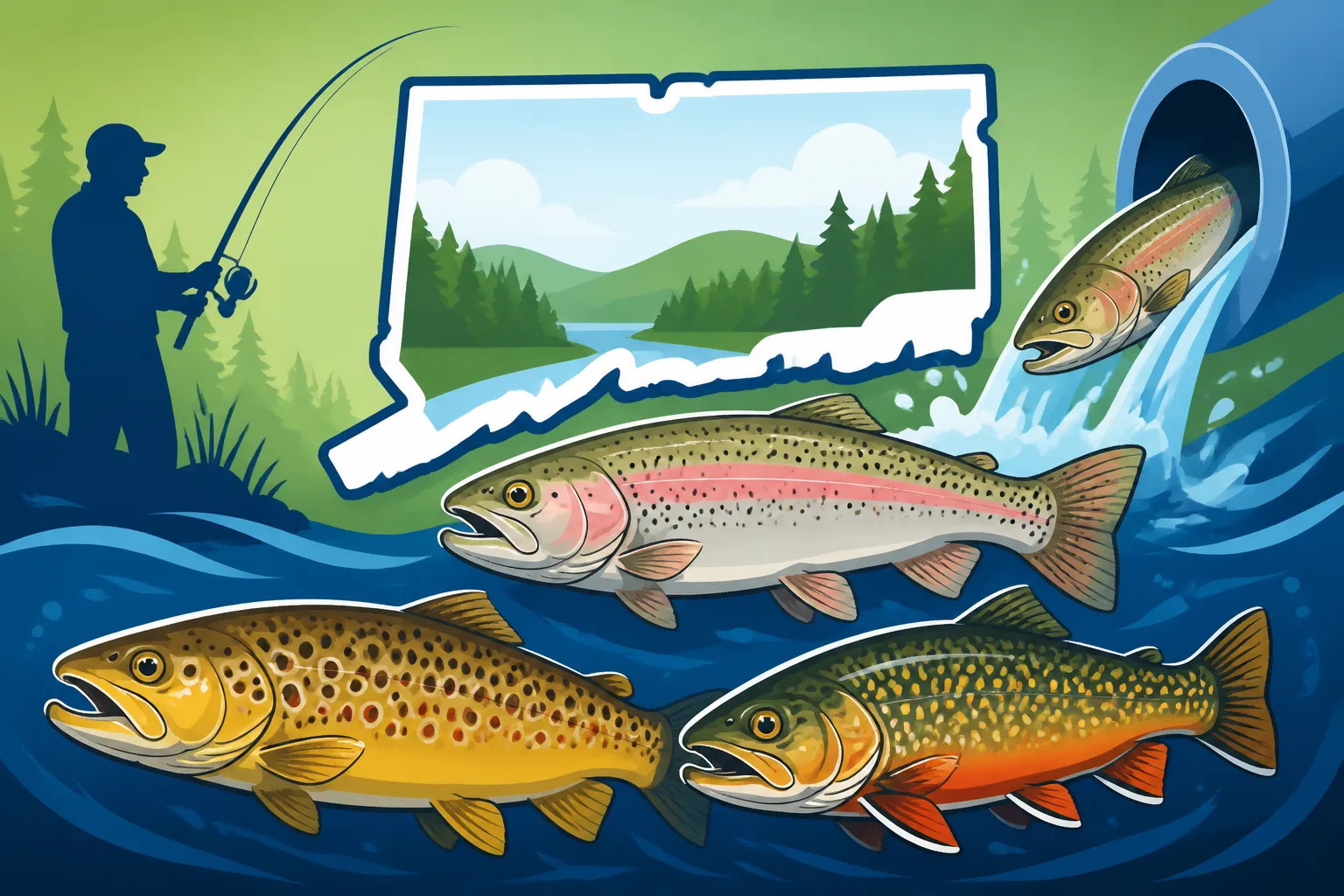
When you hear "stocked trout" in Connecticut, you're almost certainly thinking of rainbow trout and brown trout. These two species are the backbone of the state's trout stocking program, offering diverse angling experiences and thriving in a wider range of conditions than our native brook trout.
Rainbow Trout: The Flashy Fighters
Rainbow trout (Oncorhynchus mykiss) are perhaps the most recognizable of the stocked trout. Originally from the Pacific drainages of North America, they are celebrated for their vibrant coloration, particularly the iridescent pink or red stripe running along their sides, which gives them their name. Their backs are typically olive-green, fading to silvery sides and a white belly, often adorned with numerous small black spots on their body, fins, and tail.
What makes rainbow trout so popular with anglers is their spirited fight when hooked. They're known for their acrobatic jumps and strong runs, making for an exciting battle. The state stocks millions of rainbow trout annually across hundreds of locations, from small streams to large lakes, ensuring that there are plenty of opportunities for anglers of all skill levels. You can often find them in places like the Salmon River or the Naugatuck River, eagerly hitting a variety of baits and lures. If you're looking for specific stocking information, the Connecticut Interactive Trout Stocking Map, Explained is an invaluable resource.
Brown Trout: The Wily Warriors
Brown trout (Salmo trutta) hail from Europe and are revered for their cautious nature, stunning beauty, and potential to grow to impressive sizes, especially in prime habitats. Their coloration varies widely depending on their environment, but they typically feature a golden-brown to olive-brown back, fading to yellowish sides and a creamy belly. Their most distinctive markings are the scattered dark spots, often with pale halos, and sometimes red spots, found on their sides and gill covers.
Unlike rainbows, brown trout are often more elusive and require a bit more finesse to catch. They are known for their strong instincts for survival, making them challenging but incredibly rewarding adversaries. In Connecticut, while many brown trout are stocked as fingerlings or catchable-size fish, a significant portion become "holdover" trout, adapting to their new environment and growing larger, sometimes even spawning naturally in suitable streams. The Farmington River, especially its West Branch, is renowned for its trophy brown trout opportunities. Understanding Brown Trout Habits in Connecticut Streams can significantly increase your chances of success.
Understanding the "Stockie" Mindset
When these non-native trout are first introduced into a new water body, they often behave quite differently from their wild counterparts. Freshly stocked trout, often affectionately called "stockies," are accustomed to hatchery life. This means they're used to being fed regularly and seeing people, making them initially less wary and more aggressive towards artificial baits or even simple worms and corn. This is why the first few days and weeks after a stocking event can be incredibly productive for anglers, especially for those learning Best Techniques for Connecticut Trout Opening Day.
However, not all stocked trout are immediately caught. Many quickly learn to adapt to their new environment, becoming more wary and feeding on natural insects and baitfish. These are the "holdover" trout, and they can provide excellent fishing long after the initial stocking frenzy. They're harder to fool, offering a more challenging and rewarding experience. This adaptation is part of why brown trout are particularly good at becoming long-term residents in Connecticut's waterways.
Why Stock Non-Native Trout?
The decision to stock non-native trout isn't arbitrary; it's a carefully considered strategy by the Connecticut Department of Energy and Environmental Protection (DEEP) to enhance recreational fishing opportunities and manage our aquatic resources effectively. There are several key reasons why these specific species are chosen and introduced into our waters.
Meeting Angler Demand
Let's be honest: people love to fish for trout. The demand for trout fishing in Connecticut is incredibly high, especially during the spring and fall seasons. If the state relied solely on its native brook trout populations, the number of fish available would simply not meet the desires of thousands of anglers. Native brook trout populations are generally smaller, slower-growing, and more sensitive to environmental changes and fishing pressure.
By stocking large numbers of rainbow and brown trout, the DEEP ensures that there are plenty of catchable fish for everyone. This strategy provides consistent fishing opportunities in easily accessible locations, encouraging participation in the sport. These stocked fish are grown in hatcheries, allowing for a controlled supply that can be released at optimal times, such as for Connecticut Spring Fishing Day and Opening Day Rules. It's about creating a robust recreational fishery that can sustain high levels of public interest and participation without depleting native populations.
Ecological Considerations
While it might seem counterintuitive to introduce non-native species, there are sound ecological reasons behind it. Many of Connecticut's waterways have been altered over time by development, agriculture, and other human activities. Some streams might be too warm in the summer, or have too much silt, or lack the complex habitat structure that native brook trout require to thrive and reproduce naturally.
Rainbow and brown trout, being more adaptable and tolerant of a wider range of environmental conditions, can survive and even grow in these less-than-pristine environments where native brook trout would struggle. This allows the state to utilize a broader array of water bodies for trout fishing, spreading out angling pressure and maximizing the utility of our natural resources. Moreover, stocking these species in waters where native trout are absent or scarce helps prevent competition or hybridization with the more sensitive native populations. It’s a way to provide fishing without putting undue stress on the precious native trout streams.
Variety and Opportunity
Stocking non-native trout also significantly diversifies the angling experience. Rainbows and browns have different feeding habits, fighting styles, and preferred habitats, offering different challenges and rewards for anglers. Imagine hitting a river like the Farmington, where you might target a large, elusive brown trout with a carefully presented fly, or heading to a pond to catch a feisty rainbow with spinners or worms.
This variety means there's something for everyone, from beginners learning the ropes with easily caught "stockies" to seasoned veterans pursuing trophy-sized holdovers. The availability of diverse species across various waters means that anglers have more choices throughout the year, extending the fishing season and keeping interest levels high. You can even find specific gear for these different types of fishing on sites like Amazon, from fly rods for delicate presentations to spinning gear for casting lures.
Identifying Stocked Trout in Your Catch
Knowing whether the trout on the end of your line is a freshly stocked fish or a wild, stream-born resident can be both satisfying and important, especially when navigating specific regulations for certain waters. While identifying species like rainbows and browns is generally straightforward, distinguishing a stocked rainbow from a wild one can sometimes be trickier. However, there are some reliable clues.
Physical Characteristics
When you pull a trout out of the water, take a moment to observe its physical appearance.
- Fins: One of the most telling signs of a hatchery-reared fish is its fins. Stocked trout, particularly those raised in crowded concrete raceways, often have worn, rounded, or even clipped fins. Their pectoral, pelvic, and dorsal fins might appear stubby or frayed, a stark contrast to the perfectly formed, sharp-edged fins of a wild fish that has navigated natural currents and obstacles its whole life. Wild fish, even native brook trout, will have fins that are intact and often more vibrant in color.
- Snout and Mouth: Stocked trout can sometimes have slightly blunted snouts or mouths, another result of rubbing against hatchery walls or competing for food. Wild trout typically have more pointed, streamlined snouts.
- Coloration: While brown and rainbow trout have their characteristic colors, freshly stocked fish often appear somewhat paler or more uniformly colored than wild fish. Wild trout, living in diverse natural environments, tend to have more intense, camouflaged patterns that blend in with their specific surroundings – gravel beds, dark undercut banks, or sun-dappled pools. A wild brown trout from a cold, clear stream might have incredibly vivid spots and a deep, rich brown or olive hue. In contrast, a rainbow trout that's just been released might look a bit "washed out" or have a less pronounced lateral stripe compared to one that's been in the wild for months. This is a subtle clue, but noticeable once you get an eye for it. You can find visual guides to help you distinguish between species in Trout Species Identification Guide for Connecticut.
Behavioral Clues
Beyond their looks, stocked trout often exhibit distinct behaviors, especially immediately after release.
- Feeding Habits: Freshly stocked fish are often less wary and more opportunistic feeders. They might aggressively strike at almost any bait or lure, even brightly colored or unnatural presentations. This makes them relatively easy to catch. If you're using simple lures or worms and getting consistent bites in a recently stocked area, chances are you're interacting with stockies. Wild trout, particularly larger holdovers or truly native fish, are typically much more selective, requiring more subtle presentations and natural baits or flies. Learning Best Baits for Smallmouth Bass on the Housatonic (though focused on bass, the principle of natural presentation applies to wild trout too) and adapting your approach will yield better results for wild fish.
- Location: Stocked trout tend to congregate in the areas where they were released, especially in larger rivers or lakes. They might stick to open water or easily accessible banks for a while before dispersing. Wild trout, on the other hand, are masters of their environment, seeking out prime holding lies – undercut banks, deep pools, log jams, or complex rocky structures – where they can hide from predators and ambush prey.
- Fight: While both rainbows and browns can put up a good fight, very recently stocked fish sometimes lack the stamina of a truly wild fish. They might tire more quickly. However, this is a generalization, and a large, healthy stocked fish will still give you a run for your money!
Finding Stocked Waters
To really know if you're fishing for stocked trout, the best thing to do is consult official resources. The Connecticut DEEP publishes annual trout stocking schedules and maps, detailing which waters receive trout, what species, and roughly when. This information is invaluable for planning your trips. They often release rainbow, brown, and sometimes even brook trout (though the latter are typically stocked in waters where native brook trout are not prevalent, to avoid genetic mixing).
Here's a quick comparison of key traits:
| Feature | Stocked Trout (Rainbow/Brown) | Wild Trout (Native Brook Trout, Holdover Rainbow/Brown) |
|---|---|---|
| Fins | Often worn, rounded, or clipped; sometimes frayed | Fully formed, sharp-edged, intact, vibrant |
| Snout/Mouth | Can be blunted from hatchery confinement | Streamlined, pointed |
| Coloration | Often paler, more uniform, sometimes "washed out" | Intense, vivid, camouflaged patterns; deep, rich hues |
| Spots | Rainbows: Numerous small black spots everywhere; Browns: Dark spots with halos, sometimes red spots | Brookies: Distinctive red spots with blue halos; Wild Browns: Stronger, more defined spots |
| Girth/Body | Can appear slightly less streamlined if recently stocked | Streamlined, muscular, well-conditioned |
| Behavior | Less wary, aggressive feeders, congregate near stocking points | Selective feeders, more cautious, hold to natural cover and structure |
| Condition | May have minor scrapes or scale loss from transport | Pristine, healthy scales; robust condition |
When you're out there, remember that while many of the trout you catch are stocked, the thrill of the chase and the beauty of the fish are universal. And who knows, with a bit of skill and patience, you might just land a magnificent holdover brown or rainbow that has taken on all the characteristics of a wild fish! Just be sure to check the Connecticut Trout Limit and Possession Rules before you head out.
Disclaimer
This article is for general informational purposes only and does not constitute professional advice. Laws, prices and regulations vary by location and change over time. Consult a qualified professional for guidance on your specific situation.