How to Catch Blackfish in Connecticut
There's nothing quite like the thrill of a blackfish bite, and simultaneously, nothing quite as frustrating when those notoriously finicky fish are just nibbling your bait without committing. Blackfish, also known as tautog, are an incredible challenge for any angler in Connecticut, known for their powerful, structure-loving tendencies and their uncanny ability to strip a hook clean without you even knowing it. But with the right approach, tackle, and a little bit of patience, you can absolutely master the art of catching these sought-after bottom dwellers. This comprehensive guide will arm you with everything you need to know to bring more blackfish to your boat or shore spot in Connecticut.
Understanding Blackfish (Tautog): The Elusive Structure Dwellers
Before we even think about casting a line, it's crucial to understand the creature we're after. Blackfish are unique, tenacious, and incredibly well-adapted to their environment. Knowing their biology and habits is the first step to consistently putting them in the cooler.
Blackfish Biology and Habits
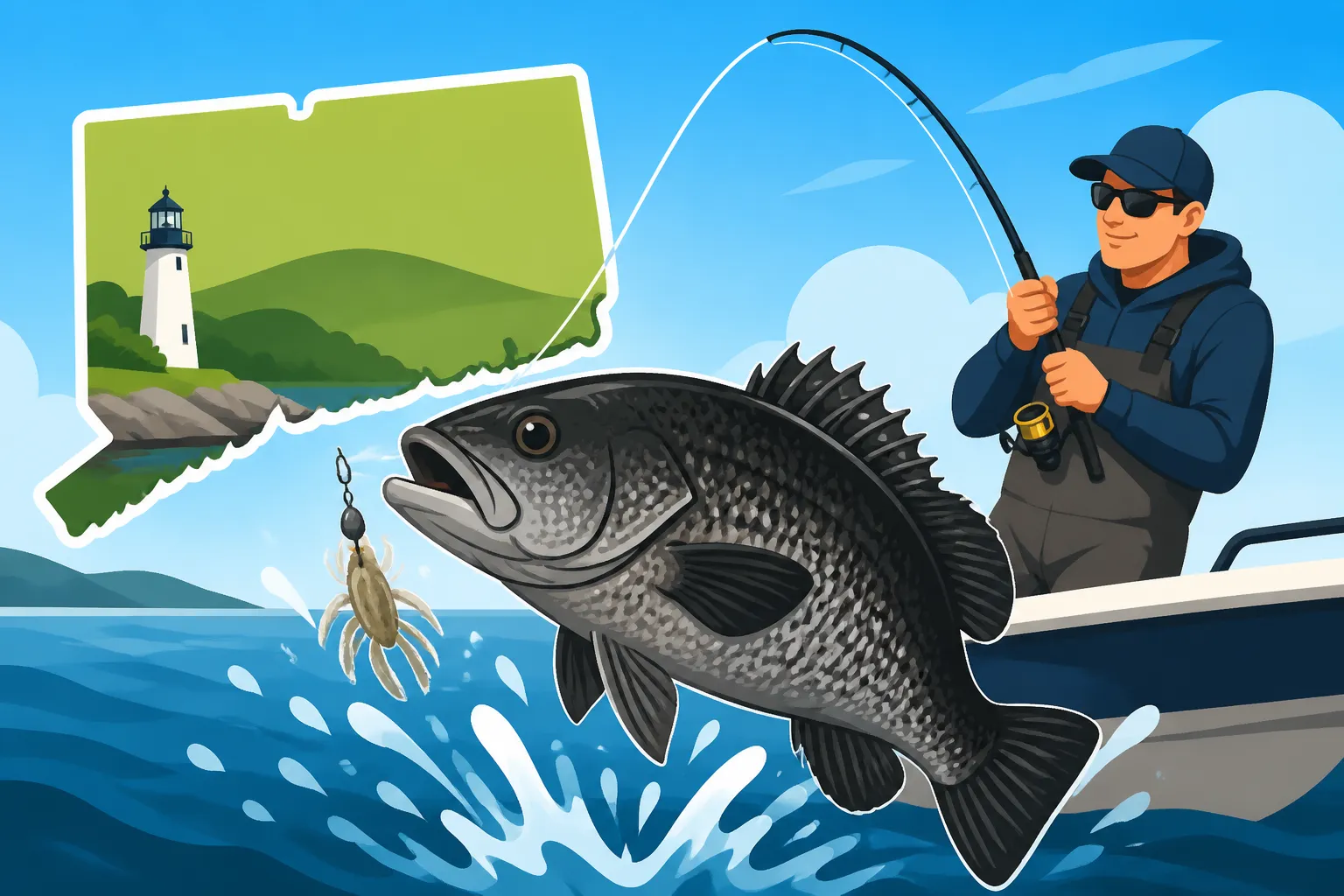
Blackfish (scientific name Tautoga onitis) are stout, strong-bodied fish with a distinctive appearance. They typically range from 1 to 10 pounds in Connecticut waters, though much larger specimens, often called "white chins" for the white coloring under their mouths, can be found. The Connecticut state record blackfish currently stands at an impressive 21 pounds, 5 ounces, caught back in 1987. These fish are characterized by their thick, rubbery lips, powerful grinding teeth adapted for crushing shellfish, and mottled coloration that helps them blend perfectly with rocky bottoms. Their diet consists almost exclusively of crustaceans and mollusks – crabs, mussels, barnacles, and small lobsters are their primary food sources. This specialized diet directly dictates the best baits to use, which we'll dive into shortly. Their powerful jaws and ability to dart into tight crevices in structure make them formidable opponents once hooked.
Preferred Habitats in Connecticut Waters
If you want to find blackfish, you need to find structure. It's as simple as that. These fish are absolute homebodies, rarely straying far from the protective cover and abundant food sources that rocky bottoms, wrecks, reefs, and other underwater features provide. In Connecticut, this means focusing your efforts on Long Island Sound, where countless natural and artificial structures exist. You'll find them congregating around rocky shorelines, boulder fields, mussel beds, and underwater ledges. Artificial structures like bridge pilings (think the bridges over the Housatonic or Connecticut Rivers near their mouths, or even the Gold Star Bridge area in New London), jetties, breakwaters, and even sunken wrecks are prime real estate for blackfish. They seek these spots not just for food, but also for shelter from predators and strong currents. Unlike many other species that roam open water, blackfish cling tightly to their chosen structure, making precise fishing techniques absolutely essential.
Seasonal Movements and Water Temperature Preferences
Blackfish activity in Connecticut is heavily influenced by water temperature. They are a "cold-water" species, becoming most active when the water is cooler, typically in the 48-60°F range. This means spring and fall are prime seasons for blackfish fishing in Connecticut.
- Spring: As the Long Island Sound waters begin to warm after winter, usually from late April into June, blackfish move from deeper offshore wintering grounds into shallower, inshore areas. They're often found around rocky reefs and jetties in 10-40 feet of water, feeding actively as they prepare for spawning.
- Summer: During the warmest months (July-August), blackfish tend to move to deeper, cooler water. They'll still be on structure, but you might need to target wrecks and reefs in 50-80 feet or more. The bite can slow down considerably in the peak heat.
- Fall: This is arguably the best time to target blackfish in Connecticut, typically from October through December. As water temperatures drop, blackfish become incredibly active again, feeding aggressively to build up fat reserves for the winter. They'll be found in a wide range of depths, from shallow rocks to deep wrecks, depending on the specific water temperature. The Connecticut Blackfish (Tautog) Season Dates usually reflect these peak activity periods, so always check the latest regulations.
During the coldest parts of winter, blackfish become largely dormant, retreating to deep offshore structures to minimize energy expenditure. Understanding these movements is key to knowing where to find them at any given time of year.
Essential Gear for Connecticut Tautog Anglers
You wouldn't bring a butter knife to a steak dinner, and you certainly shouldn't bring light tackle to a blackfish fight. These fish are notorious for their brute strength and their immediate dash back into rocky crevices once hooked. Having the right rod, reel, and terminal tackle is non-negotiable if you want to land them.
Rod and Reel Combinations for Tautog
When targeting blackfish, you need a setup that can handle serious abuse. They are not finesse fish.
- Rods: Look for a heavy-action conventional rod, typically 6 to 7.5 feet long. It needs a stiff backbone to muscle a fish away from structure and a sensitive tip to detect those famously subtle bites. Many anglers favor rods designed specifically for bottom fishing or even light jigging rods. Brands like St. Croix, Tsunami, or even some of the more robust models from Penn offer excellent options. The rod should have enough power to lift a significant weight, as you'll often be fishing with heavy sinkers in strong currents.
- Reels: A conventional reel with a strong drag system and robust gearing is preferred by many experienced tog anglers. Look for models like the Penn Fathom or Shimano Torium. These reels offer the cranking power and durability needed to pull a large blackfish from its lair. For those who prefer spinning gear, a heavy-duty spinning reel in the 6000-8000 size class (e.g., a Daiwa BG, Penn Battle, or Shimano Saragosa) paired with a stout spinning rod can also be effective, especially in shallower waters or when using lighter jigs. The key is a smooth, powerful drag that won't give out when a tog makes its first, critical run.
- Line: Braided line is almost universally preferred for blackfish for several reasons. Its lack of stretch provides incredible sensitivity, allowing you to feel every tap and nibble, which is crucial for these finicky biters. Its thin diameter for its strength also helps cut through current. A 30 to 50 lb test braided line is a good all-around choice. You'll attach a monofilament or fluorocarbon leader to this braid.
Terminal Tackle: Rigs, Hooks, and Sinkers
Your terminal tackle is where the magic happens, or where it all falls apart if not correctly configured.
- The "Tog Rig": The most common and effective rig for blackfish is often called a "tog rig" or "blackfish rig." It's essentially a high-low rig or a modified dropper loop rig. The standard setup involves a heavy sinker at the very bottom, followed by one or two snelled hooks on short dropper loops (or simply tied with a dropper loop knot) above it. The hooks should hang just off the bottom. Some anglers prefer a single hook rig, especially in very snaggy areas, with the sinker at the bottom and the hook above it.
- Hooks: Blackfish have incredibly strong mouths, so sharp, stout hooks are essential. Many anglers use O'Shaughnessy style hooks, Virginia hooks, or octopus hooks. Sizes typically range from 1/0 to 5/0, depending on the size of your bait and the target fish. For green crabs, a 3/0 or 4/0 is often a good starting point. If you're using larger hermit crabs or whole green crabs, you might go up to a 5/0. Remember, a sharp hook is absolutely critical for penetrating their tough mouths.
- Sinkers: Because blackfish live in current-swept, snag-laden areas, you'll need heavy sinkers to get your bait down and keep it there. Bank sinkers or bell sinkers are common choices, often ranging from 3 to 10 ounces, or even more in very deep water or strong currents. The goal is to use just enough weight to hold bottom without being so heavy that you can't feel the subtle bites. Sometimes, in particularly snaggy spots, anglers will use a sacrificial lighter leader for the sinker, so if it gets stuck, only the sinker is lost, not the entire rig.
- Leaders: A robust leader is vital to withstand the abrasion from structure and the blackfish's sharp teeth. 40 to 80 lb test monofilament or fluorocarbon leader material is recommended. Fluorocarbon offers better abrasion resistance and is less visible underwater, which can be an advantage in clear waters. The leader length can vary, but typically 3-6 feet is common, tied directly to your braided mainline with a strong knot like an FG knot or a double uni knot.
Tools and Accessories Every Togger Needs
Beyond the basic rod and reel, a few key accessories will make your blackfish trip much smoother and more successful.
- Crab Cracker/Cutter: If you're using green crabs (and you should be!), a dedicated crab cracker or a sturdy pair of shears is invaluable for cutting them into manageable bait pieces. Trying to break them by hand is a messy and often painful endeavor.
- Measuring Board/Tape: Always, always have a measuring device on hand to ensure your catch meets the Connecticut Blackfish (Tautog) Season Dates length requirements. Ignorance of the law is no excuse, and Connecticut DEEP officers are diligent.
- Cooler: Blackfish are excellent eating, so a good cooler with ice is essential to keep your catch fresh.
- Sturdy Pliers/Dehooker: These fish can swallow hooks deeply, and their strong jaws make removing them tricky. A good pair of long-nosed pliers or a dehooker will protect your hands and make the process easier, especially when releasing undersized fish.
- Knot-Tying Tools: If you're new to tying strong fishing knots like the FG knot or improved clinch, a knot-tying tool can be a helpful aid, ensuring consistent strength.
- Headlamp: For those early morning starts or late evening finishes, a quality headlamp leaves your hands free for rigging and unhooking.
- Net or Gaff: A sturdy landing net with a deep bag is ideal for bringing blackfish aboard, minimizing stress on the fish if you plan to release it. While gaffs can be used for keeper fish, care should be taken to avoid damaging undersized fish if you intend to release them.
Mastering Bait Selection and Presentation
Blackfish are not scavengers in the traditional sense; they are specialized feeders with a strong preference for crustaceans. This means your bait choice is paramount, and how you present it can make all the difference between a frustrating nibble and a solid hook-up.
The Undisputed King of Tautog Baits: Crabs
When it comes to blackfish, crabs are king. Period. Other baits might work occasionally, but crabs are their natural, preferred food source, and nothing else comes close to their consistent effectiveness.
- Green Crabs: These are the most widely used and readily available blackfish bait in Connecticut. You can often find them at local tackle shops, or if you're ambitious, you can trap them yourself in rocky tidal areas. Green crabs are hardy and can be kept alive in a cool, damp container for several days. For bait, they're typically cut into halves or quarters, depending on their size and the size of your hook. The trick is to expose some of the soft meat while keeping a bit of shell for the hook to hold onto. Hook them through a leg socket or corner of the shell to ensure the hook point is exposed.
- Asian Crabs: These smaller, invasive crabs have become incredibly abundant in Long Island Sound and are a natural food source for blackfish. While smaller than green crabs, they can be highly effective, especially when the fish are being finicky. They are typically used whole, hooked through the bottom of the shell.
- Fiddler Crabs: These tiny crabs, characterized by the male's single oversized claw, are highly prized by blackfish anglers but can be difficult to source in large quantities. Their small size makes them excellent for smaller blackfish or when the bite is extremely light. Hooked whole, they are a delicacy for tog.
- Hermit Crabs: These are often considered a "secret weapon" by veteran tog anglers. The soft, fleshy body of a hermit crab is irresistible to blackfish. They are harder to find and keep as bait, usually requiring specialized trapping. When using hermit crabs, carefully extract the soft body from its shell and hook it securely, often requiring bait elastic to keep it on the hook.
| Crab Bait Type | Pros | Cons | Ideal Scenario |
|---|---|---|---|
| Green Crab | Widely available, hardy, effective | Can be hard to cut, larger pieces for smaller fish | All-around, general tog fishing |
| Asian Crab | Natural food, very effective when small | Small size, can be hard to secure on hook | Finicky bite, smaller fish, matching local forage |
| Fiddler Crab | Highly attractive, excellent for picky fish | Hard to find, expensive, fragile | Tough bite, targeting smaller keeper fish |
| Hermit Crab | Irresistible to tog, natural | Hard to source, messy to rig, expensive | "Secret weapon" for trophy fish or slow days |
Alternative Baits and When to Use Them
While crabs reign supreme, there are times when alternative baits can still produce, especially if crabs are unavailable or the fish are showing a slight preference.
- Clams: Surf clams or chowder clams can sometimes entice blackfish, particularly if they are feeding on mussel beds. The soft, natural scent can be appealing. However, clams are soft and easily stripped from the hook by smaller bait stealers. Using bait elastic (thin thread specifically for securing bait) is crucial for keeping clam pieces on your hook. They are best used when fish are not actively hitting crabs.
- Worms: Bloodworms and sandworms are occasionally used for blackfish, though they are more commonly associated with scup or flounder. If you're fishing a mixed bag bottom, these might attract a curious tog, but they are generally not a primary bait.
- Mussels and Barnacles: Blackfish literally scrape these off rocks with their strong jaws. While difficult to rig effectively (mussels can be shucked and hooked, barnacles are nearly impossible), they are a natural food source. If you're desperate and find a live mussel bed, you can try hooking a shucked mussel, but expect it to be picked off quickly.
- Jigging for Tog: A growing trend, particularly for experienced anglers, is jigging for blackfish. This involves using heavy jigs (e.g., from Tidal Tails, JoeBaggs Tackle) tipped with a small piece of crab or Gulp! soft plastic. The jig is worked vertically over structure. This technique offers an incredibly sensitive feel for the bite and can be very effective in the right hands, especially on calmer days.
Rigging Your Bait for Success
Properly rigging your bait is paramount to success. A poorly presented bait will either be ignored or stripped without a hook-up.
- Hooking a Whole Green Crab: For smaller green crabs or if you're targeting larger blackfish, you might use a whole crab. Hook it through one of the back leg sockets, pushing the hook point out through the shell. This keeps the hook exposed and relatively secure.
- Cutting Crabs: The most common method. Take a green crab and cut it in half or quarters. The key is to cut it so that a solid piece of shell remains for the hook to grip, but plenty of exposed white meat is visible and giving off scent. Hook the piece of crab through the shell and out through the meat, ensuring the hook point is fully exposed. This gives the blackfish something to chew on, allowing you to feel the bite, and also provides a solid anchor for the hook.
- Securing Soft Baits: If using clam or worm, always use bait elastic. Wrap the elastic tightly around the bait on the hook to form a secure bundle. Without it, the bait will be gone on the first tap.
- Presentation: This is where the art comes in. Your bait needs to be on or very near the bottom, right in the blackfish's strike zone – which is typically within inches of the structure. Your sinker should be resting on the bottom, with your hook(s) suspended just above it. The goal is to make the bait look as natural and accessible as possible, as if it just washed up on their doorstep. Keep your rod tip pointed at the water, maintaining a slight bend in the rod to feel the action.
Strategic Fishing Techniques for Blackfish
Catching blackfish isn't about casting and reeling; it's a strategic game of precision, patience, and sensing those notoriously subtle bites.
Anchoring and Positioning Over Structure
Precision is key when targeting blackfish. These fish don't roam; they live on structure.
- Pinpoint Anchoring: You need to position your boat so your bait lands directly on or very close to the desired structure. This often means using a GPS unit with detailed bathymetric charts to mark precise spots like wrecks, rock piles, or specific ledges. Understanding the current and wind is also vital. You might need to anchor up-current or up-wind from your target, allowing your boat to drift back over the spot once the anchor sets. If you're on a charter, the captain will be a master of this, but if you're on your own boat, practice makes perfect. For those considering buying a boat, understanding Connecticut Safe Boating Certificate Requirement is also crucial.
- Chumming (Subtle Approach): Unlike striped bass or bluefish, blackfish aren't typically attracted by a massive chum slick. However, a subtle approach can sometimes help. Crushing a few crabs and dropping them down current can release scent that might draw tog out from deeper crevices, but it's not a primary tactic. More often, the "chum" is simply the small pieces of crab that fall off your hook as fish pick at it.
- Feeling the Bottom: Once anchored, you need to feel your sinker hit the bottom. A braided line really shines here, transmitting every bump and scrape. Try to identify what kind of bottom you're on – hard, rocky bottom is ideal. If you're in mud or sand, you're probably not on the tog spot. Periodically lift and drop your sinker to ensure you're still in the strike zone and to check for structure.
- Adjusting with Wind and Tide: Even the best anchoring job can be affected by changing wind or tide. Pay close attention to how your boat is sitting and how your line is drifting. If the current picks up, you might need a heavier sinker. If the boat swings too far off the spot, it might be time to pull anchor and reposition.
The Finesse of the Tautog Bite
This is where blackfish earn their reputation for being challenging. Their bite is often described as a series of delicate taps, leading up to what feels like a solid "thump" or "wham."
- The "Nibble, Nibble, WHAM!": A blackfish will typically approach your bait and use its powerful lips to "nibble" at it, trying to pull pieces off. You'll feel these as subtle ticks or bumps on your rod tip. Many anglers get excited and try to set the hook on these initial taps, only to pull the bait away from the fish or find it stripped clean. The trick is to wait. Wait for that distinctive, heavier "thump" or "pull" that signifies the fish has the bait fully in its mouth and is turning away.
- Feeling, Not Seeing: While you'll see your rod tip twitch, the real skill comes from feeling the bite through the rod blank. Keep your finger lightly on the line or your hand firmly on the rod. The moment you feel that solid weight or distinct pull, it's time to set the hook.
- Intuition: With experience, you'll develop an intuition for the blackfish bite. It's distinct from the aggressive tug of a scup or the slow pull of a sea bass. Sometimes, it's almost a slight increase in pressure rather than a sharp tug. It's a game of patience and quick reflexes.
- Patience is a Virtue: You might sit there feeling tiny taps for several minutes before a fish finally commits. Resist the urge to yank. Let them chew, and then, when you feel that solid weight, hit 'em hard.
Fighting and Landing Blackfish
Once you've felt that solid bite and set the hook, the real battle begins. Blackfish are incredibly strong for their size, and their first instinct is always to dive back into the nearest structure.
- The Immediate Power: The moment you set the hook, prepare for a powerful, head-shaking run. A blackfish will immediately try to "rock you up," meaning it will try to get back into the rocks, wrecks, or pilings to cut your line.
- "Winching" Them Out: You need to be aggressive. As soon as you feel that solid hook-up, crank down on your drag and power the fish away from the structure. Use the backbone of your rod to literally winch them up and away. Don't give them an inch of line on that initial run. If they get into the structure, it's usually game over.
- Keeping the Line Tight: Maintain constant pressure throughout the fight. Any slack in the line can allow the fish to shake the hook or make a successful dash for cover. Keep your rod tip up and the line tight.
- Careful Landing: Once the fish is at the boat, use a sturdy net to scoop it up. Avoid swinging them into the boat, as their strong thrashing can cause them to throw the hook or injure themselves (or you!). If you're going to keep the fish, dispatch it quickly and humanely. If releasing, minimize handling, especially with undersized fish, and get them back in the water as quickly as possible.
Best Times and Locations in Connecticut
Knowing when and where to find blackfish in Connecticut significantly increases your chances of success. It's not just about having the right gear; it's about being in the right place at the right time.
Prime Seasons for Tautog Fishing
As mentioned earlier, blackfish activity is highly seasonal in Connecticut, largely dictated by water temperature.
- Spring Season (Late April-June): This is the first major opportunity to target blackfish after their winter dormancy. As the water warms into the high 40s and 50s Fahrenheit, blackfish move inshore and become very active. You'll find them in shallower water, often 10-40 feet deep, around rocky reefs, jetties, and bridge pilings. This period is often characterized by aggressive feeding as the fish recover from winter and prepare for spawning.
- Summer Season (July-September): The summer months can be challenging for blackfish in Connecticut. As the inshore waters warm significantly, many blackfish retreat to deeper, cooler structures, sometimes 50-80 feet or more. The bite can be slower and more sporadic during this time. However, persistent anglers can still find them on offshore wrecks and deep rock piles in Long Island Sound.
- Fall Season (October-December): Hands down, fall is the best time for blackfish fishing in Connecticut. As the water temperatures begin to drop back into the 50s, blackfish go on a feeding frenzy to gorge themselves before winter. They become incredibly aggressive and can be found in a wide range of depths, often moving back into shallower water before retreating to deeper haunts in late fall. This is when you'll find the biggest "white chin" blackfish and experience some truly epic tog fishing. The Connecticut Blackfish (Tautog) Season Dates will provide the precise opening and closing days for these prime periods.
Tidal Influences and Best Time of Day
While seasons are broad, tides and time of day offer more granular insight into blackfish activity.
- Tidal Influences: Blackfish generally prefer moving water, as it brings food to them and helps them ambush prey. The periods of strong current, typically during the middle of the incoming or outgoing tide, are often the most productive. However, there's a caveat: very strong currents can make it difficult to hold bottom with your sinker and feel the bite. Sometimes, the slack tide (the period of minimal current between high and low tide) can be surprisingly effective, particularly in areas with strong tidal flows, as it allows blackfish to move more freely and feed without fighting the current. Many anglers swear by the last two hours of the incoming tide and the first two hours of the outgoing tide. Experimentation based on your specific spot is key.
- Best Time of Day: Unlike some species that are highly sensitive to light, blackfish aren't typically "dawn patrol" or "dusk bite" specialists. Their feeding activity is much more tied to tidal movement than it is to the sun's position. So, if the optimal tide is at midday, that's likely your best bet. However, many anglers prefer fishing in the morning simply because it allows for more fishing time during daylight hours.
Top Blackfish Spots in Connecticut
Connecticut's coastline on Long Island Sound is a blackfish paradise, dotted with countless structures perfect for these fish. While local knowledge is always best, here are some generally productive areas:
- Eastern Long Island Sound:
- The Race and Fishers Island: These areas, known for their strong currents and deep, rocky structures, hold some of the biggest blackfish. While challenging to fish due to currents, the rewards can be immense.
- Niantic Bay Reefs: The various reefs and rock piles off Niantic and Waterford are excellent blackfish grounds. Many Best Fishing Charters in Connecticut operating out of Niantic specialize in tog fishing.
- Stonington Area: The rocky ledges and broken bottom off Stonington and Mystic are consistently good.
- Central Long Island Sound:
- Guilford and Branford Reefs: The numerous reefs and rock piles extending from Guilford and Branford harbors are prime habitat.
- Falkner Island: The rocky areas around Falkner Island are known to hold good numbers of blackfish.
- New Haven Harbor Breakwaters: The extensive breakwaters protecting New Haven Harbor offer excellent shore-based blackfish opportunities, as well as boat access to nearby structure.
- Western Long Island Sound:
- Bridgeport Area: The harbor and surrounding waters offer some good rock piles and artificial reefs.
- Norwalk and Greenwich: Further west, the extensive rocky bottom and numerous islands (like the Norwalk Islands) provide ample blackfish habitat. Many charters operate from these harbors.
- Shore-Based Fishing: If you don't have a boat, don't despair! Jetties, rocky points, and breakwaters are fantastic spots to target blackfish from shore.
- West Haven & Milford Jetties: These long stone structures provide excellent access to rocky habitat.
- Fairfield Beaches & Jetties: Rocky sections along these beaches can hold tog.
- Housatonic River Mouth (Jetties): The jetties here can be productive.
- For a deeper dive into shore fishing, check out our guide on Best Shore Fishing Spots in Connecticut.
Always consult detailed nautical charts (available on sites like Amazon or specialized marine stores) and local knowledge to pinpoint specific structures.
Regulations and Conservation for Sustainable Tautog Fishing
As responsible anglers, it's our duty to understand and adhere to blackfish regulations and practice good conservation habits. Blackfish are slow-growing and long-lived, making them particularly vulnerable to overfishing.
Understanding Connecticut Blackfish Regulations
Connecticut's Department of Energy and Environmental Protection (DEEP) sets specific regulations for blackfish (tautog) to ensure sustainable populations. These regulations typically cover:
- Minimum Length Limits: There's a strict minimum size that a blackfish must be to be legally kept. This allows fish to mature and spawn at least once before being harvested. Measuring your fish immediately upon catching is critical.
- Daily Creel Limits: This dictates how many blackfish you can keep per day. It's often a relatively low number compared to other species, reflecting the conservation efforts needed for blackfish.
- Season Dates: Blackfish seasons are not open year-round. There are specific start and end dates for spring and fall seasons. Fishing outside these dates, even for catch and release, is illegal. Always refer to the official DEEP website or the most current Connecticut Blackfish (Tautog) Season Dates for the exact figures, as they can change annually.
- Gear Restrictions: While less common for blackfish, always be aware of any specific gear restrictions. For example, while not currently mandated for blackfish, circle hooks are required for striped bass when using bait, a distinction that highlights the importance of species-specific regulations.
- Connecticut Fishing Regulations Explained: For a broader understanding of all fishing rules, our comprehensive guide on Connecticut Fishing Regulations Explained is a great resource.
Familiarize yourself with these rules before you head out. Ignorance of the law is never an excuse, and penalties for violations can be significant, including fines and license suspension. Carrying a copy of your Printing or Carrying a Digital Fishing License in Connecticut and the current regulations is always a good idea.
Responsible Angling and Release Practices
Even when fishing within regulations, practicing responsible angling helps ensure a healthy fishery for the future.
- Handle Fish Carefully: If you catch an undersized blackfish or one you intend to release, handle it with care. Use wet hands to minimize the removal of its protective slime coat. Support its body horizontally, avoiding hanging it vertically by the jaw.
- Minimize Air Exposure: Keep the fish out of the water for the shortest time possible. If you need to photograph it, do so quickly.
- Use Dehookers: Long-nosed pliers or a specialized dehooking tool can help remove hooks quickly and with less trauma, especially if the fish is deeply hooked.
- Venting for Barotrauma: If you're fishing in deeper water (e.g., 50+ feet) and a blackfish comes up distended (bulging eyes, protruding stomach), it may be suffering from barotrauma (pressure changes). A venting tool can be used to release gas from its swim bladder, increasing its chances of survival upon release. Research proper venting techniques beforehand if you anticipate deep-water fishing.
- Revive If Necessary: For sluggish fish, hold them gently in the water, facing into the current, until they can swim away under their own power.
The Importance of Conservation
Blackfish are a valuable and sought-after species in Connecticut, both for their fighting qualities and their excellent table fare. However, their slow growth rate (they can live for over 20 years but grow slowly) and their tendency to congregate on specific structures make them susceptible to localized depletion if not managed carefully.
By adhering to regulations, practicing careful catch-and-release, and only taking what you need, you contribute directly to the health and sustainability of the blackfish population in Long Island Sound. This ensures that future generations of anglers will also have the opportunity to experience the thrill of battling these incredible structure dwellers. Remember, a thriving fishery benefits everyone. If you're using a boat for your fishing adventures, make sure you understand all the relevant rules, including those covered in our guide on Connecticut Boating Laws for Anglers.
Disclaimer
The information provided in this guide is for general informational purposes only and is subject to change. Fishing regulations, season dates, and license requirements are set by the Connecticut Department of Energy and Environmental Protection (DEEP) and can be modified at any time. It is the responsibility of the angler to always consult the official Connecticut DEEP fishing regulations prior to engaging in any fishing activity.