Best Time of Day to Catch Striped Bass
For any angler chasing striped bass in Connecticut, there's a frustrating truth: these powerful fish can be incredibly elusive, making you wonder if you're even in the right spot or using the right lure. But often, the biggest secret to success isn't your bait or your tackle; it's simply being there at the right moment. This comprehensive guide will peel back the layers on when exactly you should cast your line to maximize your chances of hooking into a magnificent striper.
Decoding Striped Bass Daily Rhythms and Feeding Habits
Striped bass are predators, and like most predators, their activity is heavily influenced by light conditions and the availability of their prey. They aren't just swimming around aimlessly all day; they're actively hunting, resting, and conserving energy. Understanding these underlying behaviors is crucial to predicting their movements and feeding windows throughout the day.
Why Light Levels Matter for Stripers
One of the most significant factors governing when striped bass feed is light. Stripers, especially the larger ones, are often more comfortable and confident feeding under low light conditions. Think about it: a bright, sunny sky makes them more visible to their own predators (though adult stripers have few) and makes it harder for them to ambush baitfish, which often have keen eyesight. This is why you'll frequently hear experienced anglers talk about "the bite" turning on or off with the sun.
During the twilight hours of dawn and dusk, the reduced light offers a distinct advantage to the striped bass. Their eyes are well-adapted for low light, giving them an edge over many of their prey species. This allows them to patrol shallower waters or move into areas with less cover to hunt, areas they might avoid during the harsh midday sun. The ambient light at these times also creates long shadows and softer reflections on the water's surface, which can disorient baitfish and make them easier targets. This predatory advantage is a primary reason why these specific windows are so productive for anglers.
The Role of Baitfish Activity
It's not just about what the stripers are doing; it's also about what their dinner is doing! Baitfish, such as Atlantic menhaden, silversides, and eels, also have their own daily routines. Many baitfish species are more active and less cautious during periods of low light, moving into more exposed areas to feed or migrate. This creates a perfect storm for striped bass: not only are the light conditions favorable for their hunting strategy, but their primary food source is also more readily available and vulnerable.
For instance, during dawn, baitfish often move from deeper, safer waters into shallower estuaries or along the shoreline to feed on plankton or smaller invertebrates stirred up by the night's currents. Striped bass will position themselves along these baitfish highways, waiting for an easy meal. Similarly, as dusk approaches, baitfish begin to congregate and move back to deeper or more secure holding areas for the night, creating another predictable movement pattern that stripers will capitalize on. Keeping an eye on what the bait is doing—whether you see nervous schools skipping on the surface or can mark them on your fishfinder—is often the best indicator of when the stripers themselves will become active. You might find some excellent gear for tracking baitfish activity, like a good pair of polarized sunglasses or even a portable fish finder, on Amazon.
Harnessing the Power of Dawn and Dusk: The Golden Hours
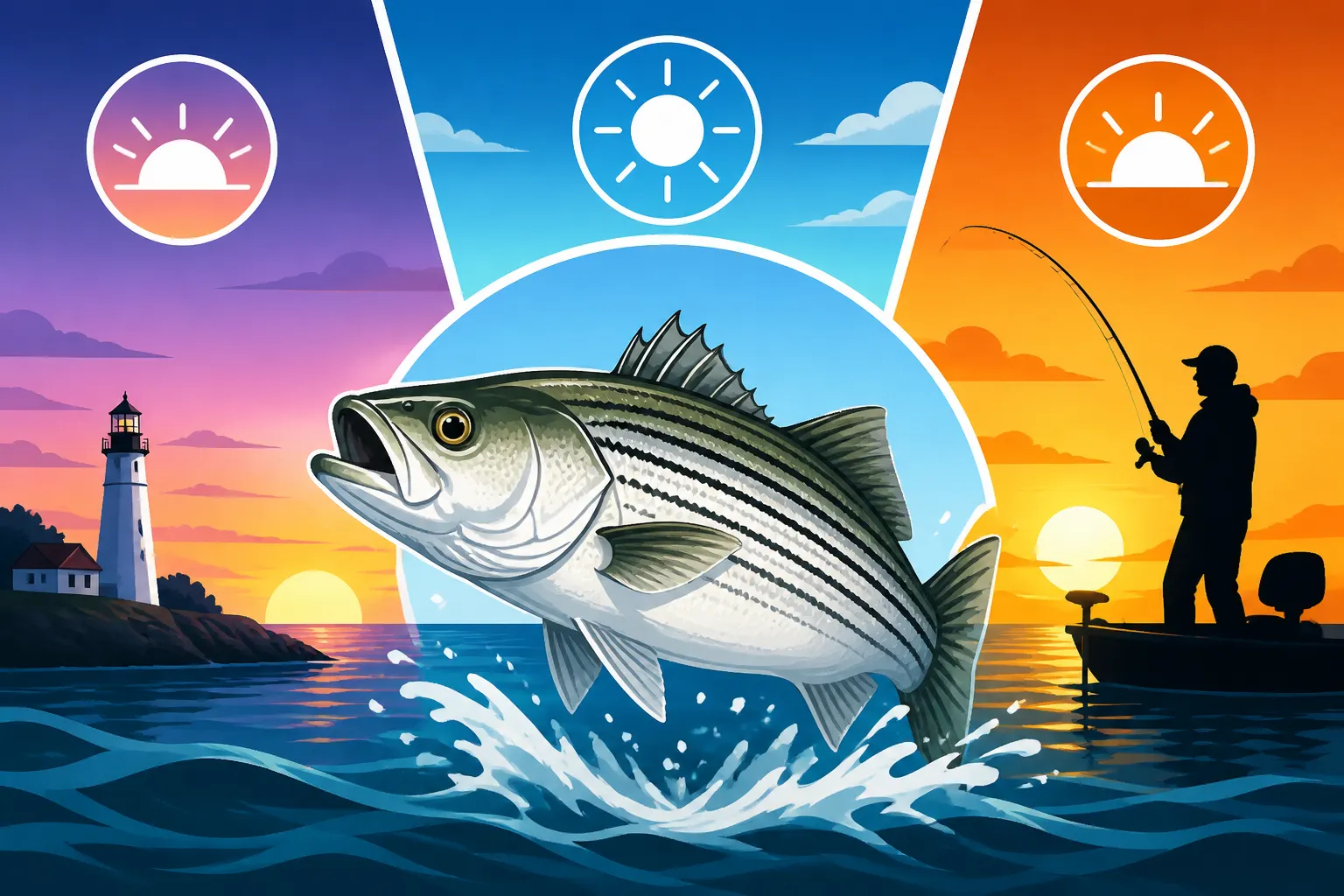
If there's one piece of advice that almost every seasoned striped bass angler in Connecticut will give you, it's to be on the water during dawn and dusk. These are often referred to as the "golden hours" for a reason—they consistently produce the most action for striped bass.
Why Sunrise is Often Supreme
The hour before and after sunrise, often extending slightly longer depending on conditions, is truly magical for striped bass fishing. The sudden increase in light, even if it's still dim, signals a shift in the underwater world. Baitfish, as mentioned, become more active, moving out from their nighttime hiding spots. This movement stimulates striped bass, which are often eager to feed after a night of lower activity or hunting. The water is typically at its coolest point of the day during sunrise, which can also be a comfort factor for stripers, especially during warmer months.
Imagine standing on a Connecticut shoreline, perhaps near the mouth of the Connecticut River Striped Bass Fishing, just as the first hint of light paints the eastern sky. The air is still, the water is calm, and suddenly, you hear the unmistakable sound of breaking baitfish. That's your cue. Stripers are often found actively pushing bait to the surface, creating visible busts. Throwing topwater lures, soft plastics, or even live bait during this window can be incredibly effective. The cool, quiet conditions, combined with the awakening food chain, make sunrise an almost unbeatable time to target these powerful fish.
Maximizing Your Chances at Sunset
Just like sunrise, the period around sunset offers another prime feeding window for striped bass. As the sun dips below the horizon, the light levels diminish, and the visual advantage swings back to the stripers. Baitfish, on their return journey to deeper waters or sheltered areas, again become vulnerable. The evening bite can often be just as strong, if not stronger, than the morning bite, especially if the weather has been hot during the day.
When the sun begins to set over Long Island Sound Fishing Guide, you'll often see a similar scenario unfold as at dawn. The activity can start with subtle swirls and then escalate to explosive surface feeds. This is an excellent time for throwing larger plugs or eels, as the stripers become more aggressive and less wary. For anglers who work during the day, the sunset bite provides a fantastic opportunity to get out on the water. It’s a perfect time to try some Best Lures for Striped Bass in Long Island Sound that create a strong profile in the dim light. Always ensure you have a good headlamp if you plan to stay past twilight, as navigating and handling fish in the dark requires adequate lighting, and you can find many reliable options on Amazon.
The Dance of Tides and Time: More Than Just Rising and Falling
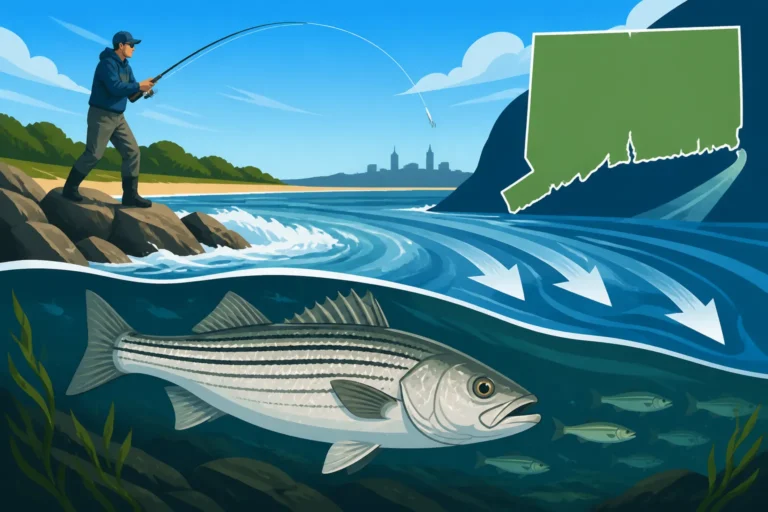
While dawn and dusk are consistently productive, the tides in Connecticut's marine and brackish waters play an equally critical, and sometimes even more important, role in determining the best time of day to catch striped bass. It’s not simply about high or low tide; it’s about the movement and currents created by the tides, and how those currents interact with the time of day.
Productive Tidal Phases
For striped bass, moving water means feeding opportunities. Currents dislodge baitfish, concentrate them in certain areas, and create ambush points. Therefore, the periods of strong tidal flow—the beginning of the incoming tide and the beginning of the outgoing tide—are usually far more productive than slack tide.
- Incoming Tide: As the tide starts to push in, new water brings in fresh baitfish, oxygen, and cooler temperatures to shallower areas. Stripers will often stage themselves at the mouths of rivers, harbors, or around rocky points, waiting for the current to deliver their meal. This can be especially effective if the incoming tide coincides with dawn or dusk, creating an unparalleled feeding frenzy. Understanding the Best Time of Day to Catch Striped Bass on the Incoming Tide can significantly boost your success.
- Outgoing Tide: Conversely, as the tide recedes, it pulls baitfish, crabs, and other forage out of estuaries, salt marshes, and river mouths into deeper channels and the main body of water. Stripers will position themselves at choke points, drop-offs, and current seams to intercept this outbound buffet. The tail end of an outgoing tide, just before low slack, can also be very productive as baitfish are concentrated in remaining deeper pockets.
Slack Tide Considerations
While strong current is generally best, slack tide isn't always a complete bust, especially if it coincides with dawn or dusk. During periods of slack water, stripers might move into deeper channels or hold tight to structure, becoming less active but still catchable with different techniques. This is when deep jigging or slow-trolling heavier lures can sometimes pick off less active fish. However, for sheer numbers and aggressive bites, most anglers prefer to focus on the moving water.
Here’s a general overview of how tidal phases often align with daily periods for optimal striper fishing:
| Time of Day | Tidal Phase | Striper Activity Level | Notes |
|---|---|---|---|
| Dawn | Incoming (early) | High | Excellent combination of low light & moving water. |
| Dawn | Outgoing (early) | High | Good low light opportunity as bait moves out. |
| Mid-Morning | Moving (either) | Moderate | Still productive, but direct sunlight can reduce surface activity. |
| Mid-Morning | Slack | Low | Often slowest, unless structure fishing deep. |
| Midday | Slack or slow moving | Very Low | Brightest sun, minimal current; fish often resting deep. |
| Afternoon | Moving (either) | Moderate | As light begins to fade, activity increases. |
| Dusk | Incoming (late) | High | Prime time, especially with strong current. |
| Dusk | Outgoing (late) | High | Equally prime, as bait washes out with fading light. |
| Night | Moving (either) | High | Consistent feeding under dark cover, less pressure. |
This table illustrates that the best opportunities often arise when the prime light conditions (dawn/dusk/night) overlap with strong tidal movements. Learning to read a tide chart for your specific fishing location in Connecticut is paramount. You'll quickly discover that the exact "best time" shifts daily with the tides, even if dawn and dusk remain generally strong bets.
Overcast Days and Foul Weather: A Different Opportunity
While sunny, calm days might seem ideal for a pleasant day on the water, they're not always the best for catching striped bass. Sometimes, less-than-perfect weather can actually create prime fishing conditions, throwing the "dawn and dusk" rulebook right out the window for a while.
The Magic of Overcast Skies
Overcast conditions essentially extend those prime low-light hours throughout the day. When the sun is hidden behind a thick blanket of clouds, the water's surface is diffused, making it harder for stripers to distinguish between bait and artificials. More importantly, it allows them to feel more secure moving into shallower waters or feeding more aggressively for longer periods than they would under a bright sun.
On a heavily overcast day in Connecticut Fishing Season Dates and Closures, particularly during the spring or fall, you might find striped bass actively feeding in areas that would normally only produce at dawn or dusk. This means you can often find a decent bite mid-morning or mid-afternoon, making the fishing much more flexible. Pay attention to fronts moving through—a dropping barometer before a storm can often trigger a strong bite, as fish sense the change and feed aggressively. When fishing in these conditions, sometimes even the color of your lure can make a difference in the reduced light, so having a varied tackle box is helpful.
Fishing in Rain, Wind, and Choppy Seas
Many anglers shy away from fishing in the rain or during windy, choppy conditions. And while comfort is definitely a factor, these conditions can be absolutely fantastic for striped bass. The disturbed surface of the water makes it much harder for stripers to be seen by their prey, and the noise of rain hitting the water or waves crashing against the shore creates natural cover for their movements.
- Rain: A steady, light rain can wash bait into the water from shorelines and rivers, creating a natural feeding lane. The low light and disrupted surface visibility also encourage stripers to feed actively throughout the day. Just remember your rain gear!
- Wind and Chop: A strong breeze creating a chop on the water can be a striper angler's best friend. The waves break up the light, making it harder for both angler and fish to see clearly, giving the striper an advantage. It also creates current and moves bait. Often, the side of an island or shoreline being pounded by waves will hold active fish, as baitfish are disoriented and pushed into their path. Just be mindful of safety, especially if you're in a smaller boat. Sometimes, if the conditions are too rough to boat, casting from a protected jetty or a breachway can be very effective. Good quality waterproof clothing is a must, and you can usually find durable options on Amazon that will keep you dry through any squall.
Embracing the Darkness: Night Fishing for the Dedicated Angler
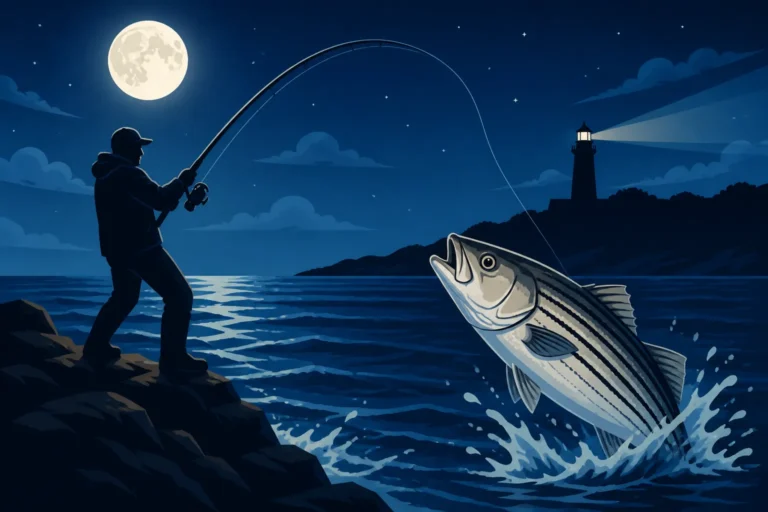
If you truly want to target larger striped bass, especially during the warmer months, you cannot ignore the nighttime bite. Night fishing for stripers is a distinct art form in itself, requiring different tactics, gear, and a whole lot of patience, but the rewards can be monumental.
Why Nighttime is Prime for Big Stripers
As the sun sets and the moon rises, many of the largest, most cautious striped bass become active. The complete absence of direct sunlight allows these trophy fish to move into very shallow water, closer to shore, or onto exposed flats to hunt without fear. They rely heavily on their lateral line and keen sense of smell to detect prey in the dark, often keying in on larger, slower-moving baits like eels or big swimming plugs that create significant vibration.
Night fishing often yields fewer fish overall than a good dawn or dusk bite, but the average size of the fish caught tends to be significantly larger. These older, wiser stripers have learned to avoid the daytime pressures of boat traffic, bright lights, and intense angling. For those willing to brave the dark, the opportunity to hook into a true "cow" striper is often at its peak. Be sure to check out our detailed guide on Night Fishing for Striped Bass in Connecticut for more in-depth strategies.
Essential Gear and Techniques for Night Fishing
Night fishing for striped bass requires a different mindset and specific equipment to ensure both safety and success.
- Safety First: A reliable headlamp is absolutely non-negotiable. Look for one with a red light option to preserve your night vision. A PFD (personal flotation device) is critical, especially if you're fishing from a boat or wading. Always tell someone where you're going and when you expect to return.
- Lure Selection: Large, dark-colored lures that create a strong silhouette against the moonlit sky or are highly visible against darker water are popular choices. Big swimming plugs, soft plastics like the 10-inch Slug-Go, and bucktail jigs are all excellent. Live eels are perhaps the most popular and effective bait for large stripers at night, fished either on the surface or with a minimal weight.
- Slow and Steady: Stripers at night are often less active in their pursuit, preferring to ambush. Retrieve your lures much slower than you would during the day. Let the lure work its magic with minimal input. Focus on structure—rocks, jetties, bridge pilings, and any other cover that might hold bait.
- Stealth: Noise carries far on calm night waters. Minimize talking, heavy footsteps, or banging gear around. Approach your fishing spots quietly.
Remember, whether you're casting from shore or from a boat in the pitch black of Long Island Sound Striped Bass Spots, the challenge and unique atmosphere of night fishing for stripers create some of the most memorable angling experiences in Connecticut.
Seasonal Considerations: Adapting Your Daily Schedule
While the "golden hours" of dawn and dusk, and the influence of tides, are generally consistent throughout the year, the exact best time of day to catch striped bass can shift significantly with the seasons in Connecticut. Stripers are migratory fish, and their priorities change depending on water temperature and spawning cycles.
Spring and Early Summer Migrations
In spring, as water temperatures rise, striped bass begin their migration along the coast, moving into Long Island Sound. During this period, the fish are often aggressive as they feed heavily after their long journey and prepare for spawning. Early in the spring, the water is still cool, and stripers are often more active during the warmest parts of the day—mid-morning to mid-afternoon—to take advantage of slightly higher water temperatures. As spring progresses into early summer, and the water warms up, they transition back to favoring low-light periods.
During the spring, you might find schools of "schoolie" stripers (smaller fish, often within the Connecticut Striped Bass Slot Limit and Season) feeding voraciously on smaller baitfish. The tide remains a critical factor, but the general feeding windows might be extended, especially on overcast days. You'll want to ensure you're using a circle hook, as required by Connecticut Striped Bass Circle Hook Requirement, particularly if using bait.
Mid-Summer Heat and the Dog Days
Mid-summer brings the hottest water temperatures to Long Island Sound and Connecticut's tidal rivers. This is when the "golden hours" become absolutely paramount, and night fishing truly shines. During the intense heat of midday, large stripers will often retreat to deeper, cooler water, holding tight to structure or in deeper channels where oxygen levels are more stable. Fishing during bright midday sun in July and August can be incredibly challenging and often unproductive for larger fish.
Instead, focus heavily on dawn, dusk, and the entire night. This is when the water is coolest and the stripers are most comfortable moving into shallower, bait-rich areas to feed. Look for rip lines, current seams, and areas with strong tidal flow that concentrate bait and provide cooler water.
Fall Run: A Prolonged Feeding Frenzy
The fall run is arguably the most anticipated time of year for striped bass fishing in Connecticut. As water temperatures begin to drop and baitfish begin their own migrations south, striped bass enter a prolonged feeding frenzy to build up reserves for winter. This period, often from September through November, can offer incredible action throughout the day, although dawn, dusk, and night still remain prime.
During the fall, the stripers are often chasing large schools of baitfish, sometimes pushing them to the surface in spectacular displays. You might find active fish breaking water at any point during the day, especially if you can locate the bait. This is a great time to try various Trolling Techniques for Long Island Sound Striped Bass, as stripers are actively patrolling open water. While the "best time of day" can be more fluid in the fall, those early morning and late evening bites often produce the largest fish, particularly as the season progresses and the waters get colder. Always consult a general guide for the Best Time of Year to Fish in Connecticut to tailor your daily efforts to the broader seasonal patterns.
Putting It All Together for Your Next Striper Trip
Ultimately, the "best time of day" to catch striped bass in Connecticut isn't a single, static answer. It's a dynamic combination of factors: the light conditions (dawn, dusk, night, or overcast skies), the stage of the tide (moving water is key), and the time of year. Being aware of all these elements and how they interact will dramatically improve your success.
While the general rule of thumb is to fish during low light conditions and moving tides, don't be afraid to experiment. Sometimes, the fish will surprise you. A sudden shift in weather, a new school of bait moving in, or an unusual tidal current can turn a historically slow time into an incredible bite. The most important thing is to be on the water, observing, learning, and adapting. You can learn so much by just being present and seeing how the water and the fish respond to the daily changes around them. Consider reading up on How to Catch Striped Bass in Long Island Sound for more comprehensive strategies that combine these daily timing principles with effective techniques. Remember to always prioritize safety, respect the fish and the environment, and enjoy the thrill of the chase.
Disclaimer
Fishing conditions and regulations in Connecticut can change. Always consult the latest Connecticut Department of Energy and Environmental Protection (DEEP) fishing guide and regulations before heading out. This guide is for informational purposes only and does not constitute official legal advice.