Best Techniques for Surfcasting Long Island Sound
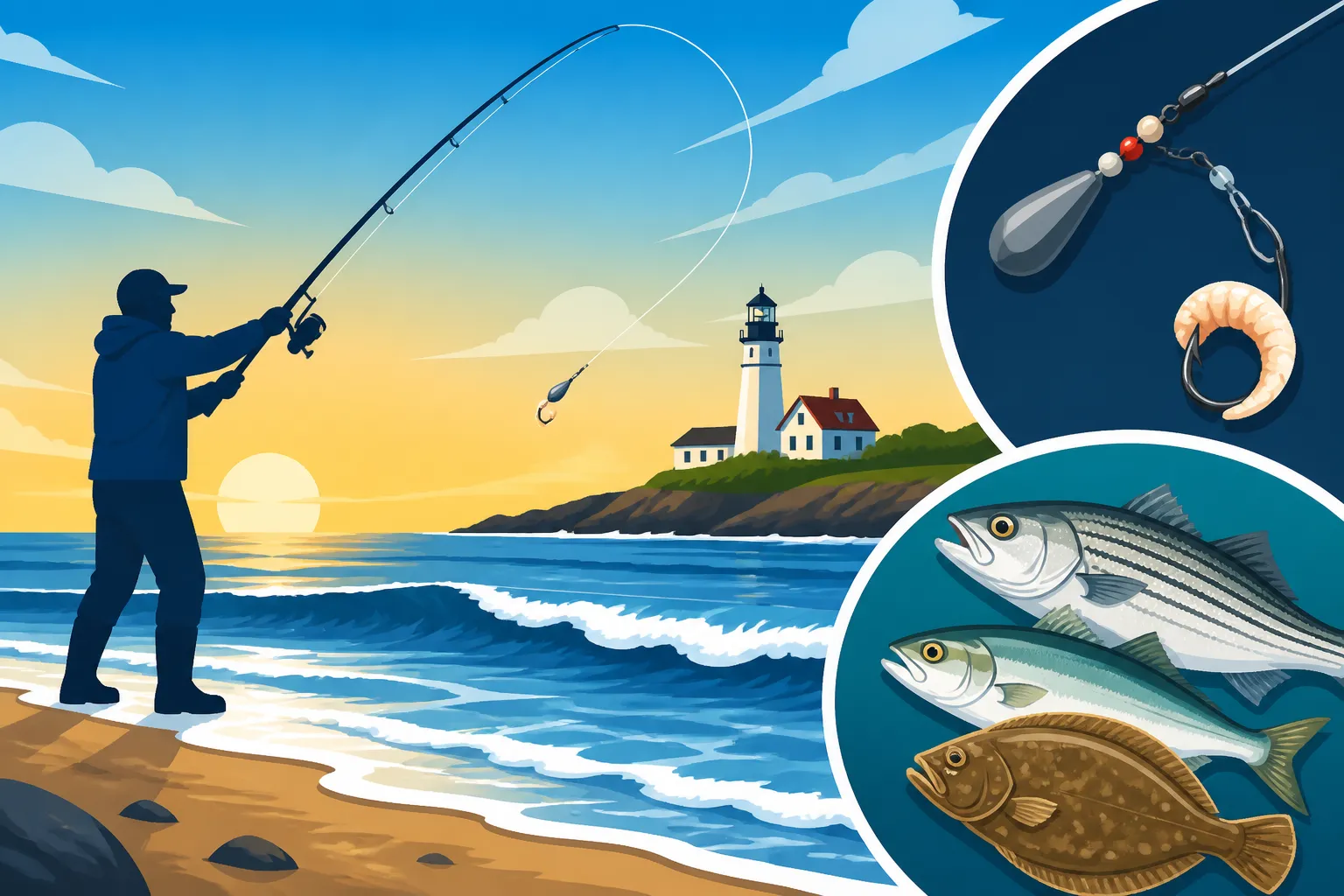
There’s nothing quite like the raw energy of standing on a Connecticut beach, the salty air whipping around you, and feeling that thumping strike of a powerful fish through your rod. But let's be real: surfcasting Long Island Sound can feel incredibly intimidating, especially with its diverse structure, powerful tides, and ever-shifting conditions. This comprehensive guide is here to break down the complexities, equip you with the knowledge, and share the best techniques to help you consistently hook into striped bass, bluefish, and other thrilling species from the shore.
Understanding Long Island Sound's Unique Challenges for Surfcasters
Long Island Sound isn't your average calm lake; it's a dynamic estuary, a saltwater environment with its own set of rules and rhythms that dictate where the fish are and how they'll behave. For a surfcaster, understanding these nuances is like having a secret decoder ring for the fishing forecast. Ignoring them is a surefire way to spend a lot of time casting without much to show for it.
Tides and Currents: The Driving Force
The most critical factor in surfcasting Long Island Sound is undoubtedly the tide and its associated currents. Unlike freshwater, where fish might roam more freely, saltwater species in the Sound are intimately tied to the ebb and flow of the ocean. Tidal charts are your best friend here, indicating high and low tides, but it's the movement of the water between these points that truly matters.
Think about it: as the tide pushes in or pulls out, it creates currents that funnel baitfish, dislodge crabs and shellfish, and generally stir up the feeding activity. Striped bass and bluefish are opportunistic predators, and they'll strategically position themselves in these currents to ambush prey. A strong incoming or outgoing tide, especially around changes in depth or structure, can be incredibly productive. For instance, fishing the last two hours of the outgoing tide and the first two hours of the incoming tide around a point or an inlet can often yield the most aggressive bites. However, a dead slack tide, both high and low, often sees a significant drop in activity as the water stills and bait disperses. Knowing when to target different parts of the tidal cycle is key to unlocking the fishing potential, a concept further explored in our guide on the Best Time of Day to Catch Striped Bass.
Bottom Structure and How it Affects Fish
While you can't see it from the surface, what lies beneath the waves on Long Island Sound's bottom is a major determinant of where fish will congregate. We're talking about everything from rocky outcrops and boulder fields to sandy flats, mussel beds, and sudden drop-offs. These features provide cover for predatory fish, shelter for bait, and concentrate food sources.
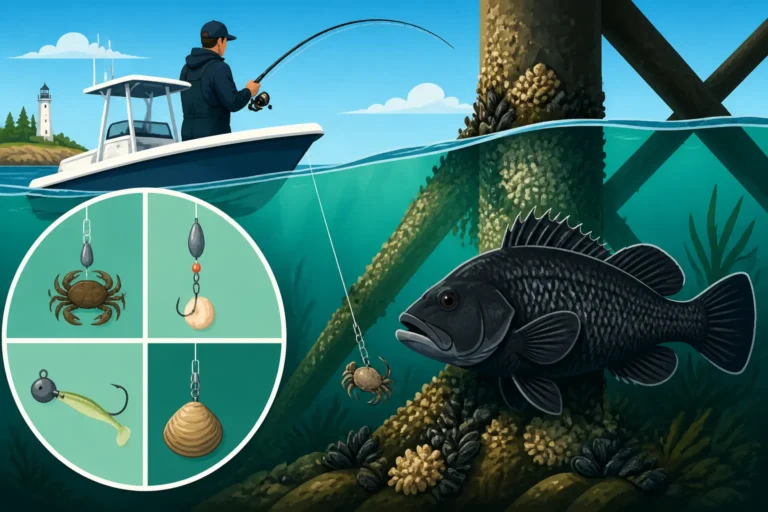
Imagine a sandy beach with a few scattered rocks. Those rocks, even small ones, create current breaks and ambush points where a striped bass might lie in wait for a passing baitfish. Now picture a section of coastline peppered with larger boulders, submerged jetties, or even old sunken structures. These areas are prime real estate for blackfish (tautog) but also draw in stripers and bluefish looking for structure-associated prey like crabs and mussels. Understanding that fish relate to structure means you shouldn't just cast blindly into open water. Instead, try to visualize what's below the surface and target your casts to land your lure or bait near these anomalies. Even subtle changes in depth, like a small sandbar running parallel to the shore, can be a magnet for fish, creating a trough where bait gets trapped and predators lie in wait.
Baitfish and Their Seasonal Movements
The presence and movement of baitfish are paramount for predicting where the larger predatory fish like striped bass and bluefish will be. Long Island Sound is a nursery and highway for numerous bait species throughout the year, including bunker (menhaden), spearing (silversides), sand eels, and mullet.
Early in the spring, as water temperatures slowly climb, smaller baitfish start to become more active, drawing in the first waves of migrating striped bass. By summer, vast schools of bunker can be found in the Sound, and when these schools get pushed to the surface by predatory fish, it creates some of the most exciting surfcasting opportunities. In the fall, as waters cool, larger baitfish like mullet and mature bunker begin their migration south, and the "fall run" of striped bass and bluefish aggressively follows them, fattening up for winter. Keeping an eye on baitfish movements – whether it's seeing nervous schools dimpling the surface, birds diving, or just reports from local tackle shops – will give you a significant advantage. If you don't see bait, chances are the bigger fish aren't far either. If you are struggling to find them, our guide on Long Island Sound Fishing Guide can point you in the right direction.
Essential Gear for Successful Long Island Sound Surfcasting
Surfcasting isn't just about throwing a line in; it's a specific discipline that requires specialized gear to handle the harsh saltwater environment, cast long distances, and battle powerful fish. Trying to use your freshwater bass setup for the surf will likely lead to frustration and broken gear.
Rods and Reels: Power and Reach
When it comes to surfcasting, your rod and reel combo needs to be robust. You're often casting heavy lures or baits into a stiff breeze, battling strong currents, and fighting fish that can easily strip hundreds of yards of line.
- Rods: A good surf rod for Long Island Sound will typically range from 9 to 11 feet in length, though some anglers go even longer (12-13 feet) for maximum casting distance, especially on open beaches. Look for a rod with a medium-heavy to heavy power and a moderate to fast action. This combination allows for powerful casting and the ability to handle larger fish, while still providing enough sensitivity to detect subtle bites. Popular options include rods from manufacturers like St. Croix, Tsunami, and Lamiglas. The extra length helps you lift your line over breaking waves and keep it out of the current as much as possible. A quality graphite composite rod strikes a good balance between sensitivity and durability, but many fiberglass options are still popular for their brute strength.
- Reels: Your reel needs to match the rod in terms of power and line capacity. A spinning reel in the 6000 to 10000 size range is common for most Long Island Sound surfcasting. It needs to be sealed against saltwater intrusion to prevent corrosion, which is the enemy of all saltwater gear. Reels from brands like Penn, Shimano, and Daiwa are often highly recommended for their durability and smooth drag systems. A reliable drag is crucial for fighting big stripers and bluefish, preventing break-offs and tiring out the fish effectively. Ensuring your reel has excellent line lay is also important for achieving those long casts without tangles. For heavy-duty use in the surf, you might even consider a Van Staal reel, known for its bulletproof construction, though they come with a higher price tag. Many surfcasters find great value in shopping for these durable reels and rods on platforms like Amazon, where reviews can help narrow down the best choices for their budget.
Line Choices and Leader Materials
The line on your reel and the leader you attach are your direct connection to the fish, and choosing the right combination is vital for both casting performance and landing your catch.
- Main Line (Braided): For surfcasting, braided line is almost universally preferred over monofilament. Its thinner diameter for a given breaking strength means you can fit more line on your spool, allowing for longer casts. More importantly, braid has virtually no stretch, which gives you incredible sensitivity to feel bites, even at extreme distances, and better hook-setting power. For Long Island Sound, a braided line test of 30 to 50 pounds is a good all-around choice. Brands like PowerPro, Daiwa J-Braid, and Berkley X9 are popular. The color of the braid is less critical than its strength and castability, but some anglers prefer high-visibility colors to track their line in the waves.
- Leader Materials (Fluorocarbon or Monofilament): Directly connecting your lure to braided line is a recipe for disaster. You need a leader. A fluorocarbon leader is highly recommended for its abrasion resistance and its near invisibility underwater, which can be a huge advantage with wary fish. For stripers and bluefish, a 40- to 80-pound test fluorocarbon leader, about 3 to 6 feet long, is standard. If bluefish are prevalent, you might even consider a short section of wire leader for their razor-sharp teeth, although this can sometimes deter striped bass. A stout monofilament leader can also work, offering good abrasion resistance at a lower cost, but it's more visible than fluorocarbon. Connecting your main braided line to your leader requires a strong knot; the FG knot or Alberto knot are excellent choices for their strength and ability to pass smoothly through rod guides. You'll want to regularly check your leader for nicks and abrasions, especially after fishing around rocky areas or after catching a toothy bluefish.
Surfcasting Essentials Beyond Rod and Reel
Beyond the core rod and reel setup, several other pieces of gear are absolutely essential for a comfortable, safe, and productive surfcasting trip on Long Island Sound.
- Waders and Boots: You'll almost certainly be wading into the surf, sometimes chest-deep, to get your cast out or to retrieve a fish. Quality breathable chest waders are a must, paired with sturdy wading boots that offer excellent ankle support and grip on slippery rocks. Felt soles are great for traction on wet rocks, but rubber soles with studs or a sticky compound are also effective. Always wear a wading belt to prevent your waders from filling with water in case of a fall.
- Surf Bag: This is your mobile tackle box, designed to hold a selection of frequently used lures, leader material, and tools close at hand. A good surf bag will have multiple compartments, drainage holes, and a comfortable shoulder strap. Brands like AquaSkinz or Fishpond offer excellent options.
- Pliers/Cutters: Heavy-duty saltwater pliers are critical for removing hooks, cutting heavy leader, and crimping sleeves. They need to be corrosion-resistant.
- Headlamp: For early morning or night fishing, a bright, reliable headlamp with a red light option (to preserve night vision) is indispensable.
- Other Accessories: Don't forget a sharp fillet knife, a reliable measuring tape, a fishing license (see our Connecticut Fishing License Guide for 2026 for details), a rag for slimy fish, and a cooler with ice for your catch. A small first-aid kit and a whistle are also smart additions for safety.
| Gear Category | Key Features | Common Sizes/Strengths | Example Brands Often Seen on Amazon | Primary Use |
|---|---|---|---|---|
| Surf Rod | Medium-heavy to heavy power, moderate to fast action, good backbone | 9-11 feet | St. Croix, Lamiglas, Tsunami, Okuma | Long casts, handling strong fish & currents |
| Spinning Reel | Sealed against saltwater, smooth drag, high line capacity | 6000-10000 series | Penn, Shimano, Daiwa, Van Staal | Durability, fighting power, line management |
| Braided Main Line | Thin diameter, high strength, no stretch, abrasion-resistant | 30-50 lb test | PowerPro, Daiwa J-Braid, Berkley X9 | Casting distance, sensitivity, hook set |
| Fluorocarbon Leader | Low visibility, high abrasion resistance, strength | 40-80 lb test | Seaguar, Berkley, P-Line | Stealth, protection against structure/fish teeth |
| Chest Waders | Breathable, waterproof, reinforced knees, wading belt attachment | Various sizes (chest & inseam) | Simms, Frogg Toggs, Hodgman | Staying dry and warm while wading |
| Wading Boots | Excellent ankle support, superior grip on wet/slippery surfaces | Sized for waders | Korkers, Simms, Orvis | Traction and safety in the surf |
| Surf Bag | Multiple lure tubes, drainage, corrosion-resistant zippers, comfortable strap | Holds 6-12 plugs | AquaSkinz, Fishpond, Tsunami | Organized access to essential lures and tools |
| Pliers/Cutters | Rust-resistant, strong jaws, spring-loaded, line cutter | Various sizes | Booms Fishing, Bubba Blade, Danco | Hook removal, cutting line, general utility |
Reading the Water: Identifying Key Striper and Bluefish Holding Spots
Understanding the equipment is one thing, but knowing where to cast is another entirely. The most successful surfcasters aren't just chucking lures as far as they can; they're actively interpreting the water in front of them, looking for subtle clues that reveal where fish might be hiding or feeding. This skill comes with time and observation, but there are definite patterns and indicators you can learn to spot.
Decoding Rips, Channels, and Drop-offs
In Long Island Sound, moving water creates distinct features that are irresistible to predatory fish. Learning to identify these from the shore, even in choppy conditions, will significantly increase your success rate.
- Rips: These are areas where opposing currents meet, or where a strong current flows over a shallow obstruction, creating turbulent, agitated water. Rips are classic ambush points for striped bass, as baitfish often get disoriented or trapped in the churning water. Look for patches of rough water, standing waves, or distinct current lines where the water surface changes texture. A rip might form around a point of land, an inlet, or over a submerged rock pile. Casting into the calmer water just ahead of a rip, allowing your lure to drift into the turbulence, can be deadly effective.
- Channels: These are deeper depressions in the bottom, often running parallel or perpendicular to the shore. Channels provide travel lanes for fish and a place for them to retreat in stronger currents or brighter conditions. You might identify a channel by a darker band of water, or if you're lucky, by seeing baitfish congregating or jumping in a specific area. Often, the water breaks differently over a channel, showing a distinct pattern compared to shallower sections.
- Drop-offs: A sudden change in depth, a drop-off, acts as a natural holding area for fish. They can sit in the deeper water, safe from overhead predators and strong currents, and dart up into shallower water to feed. You can sometimes spot a drop-off by a change in wave action – waves might break and then flatten out quickly over deeper water, or vice-versa. During low tide, you might even be able to visually identify these contours. Targeting lures to run parallel to a drop-off, or casting beyond it and retrieving back up the slope, are effective strategies. These structures are also prime areas to consider when looking for Long Island Sound Striped Bass Spots.
Locating Baitfish Activity
As we discussed, baitfish are the lifeblood of the Long Island Sound ecosystem, and their presence is the number one indicator of where you'll find gamefish. Observing bait activity is a real-time, dynamic way to read the water.
Keep a keen eye out for any signs of nervous baitfish:
- Dimpling Water: Small ripples or disturbances on the surface, especially when the water is otherwise calm, often indicate schools of small baitfish just below the surface.
- Jumping Bait: If baitfish are leaping out of the water, it's almost always because something bigger is chasing them from below. This is an immediate signal to cast into that area.
- Working Birds: Gulls, terns, and ospreys are your natural allies. When you see birds diving or congregating over a specific area, it's a strong sign that baitfish are being pushed to the surface by predators. This is an excellent opportunity to cast lures like poppers or tins that imitate fleeing bait.
- Schools on the Surface: Sometimes, large schools of bunker or other baitfish will be plainly visible on the surface. Casting around the edges or into the middle of these schools can often elicit a strike. Remember, a single nervous baitfish might not mean much, but repeated or widespread activity means a feeding frenzy might be underway.
Identifying Structure Nearshore
Even without seeing what's underwater, you can often infer the presence of productive structure by observing the coastline and the water's edge.
- Points and Jetties: Any projection of land or man-made structure (like a jetty or rock wall) into the water creates current breaks, eddies, and ambush points. Fish will often lie on the down-current side of these structures, waiting for food to be swept by. Casting parallel to a jetty or fan-casting around a point are classic, effective techniques. Areas around breakwaters, such as those found near Best Shore Fishing Spots in Connecticut in New Haven or Stonington, are prime examples.
- Rock Piles and Boulders: Rocky beaches or stretches of shoreline with visible boulders extending into the water almost certainly have more submerged rocks offshore. These offer excellent habitat for crabs and other crustaceans, attracting fish like blackfish (tautog) and also stripers. Be prepared for snags when fishing these areas, but the potential rewards are high.
- Beach Contours: Even on seemingly featureless sandy beaches, subtle contours like sandbars and troughs can hold fish. A sandbar will often be indicated by waves breaking further offshore, reforming, and then breaking again closer to shore. The trough between the beach and the first sandbar is a prime area for fish to patrol. Observing the waves can tell you a lot about the bottom contour.
- Rip-Currents and Cut-throughs: While dangerous for swimmers, rip currents (channels of strong current pulling water offshore) can concentrate bait and food, acting as a conveyor belt for gamefish. These are often identified by a gap in the breaking waves, where water is moving quickly offshore. Cast your lure into the calmer water on either side of the rip or just beyond where it pulls out. Just be cautious of areas that have active Connecticut Housatonic River Seasonal Closure Explained which have unique rules.
Mastering Lure and Bait Presentations
Once you've geared up and found a promising spot on Long Island Sound, the next step is presenting your offering in a way that entices a strike. Different species and conditions call for different tactics, and having a diverse arsenal of lures and knowing how to fish them is crucial.
Topwater Plugs for Explosive Strikes
There’s nothing quite like the heart-stopping explosion of a striped bass or bluefish blowing up on a topwater plug. This technique is incredibly exciting and often highly effective, especially during low light conditions or when fish are aggressively feeding on baitfish near the surface.
- Pencil Poppers: These long, slender plugs are designed to be "walked the dog" – a side-to-side, zig-zagging retrieve that imitates a wounded or fleeing baitfish. It takes a bit of practice to get the rhythm right, but a well-worked pencil popper can drive fish wild. They excel in calm to moderately choppy water. Try casting them near rips, over submerged structure, or into areas where you see baitfish activity. Popular brands like Super Strike and Guppy make fantastic pencil poppers.
- Chugger Poppers: These plugs have a cupped face that "chugs" or "splashes" water when retrieved, creating a commotion that mimics a struggling baitfish. They're excellent for attracting attention in choppier water or when you want to call fish up from a little deeper. A steady retrieve with occasional pauses and hard "chugs" can be very effective. Atom Striper Swipers are a classic example.
- Spooks/Walkers: Similar to pencil poppers, but often shorter and fatter, these also rely on a "walk the dog" retrieve. They're great for a more subtle topwater presentation.
Topwater fishing is usually most effective during dawn, dusk, or at night, as fish are less wary of surfacing in lower light. When the bite is on, and fish are smashing plugs, it’s an experience that keeps anglers coming back for more.
Subsurface Lures: Dancers and Swimmers
While topwater action is thrilling, most of your surfcasting success will come from lures that work just below the surface or deeper in the water column. These are your bread-and-butter lures for searching different depths and mimicking various baitfish.
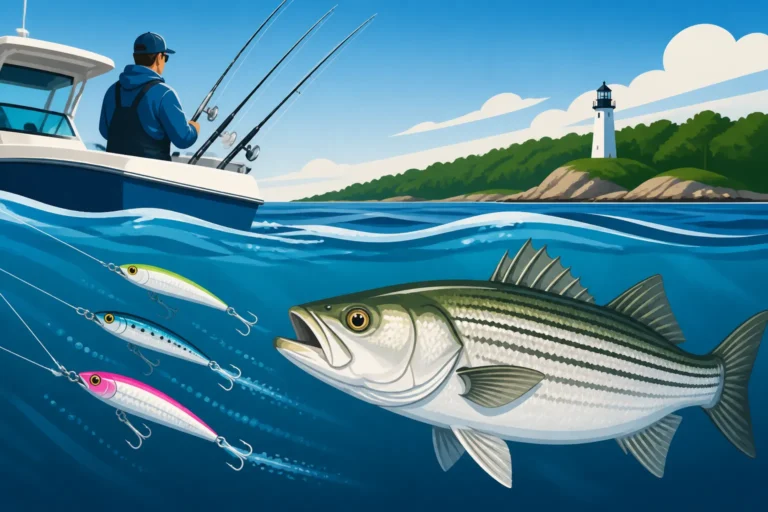
- Minnow/Swimmer Plugs: These plugs, often referred to as "swimmers" or "divers," have a lip that causes them to dive to a specific depth when retrieved. They're designed to imitate common baitfish like herring, bunker, or spearing. Different models dive to different depths, so having a selection is wise. A steady retrieve with occasional twitches or pauses is usually all it takes. Cast them parallel to the shore, into channels, or around rocky points. Jointed swimmers have a more exaggerated, lifelike action. Bomber, Rapala, and Yo-Zuri are renowned for their effective swimmer plugs. These are often among the Best Lures for Striped Bass in Long Island Sound.
- Metal Lures (Tins): Simple, heavy pieces of metal, tins (or Kastmasters, Crippled Herrings, Deadly Dicks) are incredibly versatile. Their weight allows for extreme casting distances, which is a huge advantage in the surf. They can be retrieved quickly near the surface to imitate fleeing bait, jigged vertically in deeper water, or allowed to sink and then retrieved with a steady sweep. Their flashy, erratic action often triggers aggressive strikes from both striped bass and bluefish. They are particularly effective when sand eels or other slender baitfish are present.
- Bucktail Jigs: The humble bucktail jig is one of the most effective and versatile lures ever invented for saltwater. Composed of a lead head and deer hair, they can be fished in countless ways. They can be bounced along the bottom, retrieved with a steady jigging motion, or even tipped with a soft plastic trailer (like a curly tail grub or a pork rind) for added attraction and bulk. Bucktails imitate everything from squid to various baitfish and crustaceans. They are particularly deadly for fishing deeper water, around strong currents, or near structure where other lures might snag. Learning to fish a bucktail jig effectively is a hallmark of a skilled surfcaster.
Natural Baits: The Tried and True Methods
Sometimes, especially when fish are finicky or during slower periods, nothing beats the natural appeal of fresh bait. While not as dynamic as throwing lures, bait fishing can be incredibly effective, especially for larger, more cautious fish.
- Clams: Fresh clams, especially surf clams, are a potent bait for striped bass, especially in areas with sandy bottoms. Shuck the clam, cut off the tough foot, and secure the soft belly meat to a strong hook (like a circle hook) using bait elastic. Cast it out with a pyramid sinker to hold bottom and wait for a bite. Clams are particularly effective in the spring and fall.
- Bunker (Menhaden): Whole bunker, live or freshly dead, are a prime bait for trophy-sized striped bass and bluefish. You can cast out a whole, freshly cut chunk of bunker (head, tail, or body section) using a fish-finder rig with a heavy sinker. For even more action, if you can catch them, a live bunker hooked through the nose or back with a large circle hook can be irresistible to a cruising striper.
- Eels: Live eels are a legendary bait for big striped bass, especially at night. Hooked through the lips or jaw, they are cast out and allowed to swim naturally, or slowly retrieved with a serpentine motion. Eels are incredibly effective but can be messy and require careful handling.
- Other Baits: Other effective baits include squid (whole or cut), sandworms, and even fresh herring or mackerel chunks. The key with all natural baits is freshness. Using stale or frozen-thawed bait that has lost its scent and texture will yield far fewer bites. When fishing with bait, it's often best to use a Connecticut Circle Hook Requirement for Striped Bass rig to ensure proper hook-sets and minimize harm to released fish.
Safety First: Surfcasting Long Island Sound Responsibly
Surfcasting Long Island Sound is an exhilarating pursuit, but the marine environment demands respect. Safety should always be your top priority, not just for yourself, but for others sharing the water and for the environment itself. A moment of carelessness can turn a great fishing trip into a dangerous situation.
Wading Safely in Currents and Waves
Stepping into the surf means entering a constantly moving, powerful body of water. Knowing how to wade safely is non-negotiable.
- Assess Conditions: Before you even get your feet wet, observe the waves, currents, and bottom. How big are the waves? Are there strong lateral currents? Can you see any significant drop-offs close to shore? Never wade out if you feel uncomfortable with the conditions. A rogue wave can sweep you off your feet in an instant.
- Wading Belt and Studded Boots: Always, always wear a wading belt cinched tightly around your waders. This critical piece of gear prevents your waders from completely filling with water if you fall, which can quickly become life-threatening. Good quality wading boots with aggressive soles, preferably studded, are essential for traction on slippery rocks and uneven bottom.
- Know Your Limits: Don't wade deeper than you're comfortable with, and never wade alone if conditions are rough. Be aware of submerged rocks, sudden holes, and shifting sand. Use a wading staff for added balance and to probe the bottom ahead of you. Remember that even calm-looking water can have surprisingly strong currents, especially around inlets or points. If you're new to the area, ask local surfcasters or tackle shop owners about safe wading practices for specific spots. This will ensure you are comfortable on the Best Kayak Fishing Spots in Connecticut should you transition from the shore.
- Life Jackets: While not always worn by surfcasters, if you plan on wading deep or in strong currents, a low-profile inflatable life jacket or PFD (Personal Flotation Device) is a smart choice. It could save your life if you unexpectedly lose your footing. Check out Life Jacket Requirements for Connecticut Boaters for more details, though it applies to boating, the principles of safety are applicable.
Weather Awareness and Preparedness
Long Island Sound weather can change rapidly, and being caught unprepared can be miserable at best, dangerous at worst. Always check the forecast before heading out, and be ready for sudden shifts.
- Check Multiple Forecasts: Don't rely on just one weather app. Look at marine forecasts, wind predictions, and radar. Pay attention to wind direction and speed, as strong onshore winds can make casting nearly impossible and create dangerous surf conditions.
- Dress in Layers: Even on a warm day, temperatures can drop quickly after sunset, and a wet, windy environment can lead to hypothermia. Dress in moisture-wicking layers, and always bring a waterproof outer shell, even if rain isn't in the forecast.
- Lightning Safety: If you hear thunder or see lightning, get off the water immediately. Don't risk being the tallest object on a wide-open beach during an electrical storm.
- Fog and Visibility: Dense fog can roll in quickly on the Sound, disorienting you and making it difficult to navigate, especially if you're venturing away from easily recognizable landmarks. Always bring a reliable light source and perhaps a compass or GPS if you're in an unfamiliar area.
Respecting Wildlife and the Environment
As anglers, we have a responsibility to protect the environment and the fish we pursue. Practicing ethical angling ensures healthy fish populations and pristine shorelines for future generations.
- Leave No Trace: Carry out everything you carry in, and then some. This includes all your fishing line, lure packaging, food wrappers, and especially any discarded bait containers. Leaving trash on the beach or in the water harms wildlife and detracts from the beauty of our natural spaces.
- Responsible Catch and Release: If you're practicing catch and release, do so quickly and carefully. Minimize the time the fish is out of the water. Use barbless hooks or crimp down barbs to make hook removal easier. Handle fish with wet hands, supporting their weight, especially larger ones, and avoid touching their gills. If a fish is exhausted, hold it gently in the water, facing the current, until it regains strength and swims away on its own. Understand the Connecticut Striped Bass Slot Limit and Season as well as other regulations to ensure you're compliant.
- Adhere to Regulations: Always know and follow current Connecticut fishing regulations, including size limits, bag limits, and seasons for all species you might encounter. Ignorance of the law is not an excuse. You can find detailed information on Connecticut Fishing Regulations Explained from the state's Department of Energy and Environmental Protection (DEEP) website or the annual fishing guide. Support conservation efforts by purchasing your Where and How to Buy a Connecticut Fishing License each year.
- Give Wildlife Space: Remember that you are sharing the shoreline with diverse wildlife. Give seals, shorebirds, and other creatures ample space. Do not disturb nesting birds or interfere with natural wildlife behaviors.
By embracing these techniques and prioritizing safety and responsible angling, you'll not only increase your chances of success on Long Island Sound but also contribute to the health and enjoyment of this incredible fishery for years to come.
Disclaimer
The information provided in this guide is for general informational purposes only and is not intended as legal or professional advice. Fishing regulations and conditions in Connecticut can change frequently. Always consult the latest official Connecticut Department of Energy and Environmental Protection (DEEP) fishing regulations before engaging in any fishing activities. The author and publisher are not responsible for any actions taken based on the information presented herein.