Best ice fishing access on Bantam Lake
There's nothing quite like the crisp air, the quiet solitude, and the thrill of pulling a feisty fish through a hole in the ice. But for those of us eager to hit the hard water on a large body like Bantam Lake, the excitement can quickly turn to frustration when you're unsure where to safely and legally get onto the ice. Finding reliable access points, understanding localized ice conditions, and knowing what to expect can make or break your winter angling adventure. This comprehensive guide is here to cut through the confusion, detailing the best public access points for ice fishing on Bantam Lake, ensuring you spend less time searching and more time fishing.
Understanding Bantam Lake for Ice Fishing
Bantam Lake, nestled in Litchfield, Connecticut, is a true gem, beloved by anglers year-round. But when winter blankets its surface in ice, it transforms into a prime destination for a unique kind of fishing. Its substantial size and varied depths, however, present both opportunities and challenges for the ice angler.
Bantam Lake's Unique Characteristics for Winter Anglers
Bantam Lake holds the distinction of being Connecticut's largest natural lake, sprawling across approximately 947 acres. This impressive size means a vast expanse of water to explore, but it also translates to diverse conditions under the ice. You've got everything from relatively shallow, weedy coves on the northern end to significantly deeper sections, particularly towards the western and southern basins, reaching depths of over 20 feet in some spots. This depth variation is crucial because deeper water tends to freeze later and maintain ice longer, but also can be more prone to thin ice areas if there's any underlying current or spring activity.
The lake is renowned for its diverse fishery, making it a fantastic ice fishing destination. Northern Pike are a major draw, with many anglers specifically targeting these toothy predators through the ice using large shiners on tip-ups. Beyond pike, you'll find healthy populations of largemouth and smallmouth bass, which can be aggressively jigged during winter. Panfish, including black crappie, yellow perch, and bluegill, are also abundant and provide steady action, especially for those looking for a high-volume day or introducing kids to ice fishing. The sheer variety means you're not putting all your eggs in one basket, which is a great comfort when battling the elements. For a broader overview of the lake's offerings, check out our full Bantam Lake Fishing Guide.
Essential Safety Considerations for Ice Fishing on Bantam
Safety on the ice is paramount, and Bantam Lake’s size and characteristics mean you need to be extra vigilant. It's easy to get caught up in the excitement, but overlooking safety measures can turn a fun day into a dangerous situation. The general rule of thumb for safe ice fishing is usually at least four inches of clear, solid ice for foot travel, five inches for snowmobiles or ATVs, and eight to twelve inches for vehicles. However, Bantam's varied terrain means ice thickness can differ significantly even within a short distance.
One of the biggest concerns on Bantam Lake is the presence of currents, particularly around the Bantam River inlet on the north end and its outlet on the south. Moving water thins ice quickly and unpredictably, creating dangerous weak spots that might not be visible from the surface. Always approach these areas with extreme caution, or better yet, avoid them entirely. Subsurface springs can also create localized thin ice, so constantly checking conditions is non-negotiable. It's not just about getting out there, it’s about getting home safely, and checking conditions is your first line of defense. Remember to also check our guide on How thick ice needs to be to fish safely in Connecticut for comprehensive ice safety guidelines.
Before you even step on the ice, equip yourself with essential safety gear. A spud bar is indispensable for testing ice thickness as you walk. Ice picks, worn around your neck, can be life-savers if you do break through. A rope, a throwable floatation device, and a fully charged cell phone are also critical. Dressing in layers, including waterproof outer shells, is key to preventing hypothermia. Even though you might think of ice fishing as a static activity, carrying these items with you is just as important as having your auger and tackle. Speaking of safety, knowing about Life Jacket Requirements for Connecticut Boaters and specifically the Connecticut Cold Water Life Jacket Rule October to May is absolutely vital for any winter activity on or near the water, even if you’re ice fishing from a shanty.
Primary Public Access Points for Bantam Lake Ice Fishing
Accessing Bantam Lake for ice fishing requires knowing the public entry points that are typically maintained or readily available for winter use. These locations offer parking and a relatively straightforward path onto the frozen surface, but each has its own nuances to consider.
Bantam Lake State Boat Launch (East Shore)
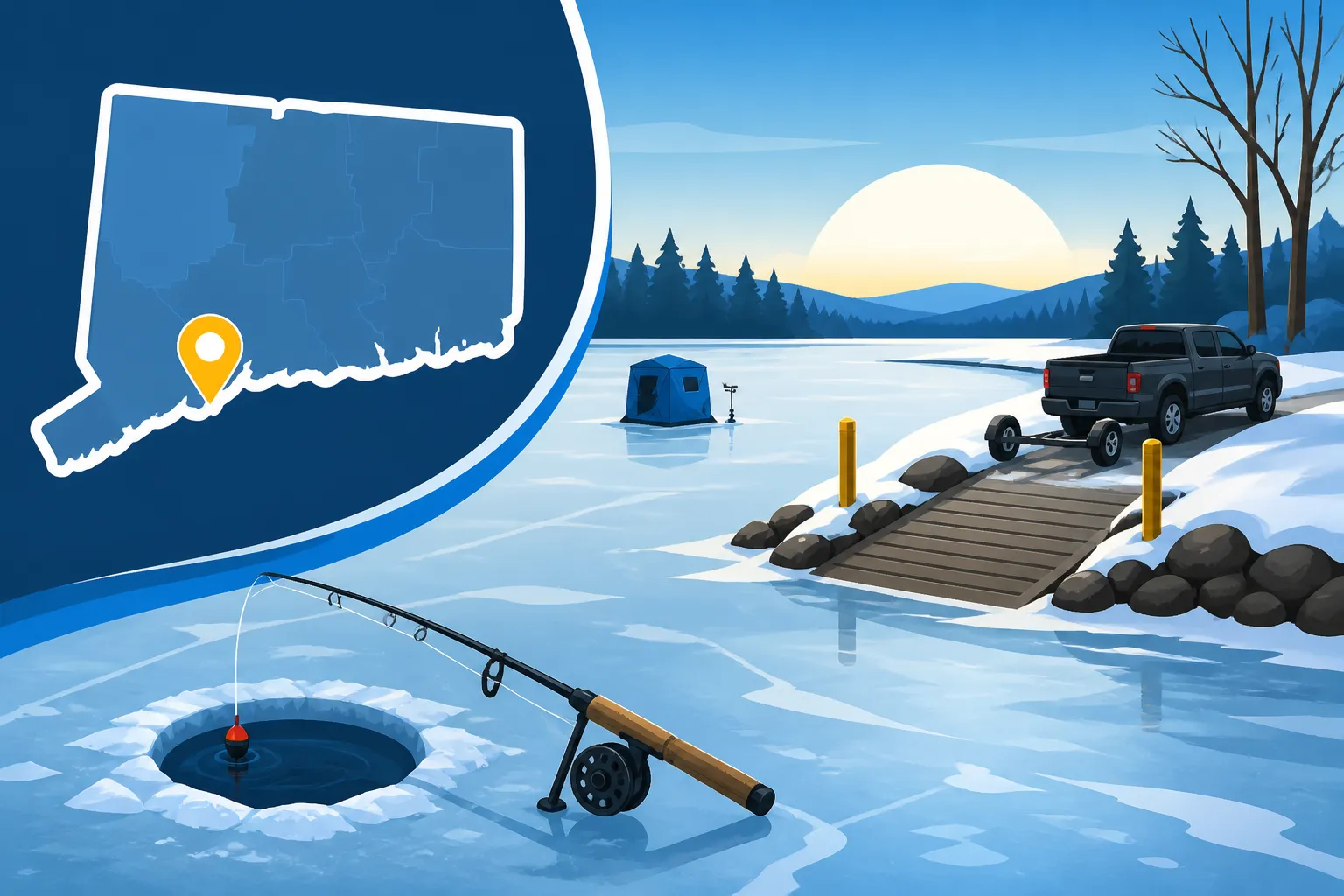
The Bantam Lake State Boat Launch, located on the eastern side of the lake off Route 209 (Bantam Road), is arguably the most popular and reliable access point for ice anglers. During the open water season, it’s a bustling hub for boaters, and come winter, it serves a similar function for those venturing onto the ice.
What to Expect at the Launch
This state-managed facility boasts a large, paved parking lot that is typically plowed after snowfalls, making it accessible for most vehicles. From the parking lot, it's a relatively short and flat walk to the shoreline, providing easy transport for your ice fishing gear—whether you're pulling a sled full of tip-ups and an auger or a portable ice shanty. The launch area itself provides a wide, gradual entry onto the ice, which is a huge benefit for safely spreading out and finding your spot.
Fishing Opportunities from the East Shore
Anglers accessing from here usually target the eastern basin of the lake. This area has a mix of depths, but you can find shallower water closer to shore, which often freezes first and provides excellent opportunities for panfish like yellow perch and crappie. As you venture further out, you’ll hit deeper structure where larger fish, particularly northern pike, tend to hold. Many anglers will set up a spread of tip-ups targeting pike, while jigging for panfish or bass in between. It’s a great spot for a family looking for a relatively safe and straightforward day on the ice, providing easy access to shallower depths where kids can have fun pulling in smaller fish.
Mount Tom State Park (West Shore)
For those looking to explore the western side of Bantam Lake, Mount Tom State Park offers another excellent public access point. While it might involve a slightly longer walk than the state boat launch, it rewards anglers with different fishing opportunities and often less crowding.
Parking and Walk-In Access
The main entrance to Mount Tom State Park is located off Route 202 in Litchfield. There's a designated parking area within the park, which, similar to the boat launch, is usually maintained to allow winter access. From the parking lot, you'll have a walk down to the lake itself. This path, while not excessively long, can be a bit more rugged than the paved boat launch, so be prepared to pull your sled or carry your gear over potentially snow-covered or uneven terrain. This access point provides a quieter experience, appealing to anglers who prefer a bit more solitude.
Exploring the Western Basin
Accessing from Mount Tom State Park puts you directly onto the western side of the lake. This area tends to be deeper on average compared to the eastern shore, offering different underwater structures like drop-offs and channels. It's a prime location for targeting larger northern pike and often where you might find more active smallmouth and largemouth bass. Many experienced ice anglers prefer this side for its potential to yield trophy-sized fish. If you're hoping to connect with a knowledgeable guide to show you the ropes or take you to some prime spots on this side of the lake, particularly for those elusive pike, platforms like FishingBooker can sometimes help you find local experts familiar with Bantam Lake's ice conditions and hot spots. They might not always advertise dedicated ice fishing trips, but it's worth checking for guides who offer winter services. For detailed information on specific targets, check out our guides on Bantam Lake Pike Fishing and Bantam Lake Bass Fishing.
Morris Town Beach (North Shore)
Another option, often favored by locals and those seeking panfish in shallower water, is the Morris Town Beach on the north shore of Bantam Lake. This municipal access point provides a more intimate entry onto the ice.
Local Access and Parking Realities
The Morris Town Beach is located off East Shore Road. Parking here can be more limited compared to the state facilities, especially on busy weekends. While the town does its best to keep access clear, it’s always wise to check local town regulations or conditions if you plan to use this spot. The walk to the ice is generally short, making it convenient for quick trips or for anglers with minimal gear.
Shallow Water Panfish Haven
This northern section of Bantam Lake is generally shallower and tends to freeze more quickly than the deeper sections. This makes it an attractive spot for early-season ice fishing, provided conditions are safe. The shallower, weedy areas are excellent for targeting panfish like yellow perch, bluegill, and crappie. It's an ideal location for an angler looking to spend an afternoon jigging for dinner or introducing children to the joys of ice fishing in a more contained, less intimidating setting. Always be mindful of any specific town rules or hours that might apply to using the beach area during winter.
Navigating Specific Ice Fishing Zones and Potential Challenges
Bantam Lake's diverse underwater topography and connections to the Bantam River mean that not all ice is created equal. Understanding these specific zones and potential challenges is crucial for both safety and success.
The Bantam River Inlet and Outlet Areas
While Bantam Lake is a fantastic ice fishing destination, certain areas require extreme caution due to constant water movement. The Bantam River flows into the northern end of the lake and exits on the southern end, creating dynamic zones where ice thickness can be notoriously unpredictable.
Understanding the Danger Zones
The most critical thing to remember about any moving water body, especially river inlets and outlets on a frozen lake, is that the ice here will always be thinner and less stable than in still sections. Even if the main lake has a foot of solid ice, areas near the river's flow can have only an inch or two, or even open water. This makes these spots incredibly dangerous, and experienced ice anglers generally avoid stepping onto the ice too close to these points. The currents erode the ice from underneath, making it deceptively weak.
Fishing Near, But Not On, Moving Water
Despite the danger, moving water areas are often attractive to fish because they can concentrate baitfish and provide oxygenated water. Anglers might find success fishing near these areas, but a safe distance away where the ice is stable and thick. This usually means setting up well into the main lake, giving a wide berth to any discernible current. Always use extreme caution, continuously test the ice with a spud bar, and if you have any doubt, stay away. It’s simply not worth the risk for a few extra fish. When planning your trip, remember to consult current Connecticut Fishing Season Dates and Closures to ensure you're fishing legally.
Deeper Water and Mid-Lake Structure Access
For those targeting Bantam Lake's larger predators, venturing into the deeper sections and locating mid-lake structure is key. However, this also presents its own set of challenges, particularly regarding ice formation.
Accessing Deeper Holds
The deeper parts of Bantam Lake, especially in the central and western basins, are prime habitat for large northern pike and impressive smallmouth bass. These fish often relate to submerged humps, deep drop-offs, and old river channels that wind through the lakebed. The challenge is that these deeper areas freeze much later than the shallower coves. Patience is essential; you might be able to fish the shallow bays for weeks before the main lake's deeper sections are safe to access. Once the ice is solid, accessing these spots often means a longer walk out from the public access points mentioned earlier.
The Role of Electronics
Once you're out on the deep ice, portable fish finders (like Vexilar or Marcum flashers, or Humminbird and Lowrance units with ice transducers) become indispensable. Without them, you're essentially fishing blind in a vast expanse. These units allow you to identify depth, locate structure, and most importantly, mark fish. You can see your jig or bait in real-time, allowing you to present it precisely where the fish are holding. This is critical for efficient fishing and for maximizing your chances of hooking into those bigger, structure-oriented fish. Many guides found on platforms like FishingBooker are masters of using these electronics on specific bodies of water, and while fewer offer dedicated ice trips, those who do will leverage this tech to put clients on fish.
Ice Shanty and Equipment Transport Considerations
Ice fishing isn't just about the rod and reel; it often involves a fair amount of gear, from augers and buckets to full-sized ice shanties. How you transport this equipment and what you do with it on the ice are important considerations for Bantam Lake.
Efficient Gear Transport
Given the distances you might need to cover, especially when accessing deeper areas, efficient gear transport is crucial. A good sled, whether a basic plastic toboggan or a purpose-built ice fishing sled with molded runners, is a must-have. These allow you to haul augers, portable shanties, buckets, tip-ups, and bait without exhausting yourself before you even drill a hole. For heavier loads or longer treks, a portable shanty on skis or a small, hand-pulled cart can make a world of difference. Remember, the Mount Tom State Park access might involve a longer haul, so plan accordingly.
Ice Shanty Regulations and Courtesy
If you plan on using an ice shanty, whether a pop-up tent or a more permanent structure, it’s vital to be aware of Connecticut ice shanty registration rules. The Connecticut Department of Energy and Environmental Protection (DEEP) has specific requirements for identifying and removing shanties once the ice begins to deteriorate. Always adhere to these regulations to avoid fines and to ensure the safety of others and the environment. Beyond regulations, practice good ice fishing etiquette: clean up all your trash, respect other anglers' space, and be mindful of noise, especially early in the morning. Even on a large lake like Bantam, crowded spots can quickly become less enjoyable without mutual respect.
Best Practices for a Successful and Safe Bantam Ice Fishing Trip
Making the most of your Bantam Lake ice fishing experience goes beyond just knowing where to access the ice. It involves preparation, awareness of conditions, and understanding the local fishery.
Checking Ice Conditions and Local Reports
The single most critical aspect of safe ice fishing on Bantam Lake is staying informed about ice conditions. Never assume the ice is safe just because it's cold or because others are out there.
Reliable Sources for Ice Information
Before you even leave your driveway, make it a habit to check the latest ice reports. The Connecticut DEEP often provides updates on major water bodies, which can be found on their website. Local tackle shops are also an invaluable resource. Stores like Litchfield Bait & Tackle or Fishin' Factory 3 in Middletown often get real-time reports from anglers who have just been out on the ice. They'll know about recent changes, dangerous spots, and general thickness. Online fishing forums and local social media groups dedicated to Connecticut fishing can also be a good source, but always take anonymous reports with a grain of salt and verify information.
The Importance of Personal Verification
Even with reports, nothing replaces personal verification. Once you step onto the ice, constantly use a spud bar to test the thickness in front of you, especially if you're venturing into a new area or after a recent warm spell. Drill a test hole as soon as you get onto the ice to visually check thickness and quality. Clear, "black" ice is much stronger than cloudy or "white" ice, which often contains air bubbles or frozen slush. Remember that temperature swings, snowfall (which insulates the ice), and underlying currents can drastically change conditions overnight. Your commitment to checking conditions is your most important safety tool, ensuring you can enjoy the hardwater without unnecessary risks.
Species-Specific Tips for Bantam Lake Ice Fishing
Bantam Lake offers a diverse catch, and tailoring your approach to specific species can greatly increase your success.
Targeting Northern Pike
Northern Pike are a star attraction for Bantam ice anglers. These ambush predators are often targeted with tip-ups set over weed lines, drop-offs, or near submerged structure. Large shiners or suckers, fished live, are typically the bait of choice. Position your tip-ups in varying depths to find where the pike are active, usually in 5-15 feet of water, though they will venture deeper. Remember to use a wire leader to prevent their sharp teeth from cutting your line. For more in-depth strategies, our guide on Best Techniques for Ice Fishing Pike offers excellent advice.
Pursuing Panfish (Perch, Crappie, Bluegill)
For consistent action and a tasty meal, panfish are the way to go. Yellow perch, crappie, and bluegill are abundant in Bantam Lake and readily caught through the ice. Small jigs, typically 1/32 to 1/8 ounce, tipped with a small minnow, a wax worm, or a small piece of plastic, are highly effective. Focus on shallower, weedy areas for bluegill and some perch, and target drop-offs or deeper basins (10-25 feet) for crappie and larger perch. A flasher is incredibly useful here for marking schools of fish and your jig, allowing you to adjust your presentation to their mood.
Chasing Bass (Largemouth & Smallmouth)
Bantam also holds good populations of both largemouth and smallmouth bass. While often caught incidentally on pike tip-ups, they can be targeted specifically. For largemouth, focus on weed edges and submerged timber in shallower to mid-depth areas with jigs, blade baits, or even small shiners under a bobber. Smallmouth bass often prefer deeper, rocky humps and drop-offs. Aggressively jigging a tube, blade bait, or a jigging rap can entice them. If you’re serious about these fantastic game fish, explore our articles on Bantam Lake Bass Fishing for more tailored tips. Remember to be mindful of Connecticut Fishing Regulations Explained and Connecticut Trout Limit and Possession Rules (although trout aren't a primary Bantam ice target, general regulations are always good to know) to ensure you're fishing legally.
Local Resources and Community Engagement
Leveraging local knowledge and connecting with the angling community can dramatically improve your Bantam Lake ice fishing experience.
Tackle Shops: Your Go-To for Local Intel
Your local tackle shop is more than just a place to buy bait; it’s a community hub for anglers. Shops like Litchfield Bait & Tackle or other similar establishments in the region are often run by passionate anglers who have decades of experience on Bantam Lake. They can provide invaluable, up-to-the-minute information on ice conditions, which baits are working best, where the fish are biting, and even offer advice on specific regulations or access challenges. Don’t be shy – strike up a conversation! Many of them are happy to share their knowledge and help you have a successful trip.
Engaging with the Angling Community
Beyond tackle shops, online forums, social media groups, and local fishing clubs offer fantastic opportunities to connect with fellow Bantam Lake enthusiasts. These platforms allow anglers to share reports, ask questions, and learn from each other’s experiences. When you're new to a lake or specific winter conditions, hearing what others are experiencing can be incredibly helpful. Just remember, always cross-reference information and prioritize safety above all else. Sometimes, even simply talking to other anglers out on the ice can provide fresh insights into what's working that day. If you're looking for an even more hands-on learning experience or simply want to maximize your chances, booking a trip with a local guide who knows Bantam Lake inside and out can be immensely beneficial. Websites like FishingBooker can sometimes help you connect with these experienced professionals who can guide you to prime ice fishing spots and teach you effective techniques. For general resources about where to find these experiences, consider exploring guides on Best Ice Fishing Lakes in Connecticut for a broader perspective on hardwater options.
| Access Point | Primary Fish Targeted | Typical Ice Conditions | Parking Availability | Walk to Ice | Best For | Notes |
|---|---|---|---|---|---|---|
| Bantam Lake State Boat Launch | Pike, Panfish, Bass | Often early to solidify | High (Plowed) | Short, Flat | Families, Mixed Bag | Most popular, can be crowded. Easy gear transport. |
| Mount Tom State Park | Pike, Smallmouth Bass | Later to solidify | Medium (Plowed) | Moderate | Trophy Fish, Solitude | Quieter, deeper water access, longer gear haul. |
| Morris Town Beach | Panfish | Often early to solidify | Limited | Short | Quick Trips, Panfish | Good for early ice, check local regulations. |
Disclaimer
Please note that ice conditions can change rapidly and unpredictably. Always exercise extreme caution when ice fishing. This guide provides general information and recommendations but cannot guarantee safety. It is your responsibility to assess ice thickness and conditions before venturing onto any frozen water body. Consult local authorities and ice reports, wear appropriate safety gear, and never fish alone. Fishing regulations are subject to change; always check current Connecticut DEEP regulations before fishing.