Blackfish (Tautog) Fishing in Connecticut
There’s nothing quite like the heart-thumping thump-thump of a blackfish hitting your bait, followed by that tell-tale, head-shaking tug that can pull you right into the rocks if you’re not ready. Many anglers, myself included, have spent countless hours scratching their heads, wondering why these notoriously finicky fish won't bite, or how to get them out of the structure once they do. This comprehensive guide is here to unravel the secrets of tautog fishing in Connecticut, helping you understand their habits, the best gear to use, and how to successfully land these hard-fighting bottom dwellers.
Understanding the Elusive Blackfish Tautog
Blackfish, or tautog as they're often called, are a truly unique and challenging species that grace Connecticut's nearshore waters. They're not like the fast-moving, pelagic species; these fish are structure-oriented, cunning, and possess incredible strength for their size. If you've ever hooked one, you know the immediate battle you're in for. Their elusive nature is part of what makes targeting them so incredibly rewarding.
Tautog Identification and Unique Characteristics
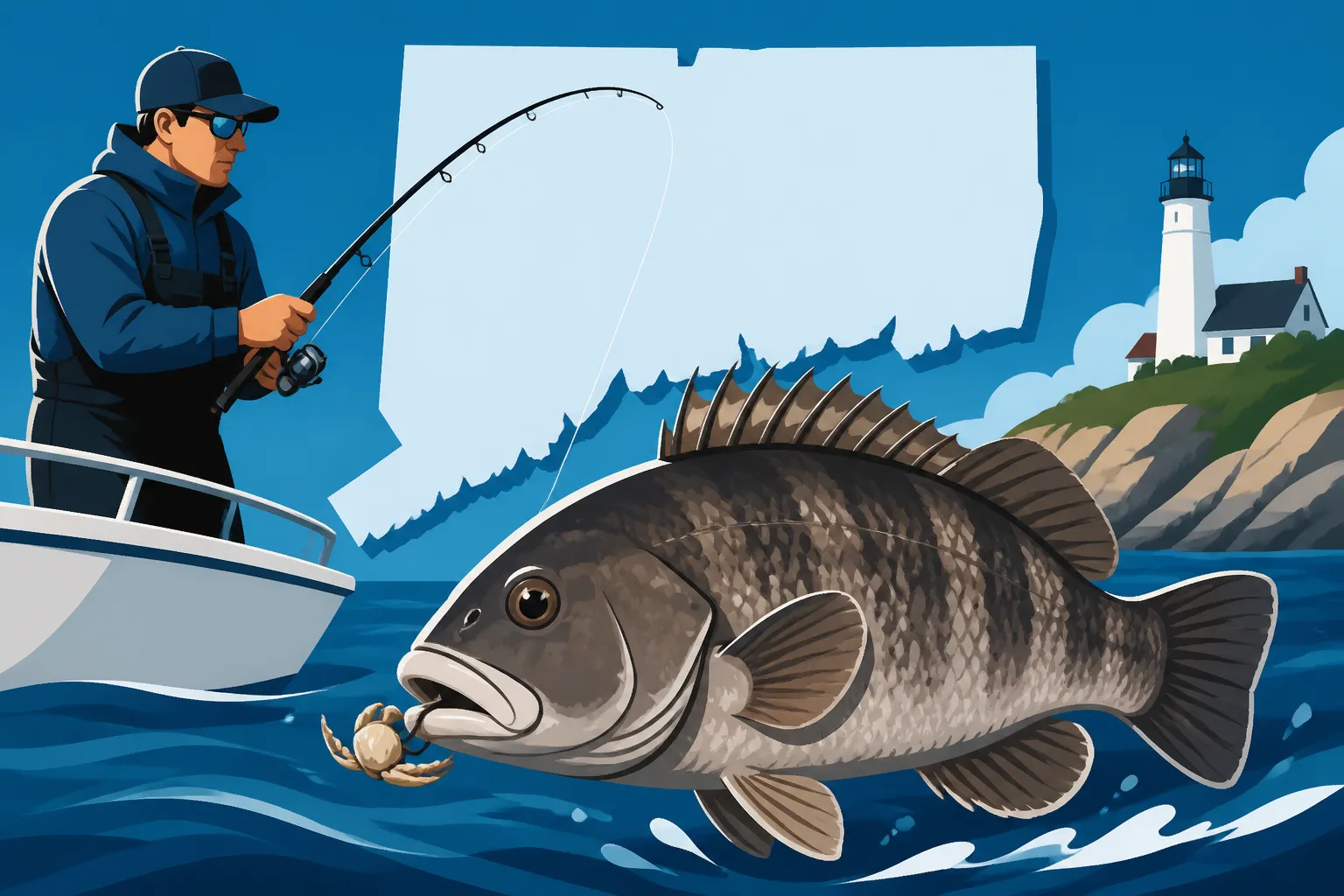
Distinguishing a tautog from other bottom fish is pretty straightforward once you know what to look for. They have a stout, somewhat blocky body, typically dark olive green to blackish in color, often mottled with lighter patches that help them blend seamlessly into rocky environments. Their most distinctive features are their thick, rubbery lips and prominent, buck-like teeth, which are perfectly adapted for crushing the shells of crabs, mussels, and other crustaceans they feed on. Inside, they have a set of grinding plates that further break down their meals. These fish can grow quite large, with true trophy specimens reaching double-digit weights, though most keepers you'll encounter are a few pounds. Their powerful tail and broad fins allow them to maneuver incredibly well in turbulent, rocky areas, and they use this to their advantage, often trying to "rock up" and break you off as soon as they're hooked.
Habitat Preferences and Seasonal Movements
Tautog are masters of their rocky domain. They absolutely love structure, and when I say structure, I mean anything from natural rock piles, ledges, and reefs to artificial reefs, wrecks, bridge pilings, and even old dock pilings. These areas provide both abundant food sources and crucial protection from predators and strong currents. You won't typically find tautog on sandy flats, though they might traverse such areas to get from one rocky patch to another.
Their movements throughout the year are largely dictated by water temperature. In the spring, as the water begins to warm in Long Island Sound, they move into shallower rocky areas to feed and spawn. This is a prime time for anglers to target them close to shore. As summer progresses and water temperatures climb, many tautog will move to deeper, cooler water, congregating on offshore reefs and wrecks. Then, in the fall, they make a significant return to shallower and mid-depth structures, often in large schools, for a feeding frenzy before the cold winter forces them back into deeper, more stable environments or into a state of semi-hibernation in deep crevices. Understanding these seasonal shifts is critical for locating them.
Their Role in Connecticut's Marine Ecosystem
Beyond being a prized sportfish, tautog play a vital role in the intricate ecosystem of Long Island Sound and Connecticut's estuaries. As opportunistic feeders, they help control populations of various invertebrates, including crabs, mussels, and barnacles, which could otherwise overpopulate certain areas. By preying on these organisms, they contribute to the health and balance of the marine environment, often cleaning structures that might otherwise become encrusted. Their presence is a good indicator of a healthy, biodiverse rocky habitat. They also serve as a food source for larger predatory fish, although their ability to hide deep within structure makes them a challenging meal for many. Blackfish Habits Around Structure delve deeper into how their behavior impacts the local ecology.
Essential Gear for Connecticut Tautog Fishing
Successfully landing a tautog isn't just about finding the fish; it's about having the right tools for the job. These are exceptionally strong fish for their size, and they fight dirty, immediately trying to wedge themselves into structure. Your gear needs to be robust enough to handle the initial shock of the bite and the subsequent tug-of-war. Trying to use lightweight freshwater tackle for tautog is a recipe for broken lines and lost fish, leading to inevitable frustration.
Rods and Reels for Tautog's Power
For tautog fishing, you need a rod with a strong backbone but a sensitive tip. A medium-heavy to heavy action conventional rod, typically 6.5 to 7.5 feet long, is ideal. The stout butt section provides the leverage needed to pull a fish away from structure, while a sensitive tip allows you to detect those subtle "taps" that tautog are famous for before they commit to the full bite. Many anglers prefer fiberglass or composite rods for their durability and parabolic bend under heavy load. Popular options include specialized jigging rods or those designed for bottom fishing.
Matching your rod with the right reel is equally important. A conventional (baitcasting) reel is almost universally preferred over spinning reels for tautog. The direct retrieve and cranking power of a conventional reel are superior for battling strong fish near abrasive structure. Look for a reel with a high retrieve ratio (for quick line recovery when a fish runs) and a smooth, powerful drag system. A reel that can hold at least 150-200 yards of 30-50 lb braided line is a good starting point. Brands like Penn and Shimano offer many suitable models. Remember, you're not just fighting the fish; you're often fighting the current and the structure too.
Line Choices: Braided vs. Monofilament
When it comes to fishing line for tautog, braided line is the overwhelming choice for most experienced anglers, and for good reason. Its virtually zero stretch provides unparalleled sensitivity, allowing you to feel every bump and tap, which is crucial for detecting those notoriously subtle tautog bites. The thin diameter of braided line also cuts through the water better, reducing current drag and helping your bait stay on the bottom. I typically recommend 30-50 lb test braided line.
While braid offers sensitivity, you absolutely need a fluorocarbon or heavy monofilament leader. Tautog have sharp teeth capable of fraying and breaking braid, and the abrasion resistance of fluorocarbon is essential when fishing around jagged rocks and wrecks. A 3 to 6-foot leader of 30-50 lb fluorocarbon is common, attached to your main line with a strong knot like an FG knot or an Albright knot. Some anglers prefer a short, heavy monofilament leader (60-80 lb) for even more abrasion resistance right near the hook, especially when fishing particularly gnarly spots. The minimal stretch of braided line is key to feeling the bite and getting that critical first turn of the reel to lift the fish.
Terminal Tackle: Hooks, Sinkers, and Rigs
Your terminal tackle needs to be as tough as your line and rod. For hooks, a strong, sharp, wide-gap hook is paramount. Sizes typically range from 1/0 to 5/0, depending on your bait size and the typical size of fish you expect to encounter. Offset shank hooks are popular, and many anglers are now opting for circle hooks, which can increase hook-up ratios in the corner of the fish's mouth, making for easier releases and reducing gut-hooking. Be sure to check Connecticut Circle Hook Requirement for Striped Bass as many anglers are moving towards these hooks for other species as well, reflecting a broader conservation ethic.
Sinkers will vary widely depending on current, depth, and target area. You’ll need a selection of bank, pyramid, or egg sinkers ranging from 1 to 8 ounces, sometimes even heavier in strong currents or deeper water. The goal is to get your bait to the bottom and keep it there without too much roll.
For rigs, the traditional two-hook tautog rig, often called a "dropper loop" or "hi-lo" rig, is a staple. This involves two snelled hooks tied off dropper loops, with a sinker at the bottom. The snells should be short, typically 4-6 inches, to keep the bait close to the bottom and prevent tangles. Another effective setup is a single-hook jig. Tautog jigs, often tipped with a piece of crab, can be incredibly effective in certain situations, especially for feeling those subtle bites. You can find a wide array of hooks, leaders, and sinkers on Amazon, often in bulk, which is helpful as you’ll inevitably lose some to the rocky bottom.
Baiting Up for Blackfish Success
Blackfish are notoriously picky eaters, but once you figure out their preferred meal, you're halfway to success. Their diet consists almost exclusively of crustaceans and shellfish, which their powerful jaws and teeth are perfectly designed to crush. Forget your typical fish baits; for tautog, it's all about the hard stuff.
The King of Baits: Green Crabs and Fiddler Crabs
Without a doubt, green crabs are the undisputed king of tautog baits in Connecticut. These small, hardy crabs are abundant in the local intertidal zones and are a natural food source for tautog. When using green crabs, you'll want to break them in half or quarters, depending on their size, and thread them onto your hook. The key is to expose some of the soft inner meat while still keeping enough shell to deter smaller nuisance fish.
Fiddler crabs are another exceptional bait, especially for those highly pressured tautog or when targeting smaller fish. They are smaller than green crabs and often harder to acquire in large quantities, but their natural movements and pungent scent can be irresistible. You might need to use smaller hooks (1/0 or 2/0) for fiddlers. The vibrant color and natural appeal of these crabs make them a go-to for serious tautog enthusiasts. Many tackle shops will carry these in season, but it's worth learning how to catch your own if you're serious about tautog fishing, and you can even find specialized crab rakes on Amazon to help you out.
Other Effective Baits: Hermits and Clams
While green crabs are king, don't overlook hermit crabs. These little guys live in discarded snail shells and are a fantastic bait, particularly for larger tautog. To use them, you'll need to crack their shells carefully to extract the soft, fleshy body. Once out, thread the entire body onto your hook, ensuring the point is well exposed. Hermit crabs have a strong scent and a very appealing texture to tautog.
Clams, especially surf clams or chowder clams, can also be effective, particularly if crabs are scarce or the tautog are in a feeding mood. They are softer and more susceptible to being picked apart by smaller fish, but their strong scent can draw in tautog. When using clams, use small pieces that fit your hook, making sure it’s securely attached. Some anglers will even use a piece of clam as a "teaser" above a crab bait. Understanding What blackfish eat around structure can really help you fine-tune your bait selection.
Bait Presentation Techniques
The way you present your bait to a tautog is just as crucial as the bait itself. Tautog are often in very tight to structure, and getting your bait right into their strike zone is paramount. When using a traditional bottom rig with a sinker, drop your bait directly onto the structure. Once it hits bottom, engage your reel immediately to prevent the current from sweeping your bait away or snagging it. Maintain a tight line so you can feel the subtle bites.
For jigging, you’ll typically tip a tautog jig with a piece of crab. Drop the jig to the bottom and work it with short, sharp lifts, letting it fall back to rest on the structure. This mimics a crab scuttling along the bottom. The key with both methods is to stay in contact with the bottom, but not get snagged. It’s a delicate balance of feeling the structure, feeling the bite, and lifting the fish quickly when it bites. When fishing from a boat, precise anchoring is vital to position yourself directly over the desired structure. For shore fishing, casting accurately to specific rock piles or submerged features is key.
Mastering Tautog Fishing Techniques
Tautog fishing is a game of patience, precision, and quick reflexes. These fish don't typically "slam" a bait; instead, they mouth it, crush it, and then often try to swim back into the safety of the rocks. Understanding these nuances and employing the right techniques can dramatically increase your success rate.
Bottom Fishing and Jigging Strategies
The most common and often most effective way to target tautog is through bottom fishing. This typically involves anchoring your boat directly over rocky structure or fishing from a pier or jetty that offers access to such areas. Once your bait is on the bottom, the challenge begins: distinguishing a bite from a snag. Tautog bites can range from a series of light taps to a slow, steady pull. You need to be ready to set the hook firmly the moment you feel a committed bite. Don't wait too long, or they'll either spit the bait or retreat into the structure. Some anglers find success by giving a slight, controlled lift of the rod tip every few seconds, allowing the bait to gently settle back, which can entice a hesitant fish.
Jigging for tautog has become increasingly popular, offering a more active and often more exciting way to catch them. Tautog jigs are typically heavy, compact jigs designed to be fished vertically. You'll tip these jigs with a small piece of crab, usually just enough to mask the hook point. The technique involves dropping the jig to the bottom, then lifting and dropping it with short, sharp motions. The idea is to make the jig and crab piece look like a natural, scuttling meal. Jigging allows for excellent bait control and can be incredibly effective when tautog are actively feeding. It also reduces snags compared to traditional rigs in some situations, as you're in direct contact with a single hook.
Fishing Around Structure: Wrecks, Reefs, and Rocks
Tautog are inextricably linked to structure. This means you need to be willing to fish in places where you will inevitably get snagged. Wrecks are fantastic tautog magnets, offering complex habitats and abundant food. When fishing a wreck, try to position your boat so you can drop your bait along the edges or directly into the structure, but be prepared to lose some tackle. Artificial reefs, often created by state agencies, are designed to attract fish and can hold large numbers of tautog. These can be incredible spots, but also require careful fishing to avoid snags.
Natural rock reefs and ledges are perhaps the most classic tautog habitat. You'll often find tautog stacked up in crevices and along the faces of these underwater features. The key is to identify these spots using a good fish finder and then position your boat or cast your bait precisely. Remember, tautog rarely stray far from their rocky homes. The moment you hook one, try to crank it up and away from the structure as quickly as possible, before it has a chance to burrow back in and fray your line. This is where the power of your rod and reel truly comes into play. Best Blackfish Charters in Connecticut often specialize in finding and effectively fishing these structural havens.
Shore-Based Tautog Opportunities
While many anglers target tautog from boats, there are some fantastic opportunities for shore-based tautog fishing in Connecticut. Piers, jetties, rock walls, and even certain rocky beach areas can hold good numbers of fish, particularly in the spring and fall when tautog move into shallower waters. The challenges are similar to boat fishing – getting your bait into the structure and extracting the fish – but with the added constraint of casting distance and angle.
When fishing from shore, a longer, heavier action spinning rod can be advantageous for casting heavier sinkers and baits. Accuracy is key; try to cast your bait as close as possible to visible structure, such as submerged rocks, bridge pilings, or the base of a jetty. Be prepared to lose some tackle here too, as snags are common. Many of the techniques like bottom fishing with green crabs remain the same, but you might need to use a slightly heavier sinker to hold bottom if there’s a strong current. Early morning or late evening often provide the best shore fishing opportunities when there is less activity and potentially more active feeding fish. Check out Best Shore Fishing Spots in Connecticut for ideas on where to start looking.
Navigating Connecticut's Tautog Regulations
Fishing for blackfish in Connecticut is a popular pastime, and to ensure the long-term health of the species, the state has implemented specific regulations. These rules can change, so it's always critical to consult the latest Connecticut DEEP Angler's Guide. Falling foul of the regulations can lead to hefty fines, so staying informed is paramount.
Understanding Blackfish Tautog Season Dates
Connecticut's tautog season is typically broken into distinct periods throughout the year, designed to protect the fish during sensitive times like spawning. For example, there might be a spring season, a summer closure, and then a longer, more productive fall season. These dates are crucial to know because fishing for tautog outside of the designated season is illegal. The exact dates can vary from year to year based on stock assessments and management decisions, so never assume. Always consult the official Connecticut Blackfish (Tautog) Season Dates directly from the Connecticut DEEP website or current fishing guide. Knowing these dates helps anglers plan their trips effectively and ensures they are contributing to sustainable fishing practices.
Minimum Length and Daily Creel Limits
Beyond season dates, there are strict rules regarding the minimum legal length a tautog must be to be harvested, and how many fish an individual angler can keep in a single day (the creel limit). The minimum length limit is in place to allow fish to reach sexual maturity and reproduce at least once before being removed from the population. This is a cornerstone of fisheries management. You'll need a reliable measuring device on hand to ensure your catch meets the legal requirements.
The daily creel limit dictates how many tautog you can possess. This limit is often lower than for other species, reflecting the conservation needs of tautog. It's not uncommon for the daily limit to change, or for there to be different limits during different parts of the season or depending on whether you're fishing from a private vessel versus a charter. For instance, sometimes the recreational limit is lower than the limit for a head boat with a captain and crew. Always double-check the Connecticut Blackfish minimum length limit and daily creel limits before you head out. These regulations are designed to prevent overfishing and maintain a healthy tautog population for future generations of anglers.
Circle Hook Requirements and Other Specific Rules
While not universally mandated for tautog, the use of circle hooks is often encouraged for all saltwater species due to their effectiveness in reducing gut-hooking and improving the survival rate of released fish. For other species like striped bass, circle hooks are explicitly required when fishing with bait. Even if not mandated for tautog, it's a practice many conservation-minded anglers adopt. A properly designed circle hook usually sets itself in the corner of the fish's mouth, minimizing damage and making for an easier, safer release.
Beyond specific hook types, always be aware of general saltwater fishing regulations. For instance, you will need a valid fishing license (though note that a marine waters fishing license is generally free for Connecticut residents, but you still need to register for it). Non-residents will typically need to purchase a license. Familiarize yourself with Connecticut Saltwater Fishing Regulations by Species for a full understanding of all relevant rules. There might also be rules about the maximum number of rods you can fish with, or specific gear restrictions in certain areas. It's your responsibility as an angler to know and follow these rules.
Top Blackfish Fishing Spots in Connecticut
Connecticut's coastline, estuaries, and offshore waters offer a wealth of opportunities for targeting blackfish. Knowing where to go is often half the battle, especially with a species so tied to specific types of underwater structure. From the eastern reaches of the state to the western borders, excellent tautog grounds abound, each with its own character and fishing challenges.
Productive Reefs and Ledges in Long Island Sound
Long Island Sound is a tautog paradise, dotted with countless natural reefs, rock piles, and submerged ledges that provide the perfect habitat for these crustacean-loving fish. These spots, often overlooked by those targeting pelagic species, are prime real estate for tautog. Some well-known areas that consistently produce include the numerous rock formations off the coasts of Niantic, Old Saybrook, and Clinton. Further west, the complex bottom contours near Norwalk and Greenwich also hold excellent numbers.
When targeting these areas, look for sudden depth changes on your fish finder, or rocky humps and ridges. Tautog will stack up on the leeward side of these structures, out of the main current, waiting for crabs and other food to drift by. Publicly available charts and bathymetric maps can help identify potential hotspots before you even leave the dock. Fishing these open water reefs often requires a boat sturdy enough to handle the Sound's conditions. Exploring these areas can lead to some truly epic tautog fishing. For a deeper dive into the Sound's offerings, consult the Long Island Sound Fishing Guide.
Tidal Rivers and Harbors Offering Tautog
While often associated with offshore reefs, tautog also venture into the lower reaches of Connecticut's tidal rivers and harbors, especially during the spring and fall migrations. Areas around the mouths of the Connecticut River, the Housatonic River, and the Thames River can be surprisingly productive. Here, tautog will congregate around bridge pilings, jetties, rock walls, and even submerged debris. These locations offer a slightly different fishing experience, often with strong tidal currents that require heavier sinkers.
Harbors also provide excellent, sometimes more protected, tautog fishing. Think about the rocky breakwaters in Bridgeport, New Haven, and Stonington harbors. These man-made structures provide ideal habitat. Fishing these areas can sometimes be done from smaller boats or kayaks, offering a great option for anglers without access to larger vessels. The tautog in these areas might be slightly smaller on average than their offshore counterparts, but they're still feisty fighters and can provide plenty of action. Just be mindful of local boating traffic and navigation channels.
Shoreline Access Points and Piers
For anglers who prefer to keep their feet on solid ground, Connecticut offers several excellent shoreline access points and public piers where tautog can be caught. Jetties and rock walls, particularly those extending into deeper water or adjacent to strong currents, are prime targets. The fishing piers in places like Milford, New Haven, and Old Saybrook can provide access to productive rocky bottoms. Even some public beaches with rocky outcrops or groins can hold tautog, especially during the cooler months.
When fishing from shore, pay close attention to the tides. Incoming and outgoing tides can both be productive, as the moving water brings food to the fish. Positioning yourself to cast close to structure is vital. Remember that while shore fishing is accessible, it often comes with its own set of challenges, including limited casting angles and the potential for snags. However, the thrill of landing a strong tautog from shore is incredibly satisfying. Best Shore Fishing Spots in Connecticut can give you some specific locations to explore. Always respect private property and be mindful of other users in these public access areas.
Best Times and Tides for Tautog
Tautog fishing isn't just about location and bait; it's also about timing. These fish are highly influenced by the rhythms of the ocean, particularly tides and water temperature. Understanding these factors can transform a slow day into a banner one.
Tidal Influence on Tautog Behavior
Tides are arguably the most critical factor in successful tautog fishing. Unlike some species that might prefer slack tide, tautog generally become more active feeders during moving water, whether it's an incoming or outgoing tide. The moving current stirs up the bottom, dislodges crustaceans, and brings food directly to the tautog hiding in their rocky lairs. Many experienced tautog anglers will tell you that the best fishing occurs during the middle hours of a strong tide, just after the slack and before the next slack.
However, certain spots might fish better on an incoming tide, while others are more productive on an outgoing. This often depends on how the current interacts with the specific structure you're fishing. It's worth keeping a fishing log to note which tides produce best at your favorite spots. The ebb and flow of the tides also determine how much weight you'll need to hold bottom, directly impacting your presentation. Fishing at slack tide can sometimes be productive, especially in very deep water or around wrecks, but generally, a good push of water will get the tautog actively feeding.
Seasonal Peaks for Tautog Fishing
While you can technically catch tautog during specific seasons in Connecticut, there are definite peak periods when the fishing is at its absolute best. The spring season, typically opening in April, sees tautog move into shallower, more accessible waters as they prepare to spawn. They are often hungry after a long winter and can be quite aggressive. This is an excellent time for both boat and shore anglers.
The fall run, however, is often considered the prime time for tautog. From late September through November, and sometimes even into December if the water stays mild, tautog congregate in large schools and feed heavily in preparation for winter. They are often found in good numbers and are very aggressive, making this the ideal time to target trophy-sized fish. During these fall months, fishing can be exceptional on both inshore and offshore structures. The summer months, with their warmer water, tend to push tautog into deeper, cooler offshore haunts, making them a bit harder to find for the average angler.
Weather and Water Conditions
Like all fishing, weather and water conditions play a significant role in tautog success. A steady barometer and stable weather patterns are generally preferred. Drastic changes in weather, like a sudden cold front or a major storm, can temporarily shut down the bite. Overcast days with a light chop can sometimes be very productive, as the reduced light penetration might make tautog more comfortable moving out of heavy cover to feed.
Water temperature is, of course, a huge factor. Tautog are cold-blooded, and their metabolism and activity levels are directly tied to the temperature of the water. They are most active in water temperatures ranging from the mid-40s to the low 60s Fahrenheit. If the water gets too cold (below 40F) or too warm (above 70F), they tend to become sluggish or move to more favorable depths. Water clarity can also be a factor; while tautog don't rely heavily on sight, extremely muddy water can make it harder for them to locate your bait by scent. A moderate level of water clarity is generally preferred.
Conservation and Responsible Tautog Angling
As dedicated anglers, we all share a responsibility to protect the fish we pursue and the environments they call home. Tautog are a valuable resource, and practicing responsible angling ensures that future generations can enjoy the thrill of catching these hard-fighting bottom dwellers. It’s about more than just following the rules; it’s about a mindset.
Catch and Release Best Practices
Even when you're allowed to keep fish, sometimes you catch a tautog that's either too small, too large (trophy fish are important breeders), or you've simply caught enough for dinner. When releasing a tautog, minimizing stress and injury is key. Handle the fish as little as possible. If using a circle hook, it often hooks the fish in the jaw, making for an easy removal with a dehooker or pliers. Avoid dragging the fish onto dry land or concrete; if possible, keep it in the water or use a wet mat or net.
Support the fish horizontally, especially larger ones, to avoid damaging internal organs. If the fish is "venting" (air coming out of its vent), it likely needs to be recompressed. A common issue with bottom-dwelling fish brought up from deeper water is barotrauma, where expanding gases in their swim bladder prevent them from swimming back down. In these cases, a "fizzing" tool (a hollow needle designed to carefully release air from the swim bladder) or a descending device can be used to help the fish return to depth. However, this is a skill best learned from an experienced angler to avoid harming the fish. Always aim for a quick, gentle release.
Minimizing Impact on Sensitive Habitats
Tautog thrive in rocky, structured environments, which are often sensitive marine habitats. When fishing, be mindful of your anchor. Try to anchor on sandy patches near structure rather than directly on delicate reef systems or mussel beds. If you're snagged, try to retrieve your tackle without disturbing the bottom more than necessary. Using environmentally friendly sinkers (like those made of steel or bismuth, rather than lead) is another way to reduce your impact, especially in areas with heavy snagging.
Avoid leaving any trash, discarded line, or bait containers behind. "Pack it in, pack it out" is a golden rule of responsible angling. Discarded fishing line, in particular, can be a major hazard to marine wildlife, causing entanglements. Keeping these habitats clean and pristine benefits not only the fish but also all other marine life that depends on them. This includes being careful with your boat's wake in shallow, sensitive areas.
Reporting and Community Involvement
One of the best ways to contribute to tautog conservation is by actively participating in the scientific monitoring efforts. The Connecticut DEEP often relies on angler reports to gather data on fish populations. This can involve reporting your catch (even if released), providing information about fishing effort, or noting any unusual observations. This data helps fisheries managers make informed decisions about seasons, limits, and overall management strategies.
Consider joining local fishing clubs or conservation organizations. These groups often work with state agencies to advocate for healthy fisheries, participate in habitat restoration projects, and educate the public on responsible angling practices. Being part of a community that cares about the future of Connecticut fishing is a powerful way to make a difference. Every angler has a role to play in ensuring that species like tautog continue to thrive in Long Island Sound. Don't forget, understanding Connecticut Fishing License Guide for 2026 and its renewals helps fund these important conservation efforts.
Disclaimer
This article is for general informational purposes only and does not constitute professional advice. Laws, prices and regulations vary by location and change over time. Consult a qualified professional for guidance on your specific situation.