Connecticut fishing license reciprocity on the Connecticut River with Massachusetts
Oh, the Connecticut River! It’s such a magnificent waterway, carving its way through our beautiful state and offering some truly incredible fishing opportunities. But let's be real, whenever a major river forms a border between states, it instantly creates a headache for anglers trying to figure out which fishing license they actually need. It’s a common frustration, and many a fishing trip has been cut short by uncertainty or, worse, a run-in with a conservation officer. This guide is here to clear up that confusion, specifically regarding fishing license reciprocity on the Connecticut River between Connecticut and Massachusetts, so you can focus on reeling in that next big catch without a worry.
Understanding Reciprocity: The Connecticut River's Unique Status
The concept of "reciprocity" when it comes to fishing licenses on border waters sounds simple, right? You'd think that if a river flows between two states, a license from either state should cover you for the entire shared stretch. Unfortunately, that's often a hopeful assumption rather than a legal reality, and the Connecticut River between our two states is a prime example of why you can't just assume. Ignoring these specific rules can land you in a heap of trouble, potentially facing fines or even the confiscation of your gear, which is nobody's idea of a fun day out.
The Myth vs. Reality of Border Waters
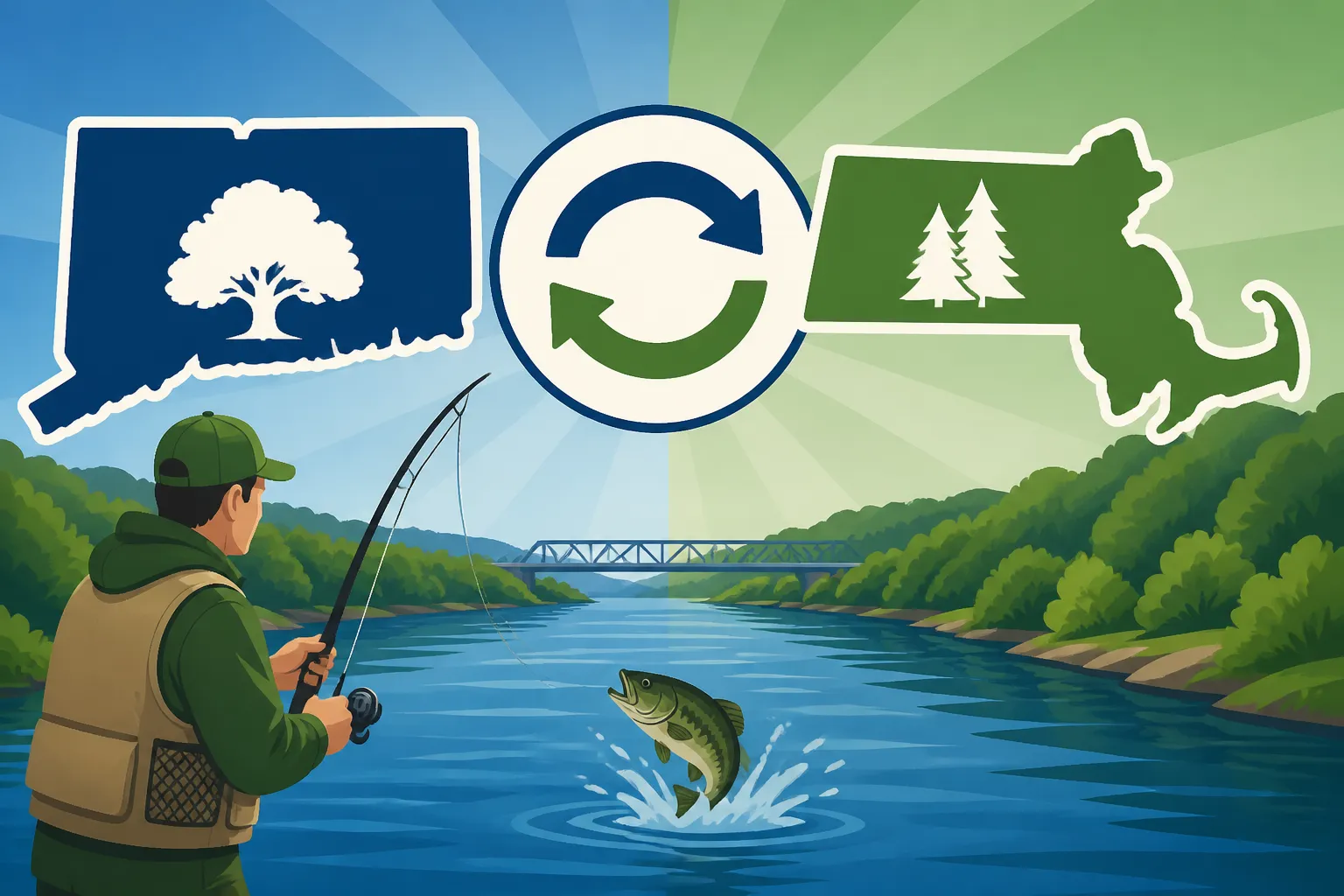
Many anglers, especially those new to fishing or new to the area, often hear whispers of "reciprocity" on boundary waters. They imagine a magical line down the middle of the river where one license ends and another begins, or even better, that a single license covers both sides. While some states do have formal reciprocity agreements for shared waterways, allowing anglers with a valid license from either state to fish the entire body of water, Connecticut and Massachusetts do not have such an agreement for the Connecticut River. This is a crucial distinction that can save you a lot of grief. The reality is that if you are fishing in Connecticut waters, you need a Connecticut fishing license. If you are fishing in Massachusetts waters, you need a Massachusetts fishing license. It's as simple, and as complicated, as that. The river, despite flowing seamlessly, is legally divided.
Specific Connecticut-Massachusetts Border Details
So, where exactly is this invisible line on the Connecticut River? From a legal standpoint, the state line between Connecticut and Massachusetts crosses the Connecticut River at a specific point near the town of Enfield, Connecticut, and Longmeadow, Massachusetts. North of this line, you are in Massachusetts. South of this line, you are in Connecticut. This means that if you launch your boat in Connecticut and motor north across that invisible line into Massachusetts waters, you are technically required to possess a valid Massachusetts fishing license, in addition to your Connecticut one if you plan to fish in both. The same goes for Massachusetts anglers heading south.
It’s not just about where your boat is floating, either. It’s also about where your line is in the water. If you’re standing on the Connecticut side of the river, casting into what you think might be Massachusetts water, you need to be very mindful. Generally, if you are physically in Connecticut, your line and lure need to be in Connecticut waters if you only possess a Connecticut license. This can be tricky, especially with long casts, and it’s a big reason why clarity is so important. Getting a good waterproof map of the river, perhaps one you can find on Amazon, that clearly marks the state lines can be incredibly helpful in understanding these boundaries.
Connecticut Fishing License Requirements for the Connecticut River
If you’re planning to fish the Connecticut River within our state's boundaries, you absolutely need a Connecticut fishing license. This isn't just a suggestion; it's a legal requirement. Our state takes its conservation efforts seriously, and proper licensing is a cornerstone of funding these crucial programs, from stocking trout to monitoring fish populations. Ignoring this requirement can lead to significant penalties, as detailed in the article on Fishing Without a License in Connecticut: Penalties.
Resident and Non-Resident Licenses
Connecticut offers various types of fishing licenses, and for the Connecticut River, you'll generally be looking at an inland fishing license, or potentially an All-Waters license if you also plan to hit the marine district. The primary distinction will be whether you are a resident or a non-resident of Connecticut.
- Connecticut Resident Inland Fishing License: If you are a bona fide resident of Connecticut, meaning you've lived here for a specified period and meet other criteria, you'll purchase a resident inland fishing license. This covers you for all freshwater fishing within Connecticut, including the Connecticut River within our borders. You can find more details on our Connecticut Fishing License Guide for 2026.
- Connecticut Non-Resident Inland Fishing License: For those visiting our beautiful state, a non-resident inland fishing license is required. This grants you the same privileges as a resident license for freshwater fishing in Connecticut. The costs differ significantly between resident and non-resident options, which is thoroughly explored in Resident vs Nonresident Fishing License Costs in Connecticut.
It’s vital to understand that simply being a Connecticut resident doesn't mean your Connecticut license is valid in Massachusetts waters, even on the Connecticut River. It's a common misconception that because it's "the same river," the rules blur. They don't. The moment your line or boat crosses into Massachusetts territory, you're subject to their regulations.
When a Massachusetts License Might Apply (or Not)
For a Connecticut angler, a Massachusetts fishing license would only apply if you intend to fish in the Massachusetts portion of the Connecticut River. This isn't a reciprocal agreement that lets your CT license cover MA waters. Instead, it's about adhering to the laws of the state you are actively fishing in.
- When a Massachusetts License Would Apply: If you launch your boat in Enfield, head north past the state line, and decide to drop a line near Longmeadow, MA, you must have a valid Massachusetts fishing license. Similarly, if you decide to take a road trip and fish from shore or launch a boat from a Massachusetts access point on the Connecticut River, you'll need a MA license. Think of it this way: wherever you are physically fishing, that state's license is required.
- When a Massachusetts License Wouldn't Apply: If you are exclusively fishing the Connecticut River within Connecticut state lines – say, downstream from Enfield near Hartford or Middletown – then a Massachusetts license is completely irrelevant. Your Connecticut license covers you. You can learn more about the different license types in Connecticut Inland vs Marine vs All-Waters License, Explained.
Always remember to check the current year’s regulations for both states. Regulations can change, and what was true last year might not be true this year. A quick glance at the Reading the Connecticut Fishing Guide or the MassWildlife guide can save you from an awkward conversation with a warden.
Massachusetts Fishing License Requirements for the Connecticut River
Just like Connecticut, Massachusetts has its own set of rules and requirements for anglers looking to enjoy the freshwater fisheries within its borders, including the Connecticut River. If you're coming from the Massachusetts side and venturing onto the Connecticut River, you need to be aware of what's expected of you.
Massachusetts Inland Fishing License Basics
Massachusetts, similar to Connecticut, distinguishes between residents and non-residents for its fishing licenses. These licenses are essential for anyone fishing the freshwater portions of the Connecticut River that lie within the Commonwealth's jurisdiction.
- Massachusetts Resident Freshwater Fishing License: For residents of Massachusetts, this license covers all freshwater fishing in the state. If you live in Massachusetts and fish the Connecticut River, this is your go-to license. This will allow you to fish from the MA shoreline or from a boat within MA waters on the Connecticut River.
- Massachusetts Non-Resident Freshwater Fishing License: If you are visiting Massachusetts, perhaps from Connecticut or another state, and wish to fish the MA portion of the Connecticut River, you'll need a non-resident freshwater fishing license.
It's really important to stress that these licenses are not interchangeable across the state line. Your Massachusetts license will not protect you if you drift into Connecticut waters and drop a line, even for a moment. Law enforcement officers are vigilant about these boundaries, and ignorance of the law is never an excuse. Many anglers find it useful to keep a digital copy of their license on their phone (in addition to a physical one, if available) for easy access, much like how you might store a backup on your phone from an Amazon order confirmation. Our article on Printing or Carrying a Digital Fishing License in Connecticut has some great tips on this.
Navigating the Border from the Massachusetts Side
For Massachusetts anglers, the challenge is understanding exactly where their MA license stops being valid and a CT license becomes necessary. The Massachusetts portion of the Connecticut River extends south until it reaches that invisible state line near Enfield, CT.
- Fishing North of the Line: If you're launching from a Massachusetts boat ramp, such as those found in Agawam, Springfield, or Hadley, and you stay north of the state line, your MA freshwater fishing license is all you need. You can enjoy the river's bounties without concern for Connecticut regulations.
- Crossing the Line into Connecticut: If you navigate your boat south across the state boundary, even just a few yards, and intend to fish, you are legally obligated to possess a valid Connecticut fishing license. This applies whether you're anchored, drifting, or trolling. The game wardens from both states are typically familiar with this stretch of river and the jurisdictional lines. It's not uncommon for them to patrol these areas, so don't risk it.
To help visualize this, imagine a busy highway with a state line. You wouldn't expect your driver's license from one state to cover you if you violate a law in another state, just because you're on the same road. Fishing licenses work similarly in this border situation.
Practical Scenarios and Common Questions
The legalities of state borders on a shared waterway can be a real head-scratcher. Let’s look at some common scenarios to make this more concrete and help you avoid any accidental infringements.
Fishing from a Boat on the Connecticut River
This is perhaps the most common source of confusion for anglers on the Connecticut River. When you're in a boat, you have mobility, which means you can easily cross state lines without even realizing it sometimes.
- Scenario 1: Launching in CT, Staying in CT Waters: If you launch your boat from a Connecticut access point (e.g., Enfield, Windsor Locks, or Middletown) and stay south of the state line, you only need a Connecticut fishing license. Ensure your boat is also properly registered in Connecticut, following Connecticut Boating Laws for Anglers.
- Scenario 2: Launching in MA, Staying in MA Waters: Similarly, if you launch from a Massachusetts access point (e.g., Longmeadow or Springfield) and stay north of the state line, you only need a Massachusetts fishing license.
- Scenario 3: Crossing the Border While Boating: This is where it gets tricky. If you launch in Connecticut and plan to motor north into Massachusetts waters to fish, or vice-versa, you must have both a valid Connecticut fishing license AND a valid Massachusetts fishing license. This is not reciprocity; it's simply having the correct license for the waters you are actively fishing in. For example, if you're targeting specific fish that are more prevalent in one state's portion of the river, you need to be licensed for that area. It's a pain, no doubt, but it's the law. Many anglers will purchase a yearly license for their home state and then a short-term, such as a 3-day or 7-day, non-resident license for the other state if they only plan occasional cross-border trips. You can learn more about license costs in How Much Does a Connecticut Fishing License Cost.
Shore Fishing on Both Sides of the River
Shore anglers might feel less exposed to this border issue, but it's just as important. Your physical location on land determines which state's laws apply to you, regardless of how far your cast reaches.
- Scenario 1: Fishing from the Connecticut Shoreline: If your feet are on Connecticut soil, you need a Connecticut fishing license. Even if your cast goes way out into the main channel, as long as you're physically in Connecticut and your line is technically in Connecticut waters (which, for a river of this size, it likely is when casting from shore), you're covered.
- Scenario 2: Fishing from the Massachusetts Shoreline: If you decide to fish from a park or access point on the Massachusetts side of the river, you must have a Massachusetts fishing license. Again, your physical location dictates the primary jurisdiction.
It's incredibly important to note that you cannot stand on one state's shore and intentionally cast into the other state's waters without the appropriate license for that other state. While hard to enforce perfectly, the spirit of the law is clear: you need permission from the state whose resources you are utilizing. Always ensure your gear, including your tackle box and any specialized items you might have purchased from Amazon, is legally compliant for the waters you're fishing.
When in Doubt, Buy Both
Seriously, folks. If you frequently fish the stretch of the Connecticut River near the state line, or if you plan an extended trip where you might be exploring both sides, the safest and most stress-free option is to simply purchase a fishing license for both Connecticut and Massachusetts.
It might feel like an extra expense, and yes, it is. But consider the alternative: the anxiety of constantly checking your GPS, wondering if you've drifted across the line, or worse, the potential cost of a citation and fine, which will almost certainly outweigh the cost of a second license. Many experienced anglers who frequent border waters operate on this principle. Having both licenses gives you absolute freedom to navigate and fish anywhere on that shared stretch without a second thought about jurisdiction. It’s the ultimate peace of mind. You can typically purchase these licenses online, which is often the easiest way. For Connecticut, you can find out Where and How to Buy a Connecticut Fishing License.
Key Takeaways and Best Practices
Navigating the nuances of fishing regulations, especially across state lines, can be daunting. But a little preparation goes a long way in ensuring your time on the water is enjoyable and free of legal worries.
Always Carry Your License
This might seem obvious, but you’d be surprised how many anglers leave their license in the truck, or assume a digital copy isn't sufficient. Whether it's a physical card tucked into your wallet or a clear, accessible digital copy on your phone, always have proof of your valid fishing license(s) on you while fishing. Conservation officers are well within their rights to ask for it, and not having it can lead to delays, frustration, or even a citation. Think of it like your driver's license; you wouldn't drive without it. Fishing is no different. You might even consider a waterproof license holder, readily available on Amazon, to protect your paper copy from the elements.
Here's a quick reference table for clarity:
| Location of Angler/Line | Has CT License Only | Has MA License Only | Has BOTH CT & MA Licenses |
|---|---|---|---|
| Physically in CT waters | Legal | Illegal | Legal |
| Physically in MA waters | Illegal | Legal | Legal |
| Shore fishing in CT | Legal | Illegal | Legal |
| Shore fishing in MA | Illegal | Legal | Legal |
Stay Informed
Fishing regulations are not static. They can change annually, and sometimes even mid-season, depending on species management needs, environmental factors, or legislative updates. It's your responsibility as an angler to stay up-to-date on the current rules for any waterbody you plan to fish.
- Connecticut DEEP: For Connecticut-specific regulations, always refer to the official Connecticut Department of Energy and Environmental Protection (DEEP) website or their annual fishing guide. They often have an online interactive map and digital versions of their guide.
- Massachusetts Division of Fisheries and Wildlife (MassWildlife): For Massachusetts regulations, the MassWildlife website is your official source. They also publish an annual freshwater fishing guide.
A quick check of these resources before you head out, especially if you haven't fished a particular area in a while, can prevent a lot of headaches. It's better to spend five minutes reviewing the rules than to spend hours dealing with the consequences of not knowing them. Remember, these guides also cover specific species regulations, creel limits, and seasonal closures that might apply regardless of your license reciprocity situation.
Fishing the Connecticut River, whether from our side or our neighbor's, is an incredible experience. It's teeming with various species, from striped bass pushing upriver to smallmouth bass holding in rocky currents, and of course, countless panfish. By understanding and respecting the state lines and license requirements, you ensure that you're contributing to the conservation efforts that make this fishery so vibrant and that your day on the water remains truly relaxing and rewarding. Tight lines, everyone!
Disclaimer
The information provided in this guide is for general informational purposes only and is subject to change. While we strive to keep the content accurate and up-to-date, fishing regulations and licensing requirements can vary. It is the responsibility of each angler to consult the official websites of the Connecticut Department of Energy and Environmental Protection (DEEP) and the Massachusetts Division of Fisheries and Wildlife (MassWildlife) for the most current and authoritative rules and regulations before engaging in any fishing activity.