Where chain pickerel live in Connecticut
Feeling a bit lost when it comes to tracking down those toothy, aggressive chain pickerel in Connecticut? You're certainly not alone! Many anglers, myself included, have spent countless hours casting into promising waters only to come up empty-handed because we weren't truly understanding where these feisty predators prefer to set up shop. This guide is all about pinpointing exactly where chain pickerel live in Connecticut, delving into their favorite habitats, the types of waters they call home, and how their locations shift with the seasons, so you can spend less time guessing and more time reeling them in.
Understanding Chain Pickerel Habitat Preferences
Chain pickerel are fascinating fish, and to truly find them consistently, you have to think like one. They aren't random wanderers; they have very specific preferences when it comes to their environment, driven by their ambush predator nature. If you can identify these key habitat characteristics, you'll be well on your way to a successful day on the water.
The "Weed Dweller" Reputation: Why They Love Vegetation
When you hear "chain pickerel," the first thing that should pop into your mind is "weeds." These fish are the undisputed kings of the aquatic jungle. They thrive in areas with dense vegetation, whether it's lily pads, cattails, submerged grass beds, or even thick algae mats. This isn't just a preference; it's a survival strategy. Pickerel are ambush predators, meaning they lie in wait, perfectly camouflaged, ready to dart out and snatch an unsuspecting baitfish or frog that swims by. The intricate network of aquatic plants provides them with the perfect cover for these stealthy attacks.
Imagine a calm summer day on a Connecticut pond. You see a vast expanse of lily pads reaching out from the shore, their broad leaves dappling the water's surface. Beneath those pads, in the shadowed lanes and pockets, a pickerel is likely lurking, blending seamlessly with the stems. If you're not casting into or along the edges of these types of areas, you're missing out on a huge percentage of the pickerel population. The frustration of casting into open water when the fish are buried deep in the greenery is real, and understanding this preference is your first major step towards success. You can dive deeper into their behaviors in Chain Pickerel Habits in Connecticut Ponds.
Depth and Water Clarity: What Kind of Water They Prefer
While pickerel love weeds, they're not necessarily deep-water dwellers, especially not like some of our cold-water trout species. You'll typically find chain pickerel in relatively shallow water, often ranging from just a few feet down to about 10-15 feet, depending on the weed lines and available cover. They appreciate slower-moving or still water, which is why ponds, shallow lakes, and the backwaters of rivers are their prime real estate. Fast, turbulent currents usually don't hold many pickerel, as it's hard for them to maintain their ambush positions in such conditions.
Water clarity is another interesting factor. While they can tolerate some stained or murky water, they generally prefer waters with at least moderate clarity. This allows them to effectively spot their prey and utilize their camouflage. Heavily turbid or muddy conditions can make their ambush tactics less effective, driving them to clearer pockets or slightly deeper, less affected areas. Don't worry too much about pristine clear water, though; many excellent pickerel spots in Connecticut have a slight tea stain from tannins in the water, which can actually enhance their camouflage!
Forage and Ambush Points: How Their Hunting Style Dictates Location
The pickerel's hunting style is entirely about ambush, and their preferred locations reflect this. They need two main things: abundant forage and prime ambush points. Their diet consists mainly of smaller fish like minnows, juvenile perch, sunfish, and shiners, but they're opportunistic and will also strike at frogs, crayfish, and even small rodents or birds that fall into the water. Therefore, areas that concentrate these prey species are pickerel magnets.
Think about areas where these baitfish congregate. This could be shallow flats where minnows spawn, the edges of drop-offs where baitfish school, or around any structure that provides shelter for smaller fish. The "ambush point" itself is usually a blend of heavy cover and a strategic location. A gap in a lily pad field, the dark shadow of an overhanging tree limb, or a submerged log near a weed edge—these are all classic pickerel lies. When you're scouting a new spot, ask yourself: "If I were a small baitfish, where would I feel safe? And if I were a pickerel, where would I wait to surprise that baitfish?" Your answers will often lead you to the right spots. Having a good pair of polarized sunglasses, which you can find on Amazon, can greatly aid in spotting these crucial ambush points.
Prime Freshwater Locations for Chain Pickerel in Connecticut
Connecticut is blessed with a fantastic variety of freshwater habitats, and many of them are absolutely crawling with chain pickerel. Knowing the types of places to target will significantly boost your chances. Remember, a valid Connecticut Fishing License Guide for 2026 is essential before you head out!
Key Lakes and Ponds: Specific Examples and What Makes Them Good
When it comes to pickerel fishing, Connecticut's numerous lakes and ponds are your bread and butter. These still-water bodies often provide the perfect combination of shallow depths, extensive weed growth, and ample forage. Many of the best pickerel lakes are not necessarily the deepest or clearest; rather, they are the ones with fertile bottoms that support lush aquatic vegetation.
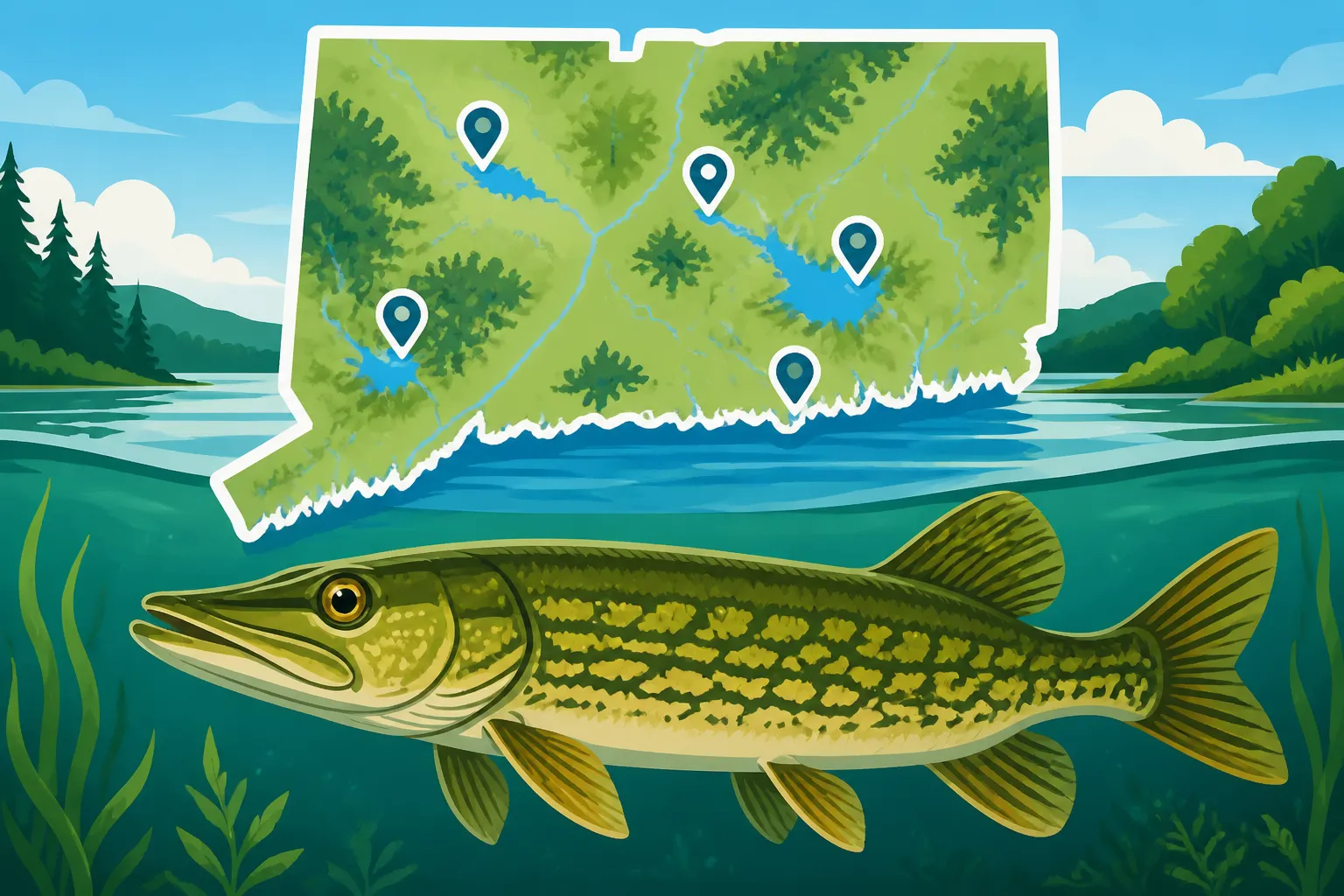
Consider waters like Bantam Lake in Litchfield, which is renowned not just for its pike, but also its healthy pickerel population, especially in its weed-choked bays and shallower coves. Bashan Lake in East Haddam, Gardner Lake in Salem/Bozrah/Montville, and Mansfield Hollow Lake in Mansfield are other excellent choices. What makes these good? They all feature expansive shallow areas with abundant weeds, lily pads, and submerged timber. Picture casting a bright spinnerbait or a live shiner along the edge of a massive weed line that extends for hundreds of yards, or popping a topwater frog over a mat of lily pads – those are the scenarios where pickerel shine. For more ideas on where to go, check out Best Fishing Lakes in Connecticut and Best Pickerel Ponds in Connecticut. These are typically waters where you might also find panfish, so don't be surprised if you hook a chunky bluegill while targeting pickerel.
Slow-Moving Rivers and Backwaters: How Rivers Fit the Bill
While pickerel prefer still water, they can certainly be found in rivers, particularly in the slower-moving sections, oxbows, backwaters, and coves that offer a respite from the main current. These riverine habitats often mimic pond environments with their calmer flows and propensity for accumulating vegetation and fallen timber.
Think of the lower sections of rivers like the Housatonic, Connecticut River tributaries, or even the slower stretches of the Shetucket River. You won't find many pickerel in the raging rapids of a trout stream, but as the river widens, slows, and creates eddies or marshy fringes, that's where pickerel move in. Look for areas where the river widens into a bay-like section, or where a small feeder creek creates a slower pocket of water. These areas often have extensive reeds, cattails, and submerged grass, providing that crucial cover. A canoe or kayak can be incredibly effective for navigating these types of river sections, allowing you to quietly access hidden pockets that shore anglers can't reach. If you're looking for more details on general river fishing, take a look at Best Fishing Rivers in Connecticut.
Hidden Gems and Lesser-Known Spots: Encouraging Exploration
Beyond the well-known lakes and ponds, Connecticut has countless smaller, unnamed ponds, farm ponds, and even beaver ponds that are absolutely teeming with pickerel. These spots often receive less fishing pressure and can offer incredible action. The key is to do a little exploring. Many of these smaller waters are found within state forests, wildlife management areas, or even by simply looking at satellite maps.
These hidden gems often have all the prime pickerel habitat: shallow depths, abundant weeds, and plenty of forage. Access might be walk-in only, or require a small car-top boat or inflatable kayak. Don't be afraid to pull over and check out a promising-looking pond you see from the road, as long as it's public land or you have permission. These overlooked waters can be incredibly rewarding, offering not only great fishing but also a sense of discovery and solitude. Just make sure you understand Connecticut Fishing Regulations Explained for any water body you plan to fish, even if it's small and obscure.
Identifying Pickerel-Friendly Structures and Cover
Finding the right body of water is one thing, but once you're there, you need to be able to identify the specific micro-habitats where pickerel are most likely to be holding. These fish are masters of camouflage and ambush, always positioning themselves to strike.
Submerged Vegetation: Weeds, Lily Pads, and Grass Beds
As we've touched on, vegetation is paramount. Pickerel don't just "like" weeds; they live in them. When you're on the water, actively look for different types of aquatic plants. Lily pads are iconic pickerel cover, especially the edges and pockets within large mats. Cast a weedless lure right into those openings. Submerged grass beds, especially those with varying heights and open lanes, are also fantastic. These can often be identified by patches of slightly darker water or by the way your lure snags lightly as it passes through.
Cattails and reeds along the shoreline are prime targets too, particularly where they meet deeper water or form small points. Don't overlook patchy weed beds either; sometimes the most productive spots are where a dense bed transitions to sparser growth, creating an edge for the pickerel to patrol. This transition zone is a classic ambush point. When you're shopping for lures, look for weedless options that can be found on Amazon to avoid constant hang-ups. For more on tactics, see How to catch pickerel through thick weeds.
Wood Structure: Laydowns, Brush Piles, and Stumps
While vegetation is their primary home, chain pickerel are also drawn to wood structure, especially in waters where plant growth might be less dense. Fallen trees (laydowns), brush piles, and stumps provide similar benefits to weeds: cover, shade, and ambush points. These structures often attract baitfish, creating a ready-made buffet for a lurking pickerel.
When you see a large tree that's fallen into a lake, creating a complex web of branches underwater, that's a prime target. Work your lure slowly around the submerged branches, pausing in any pockets or openings. Similarly, old dock pilings, submerged logs, and even scattered debris can hold fish. These hard structures often provide a bit more depth than shallow weed beds, which can be important during hot summer days or when fish are less active.
Man-Made Features: Docks, Bridges, and Culverts
Pickerel aren't shy about using man-made structures for cover either. Docks, especially older ones with lots of pilings and submerged planks, can be excellent ambush points. The shade they provide also offers a cooler spot during sunny days. Cast parallel to the dock, or skip lures underneath it if you can.
Bridges that span small rivers or connecting waterways often create current breaks and eddies, which can attract baitfish and, consequently, pickerel. The pilings themselves provide vertical structure and shade. Culverts, especially where they connect two ponds or a pond to a slow-moving stream, can also concentrate fish, particularly during periods of water flow. These structures, much like natural wood, offer vertical cover and provide strategic points from which to launch an attack.
Here's a quick reference table for pickerel habitats:
| Habitat Type | Description | Key Characteristics | Best Times to Fish |
|---|---|---|---|
| Dense Weed Beds | Lily pads, submerged grasses, cattails, reeds | Shallow, oxygen-rich, abundant forage | Spring, Summer, Fall (daytime) |
| Fallen Trees/Brush | Laydowns, submerged logs, brush piles | Provides cover, shade, ambush points | Year-round, especially good in sparse weed areas |
| River Backwaters | Slow-moving coves, oxbows, eddies | Calmer water, often weed-lined, less current | Spring, Summer, Fall |
| Shallow Lakes/Ponds | Bodies of water with extensive shallow areas, fertile bottoms | Large areas of ideal pickerel habitat | Year-round (including Ice Fishing in Connecticut) |
| Docks & Pilings | Man-made structures offering shade and vertical cover | Accessible, often holds baitfish | Year-round |
| Culverts/Bridges | Structures creating current breaks or connecting water bodies | Concentrates fish, strategic ambush points | Spring, Summer, Fall |
Seasonal Movements and How They Affect Location
Just like many other fish species, chain pickerel aren't static residents. Their locations shift throughout the year, driven by water temperature, spawning cycles, and the availability of food. Understanding these seasonal movements is critical to consistently finding them.
Spring and Spawning: Where They Go to Reproduce
As the ice melts and water temperatures begin to rise, typically into the high 40s and 50s Fahrenheit, chain pickerel become very active and start their spawning rituals. Unlike trout, which spawn in colder, moving water, pickerel are broadcast spawners and prefer shallow, weedy areas. They'll move into extremely shallow flats, flooded marshlands, and dense vegetation along the shorelines of lakes and ponds to lay their eggs.
During this spring period, usually from March through April in Connecticut, you can often find large numbers of pickerel concentrated in these very accessible shallow areas. They become quite aggressive, both due to spawning instincts and a renewed hunger after winter. Casting small jerkbaits, spinners, or even live minnows into these shallow, vegetated zones can be incredibly productive. Look for warmer pockets of water where sunlight penetrates the shallowest parts of a lake or pond; these will be pickerel hotspots. After spawning, they might linger in these areas for a bit before moving to summer haunts.
Summer Stays and Deep Weed Lines: Hot Weather Tactics
As summer progresses and water temperatures climb, pickerel don't necessarily abandon the shallow weeds entirely, but they might seek out slightly deeper, denser cover, or move to the outside edges of weed lines where the water is a bit cooler. They still need that ambush cover, but they'll be less active in the scorching mid-day sun.
During summer, focus on the deeper edges of large weed beds, particularly where those beds drop off into slightly deeper water. If a pond has a thermocline, pickerel will often position themselves just above or within it, as long as there's oxygen and cover. Fishing early morning or late evening often yields better results when the sun is less intense. Topwater lures can be explosive at dawn or dusk over lily pads, while weedless jigs or spinnerbaits worked through submerged grass are effective during the day. Remember to check out Best Techniques for Chain Pickerel for more specific summer tactics.
Fall Feeding Frenzy: Where They Ambush Prey Before Winter
Fall is arguably one of the best times to target chain pickerel in Connecticut. As water temperatures start to cool, pickerel become incredibly active, going on a serious feeding binge to fatten up for the leaner winter months. They often return to shallower areas, especially those with abundant baitfish that are also preparing for winter.
Look for pickerel in the same shallow, weedy areas they frequented in spring, but also pay attention to any remaining green weeds, submerged timber, and rocky points that might hold bait. They'll be aggressively striking a wide variety of lures and baits. Don't be surprised to find them in surprisingly shallow water, especially on sunny fall days that warm up the shallows. Their aggressive nature in the fall makes for some fantastic action, and they'll often chase lures with impressive vigor.
Winter Ice Fishing Spots: Under the Hard Water
Chain pickerel are incredibly popular targets for ice anglers in Connecticut, and they remain active even under a layer of ice. When targeting them through the ice, they'll typically be found in the same types of shallow, weedy areas they inhabit during warmer months. The key difference is that their metabolism slows down, so they might not chase lures as far or as fast.
Look for areas with standing weeds, submerged brush, or the edges of drop-offs in relatively shallow bays or coves. Using tip-ups with live shiners or minnows is a classic and highly effective method for pickerel through the ice. Jigging with small spoons or jigs tipped with bait can also work, especially if you actively work the bait. Remember that safety is paramount when ice fishing; always check How thick ice needs to be to fish safely in Connecticut before venturing out. For more on ice fishing, refer to Ice Fishing in Connecticut and Best jig for winter pickerel through the ice.
By understanding these seasonal shifts and matching your approach to the time of year, you'll greatly improve your chances of locating and catching these exciting fish, no matter when you hit the water in Connecticut.
Disclaimer
This article is for general informational purposes only and does not constitute professional advice. Laws, prices and regulations vary by location and change over time. Consult a qualified professional for guidance on your specific situation.