Best charters for catching your first striped bass
Trying to catch your first striped bass in Connecticut can feel like chasing a ghost if you're going it alone. There's so much water, so many tides, and those powerful fish seem to have a knack for avoiding the uninitiated. This guide is here to cut through that confusion, focusing specifically on why a guided fishing charter is truly your ultimate advantage for landing that memorable first striper and what to look for to ensure a fantastic experience.
Why a Charter is Your Best Bet for a First Striped Bass
Let's be honest, fishing for striped bass in a place like Connecticut, especially in Long Island Sound, can be incredibly daunting. It's a huge body of water, and stripers are notorious for being here today, gone tomorrow. You could spend countless hours, and a small fortune, trying to figure out their patterns, buy the right gear, and learn the best techniques. This is where a charter truly shines – it’s like having a seasoned mentor and a perfectly equipped classroom all rolled into one.
Expert Knowledge and Local Hotspots
One of the biggest advantages of booking a fishing charter, particularly for a first-time striped bass angler, is tapping into the captain's deep well of local knowledge. These captains spend hundreds, if not thousands, of hours on the water each season. They live and breathe the ebb and flow of the tides, they track baitfish migrations, and they know the subtle underwater structure that holds stripers.
Think about it: while you might be guessing where the fish are, your charter captain already knows where the schools of bunker (menhaden) are congregating near the mouth of the Connecticut River, or which rocky reefs off the coast of Niantic are holding bigger fish on a particular tide. They've seen it all – the hot bites, the slow days, and everything in between. They understand how factors like water temperature, moon phase, and even barometric pressure influence striper behavior. This isn't just theory; it's practical, on-the-water wisdom gained over years. They'll take you directly to proven hotspots, saving you endless hours of fruitless searching and dramatically increasing your chances of success. It's really the most efficient way to learn about Striped Bass Fishing in Long Island Sound.
Specialized Gear and Techniques Provided
Another huge hurdle for a beginner is assembling the right tackle. Striped bass fishing requires specific rods, reels, lines, lures, and baits that can handle their powerful runs and often aggressive strikes. Investing in quality gear can be expensive, and honestly, you might not even know what you truly need until you've fished for them a few times.
A good charter provides all the top-notch, well-maintained equipment you'll need. This means robust rods capable of casting heavy plugs or handling live bait, reels spooled with strong line, and a variety of lures and baits that the captain knows are working that day. They'll have everything from chunking setups to live-lining rigs, and perhaps even some lighter tackle for schoolie stripers. Not only do you get to use professional-grade gear without the upfront cost, but the captain or mate will also show you how to use it effectively. They'll teach you proper casting techniques, how to present a live eel, or the best retrieve for a particular jig. This hands-on instruction is invaluable and accelerates your learning curve exponentially, far beyond what you'd pick up from watching videos alone.
Safety and Stress-Free Experience
Let's not forget the practical side of being out on the water. Long Island Sound can be beautiful, but it can also be unpredictable. Weather can change quickly, currents can be strong, and navigating unfamiliar waters has its own risks. For a beginner, all of this can add a layer of stress that detracts from the fun of fishing.
When you book a charter, you're stepping onto a vessel operated by a licensed professional who prioritizes your safety. They're intimately familiar with Connecticut Boating Laws for Anglers and have all the required safety equipment on board. You don't have to worry about reading charts, checking marine forecasts, or handling docking. Your focus can remain entirely on the fishing experience. It's truly a stress-free way to enjoy the sport, allowing you to immerse yourself in the thrill of the chase without the logistical worries. Plus, many captains are great at creating a relaxed, encouraging atmosphere, which is perfect for someone learning the ropes.
What to Look for in a First-Time Striped Bass Charter
Deciding to go on a charter is the first great step. The next is choosing the right charter for your first striped bass experience. Not all charters are created equal, and some are better suited for seasoned anglers hunting trophies, while others excel at introducing newcomers to the sport. Your goal is to find one that fosters learning and a positive first encounter.
Captain's Experience and Communication Style
When you're seeking your first striped bass, the captain's demeanor and their willingness to teach are paramount. Look for a captain who clearly states their charter is "beginner-friendly" or "family-friendly." A great captain for a first-timer isn't just a fish-finder; they're an educator. They should be patient, happy to explain techniques, answer questions, and provide encouragement, especially when things aren't biting instantly.
Check out reviews on platforms like FishingBooker, or local forums. Do people mention the captain's patience or teaching style? A captain who barks orders or gets frustrated easily is not the right fit for a debut trip. You want someone who makes the experience enjoyable, even if the fish are finicky. A good captain for a beginner will walk you through setting the hook, fighting the fish, and even proper handling for a safe release or efficient retention, depending on what you're doing. This educational aspect is what transforms a simple boat ride into a genuine learning adventure.
Boat Type and Amenities for Beginners
The type of boat matters, especially for comfort and safety, particularly for those new to saltwater fishing. While some hard-core anglers might prefer minimalist center consoles, a first-timer might appreciate a boat with a bit more stability and amenities.
Consider factors like:
- Deck Space: Is there enough room to move around comfortably without tripping over gear or other anglers? For a beginner, more space means less entanglement.
- Head (Bathroom): This is often overlooked but crucial, especially for longer trips or if you're bringing family members. A clean, accessible head can make a big difference in comfort.
- Shade: On sunny summer days, a T-top or partial enclosure can offer much-needed relief and prevent sunburn.
- Stability: Larger, wider boats tend to be more stable, which can be a huge plus if you're prone to seasickness or just getting used to being on the water.
While you don't need a luxury yacht, finding a charter that offers a comfortable, safe, and clean environment will significantly enhance your first experience. Many charters, especially those listed on sites like FishingBooker, provide detailed descriptions of their vessels and amenities, helping you make an informed choice.
Focus on Education and Hands-On Learning
This ties into the captain's communication, but it's important enough to highlight specifically. For your first striped bass, you're not just looking to catch a fish; you're looking to learn how. Inquire if the charter offers hands-on instruction. Some charters might be more "point and cast" operations, while others are truly dedicated to teaching you the nuances.
A charter focused on education will:
- Explain the "Why": Not just "cast there," but "cast there because the tide is pushing bait into that eddy."
- Demonstrate Techniques: Showing you how to retrieve a plug, feel for a bite, or set the drag correctly.
- Provide Feedback: Gently correcting your technique to improve your chances.
- Involve You: Letting you bait your own hooks (if comfortable), handling your own fish (with guidance), and generally participating beyond just holding a rod.
Look for charters that explicitly mention they welcome beginners, are patient with kids, or even offer instructional trips. This commitment to teaching ensures you walk away not just with a fish story, but with valuable skills for future fishing adventures. It's exactly What to Expect on a Connecticut Fishing Charter that's truly beneficial for a newcomer.
Top Locations in Connecticut for Catching Your First Striper
Connecticut's shoreline and tidal rivers offer an abundance of opportunities to hook into striped bass. The fish migrate through, feed in, and stage around various areas depending on the season and bait availability. Knowing which general areas are known for striper activity can help you narrow down your charter search.
Western Long Island Sound (e.g., Greenwich, Norwalk areas)
The western reaches of Long Island Sound, closer to the New York border, offer excellent striped bass fishing, particularly during the spring and fall migrations. This area is characterized by numerous harbors, bays, and rocky shorelines, providing ample structure for stripers to ambush baitfish.
Charters operating out of towns like Greenwich, Stamford, and Norwalk often target the numerous reefs, rock piles, and points that dot the coastline. These spots can hold both resident stripers and migratory fish. In the spring, these waters warm up, drawing in bait and, subsequently, hungry stripers. The fall sees them staging and feeding heavily before their southward journey. Many captains in this region specialize in light tackle fishing, offering an exciting and engaging experience for newcomers. You might find charters focusing on Long Island Sound Striped Bass Spots near these populous areas.
Central Long Island Sound (e.g., New Haven, Niantic areas)
Moving eastward, the central part of Long Island Sound, including areas around New Haven, Madison, and Niantic, is a prime location for striped bass. This section boasts a mix of deep channels, extensive flats, and significant river mouths, like the Housatonic and Connecticut Rivers, which act as highways and feeding grounds for stripers.
Charters from ports like Milford, New Haven, Clinton, and Niantic have access to diverse fishing environments. The Housatonic River, for instance, is famous for its holdover stripers that spend the winter in the river before spreading out into the Sound. The expansive flats and rocky structures in this central zone are excellent for targeting stripers with a variety of methods, from live bait to artificial lures. These areas are incredibly productive throughout the prime fishing season, making them great choices for a first-timer's success. This is often where you'll find charters advertising for Best Night Fishing Charters for Striped Bass as well, due to the abundance of bait.
Eastern Long Island Sound and River Mouths (e.g., Old Saybrook, Stonington areas)
The eastern end of Long Island Sound and the major river systems that feed into it, particularly the mighty Connecticut River, are legendary for striped bass fishing. This area is a critical migration corridor and offers some of the most consistent action, especially when the river herring and shad runs are in full swing.
Captains departing from Old Saybrook, Lyme, New London, and Stonington can access the vibrant fisheries at the mouth of the Connecticut River, the many reefs and islands of Fishers Island Sound, and the deeper waters further east. The rips and currents in these areas concentrate baitfish, leading to incredible feeding frenzies. In the spring, stripers gorge on herring and shad ascending the river, and in the fall, they stage again, feeding voraciously. This intense feeding behavior makes it an excellent location for a first-timer to experience the power of a striper on the line. Charter captains here are adept at navigating these dynamic waters and putting you on the fish during key feeding windows. It's often where the Striped Bass Migration Along the Connecticut Coast is most pronounced.
Planning Your First Striped Bass Charter Trip
You've decided on a charter, you know what to look for, and you've picked a general area. Now, let's nail down the logistics to ensure your first striped bass trip is everything you hope for. A little preparation goes a long way!
Best Time of Year and Day for Stripers
Timing is everything when it comes to striped bass. While you can find stripers in Connecticut waters for a good portion of the year, certain periods offer peak opportunities, especially for a first-timer hoping for a memorable catch.
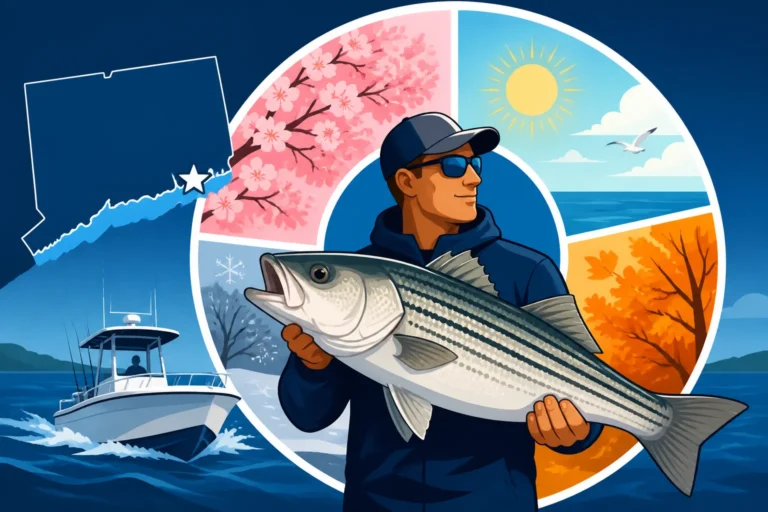
- Spring (May-June): This is arguably the best time for sheer numbers and a great chance at a trophy. Stripers migrate into Long Island Sound, hungry after their winter fast, and feed heavily on herring and shad pushing into the rivers. The fish are often more aggressive and can be found closer to shore or in river mouths.
- Fall (September-November): As water temperatures drop, stripers begin their southward migration, feeding aggressively to build up fat reserves for the winter. This "fall run" can be incredibly productive, with stripers schooling up and chasing bait in a frenzy.
- Summer (July-August): Stripers are present, but they tend to move to deeper, cooler waters during the day. Early mornings, late evenings, and night fishing are often the most productive.
As for the best time of day, it often correlates with the tides and low light conditions. Dawn and dusk are prime times, as stripers are ambush predators and use the reduced light to their advantage. A good charter captain will schedule your trip around these optimal windows and Best Time of Year to Fish in Connecticut. If you're looking at Best Half-Day Fishing Charters in Connecticut, they will most likely focus on these periods.
What to Bring (and What Not To)
While your charter will provide the essential fishing gear, there are a few personal items you should definitely bring to ensure comfort and preparedness.
| Category | What to Bring | What NOT to Bring |
|---|---|---|
| Clothing | Layers (even on warm days, it's cooler on water), Rain gear, Hat, Sunglasses (polarized are a huge plus for spotting fish/structure) | Too many bulky items, clothing you don't want to get dirty/wet |
| Footwear | Non-slip, closed-toe shoes | Flip-flops, open-toed sandals, expensive sneakers |
| Food & Drink | Water, Snacks, Lunch (for longer trips) | Excessive alcohol (check charter policy), glass bottles |
| Sun Protection | Sunscreen (SPF 30+), Lip balm with SPF | |
| Personal Items | Small backpack, Motion sickness medication (if needed, take before departure), Camera (waterproof if possible) | Excessive valuables, unnecessary electronics |
| Documentation | Fishing license (confirm with captain if included), ID | |
| Optional Comfort | Small towel, Small cooler for your catch (if keeping fish), Book/magazine for downtime |
Always confirm with your specific charter beforehand if they require you to bring your own fishing license or if it's covered under a boat license. Generally, for individual recreational fishing, you'll need your own.
Booking Your Charter and Asking the Right Questions
When you're ready to book, don't hesitate to ask questions. This is your experience, and a reputable captain will be happy to provide all the information you need. Websites like FishingBooker are excellent resources for finding and comparing charters, often featuring reviews, photos, and direct booking options.
Here are some key questions to ask:
- "Is the trip suitable for a complete beginner?" Reiterate that this is your first time targeting striped bass.
- "What's your philosophy on teaching?" Do they offer hands-on instruction?
- "What type of fishing will we be doing?" (e.g., trolling, jigging, bait fishing, live-lining)
- "What's the typical size of striped bass caught on your trips during this season?" Manage your expectations.
- "What's included in the price?" (e.g., bait, tackle, fish cleaning)
- "Do I need a Connecticut fishing license, or does the boat cover it?" Most often, you will need your own Connecticut Fishing License Guide for 2026.
- "What's your cancellation policy for weather?"
- "What are your recommendations for what to bring (clothing, food, etc.)?"
- "What's the Tipping Etiquette for Connecticut Fishing Charters for the mate or captain?"
By asking these questions, you'll ensure you're booking a charter that aligns with your goals and provides the best possible introduction to the exciting world of striped bass fishing in Connecticut. Don't be shy; a good captain wants you to have a great time and will appreciate your thoroughness!
Disclaimer
This article is for general informational purposes only and does not constitute professional advice. Laws, prices and regulations vary by location and change over time. Consult a qualified professional for guidance on your specific situation.