Best technique for largemouth bass in farm ponds
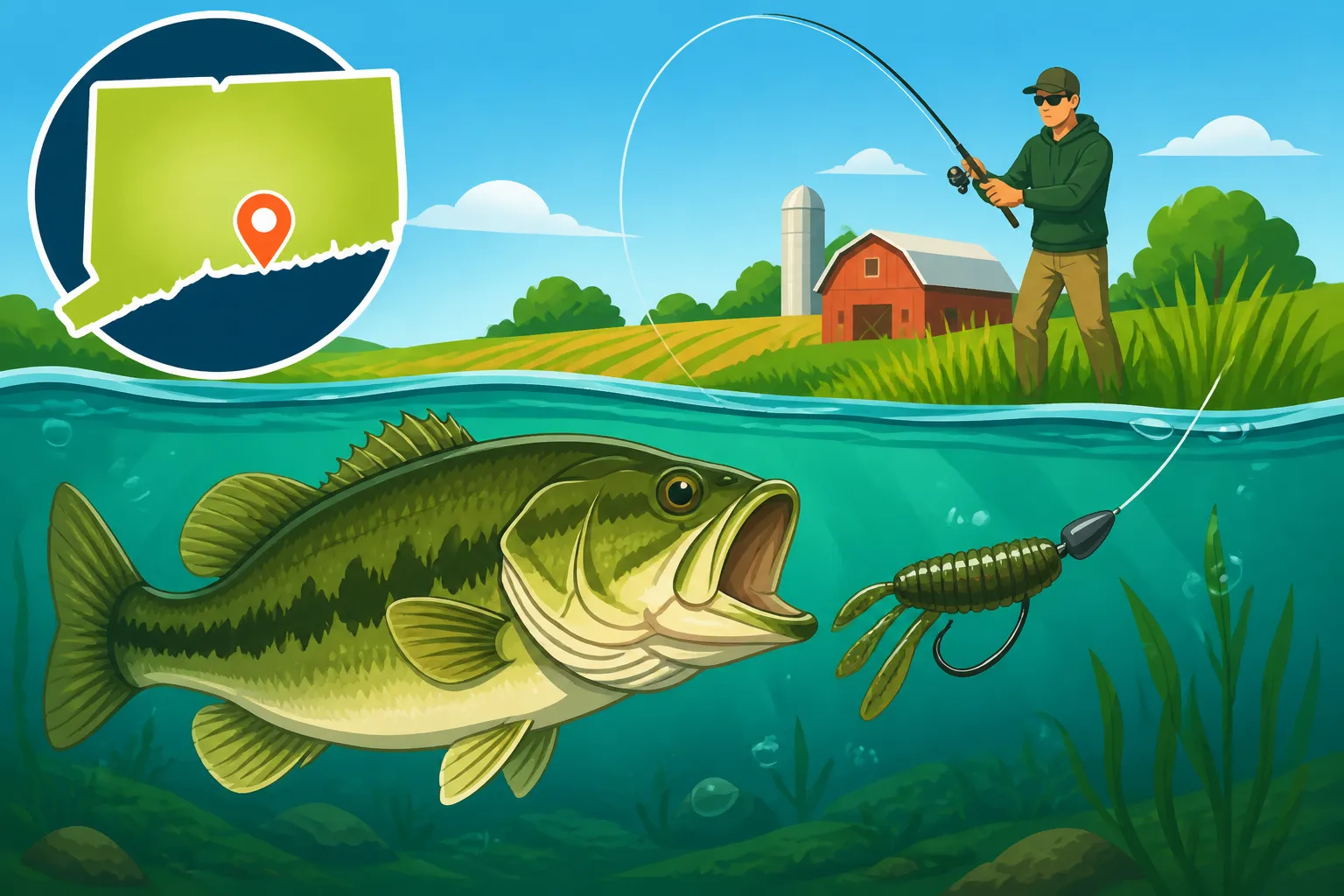
Ah, farm ponds. They might seem like simple bodies of water, but anyone who's spent an afternoon casting knows they can be incredibly frustrating or incredibly rewarding. Unlike vast lakes or flowing rivers, farm ponds present a unique set of challenges and opportunities for landing that prized largemouth bass. This guide is all about giving you the edge, detailing the best techniques to unlock their secrets and consistently bring those bucketmouths to the net in Connecticut's private and public ponds.
Why Farm Ponds are a Different Ballgame for Largemouth Bass
Fishing a small farm pond isn't like heading out to a massive reservoir or a wide-open river. These often-overlooked gems have their own rhythm, their own set of rules, and require a slightly different approach if you want to be successful. It’s a common mistake to treat them like mini-lakes, when in reality, their intimacy demands a more focused strategy. The fish population can be denser, but also more prone to pressure, and their habitat is usually more defined.
Decoding Pond Layouts and Bass Habits
Farm ponds, by their very nature, are often man-made, dug out for livestock, irrigation, or simply aesthetic appeal. This means they rarely have the complex, natural contours of a large lake. Instead, you'll typically find a fairly consistent depth profile, often a bowl shape, sometimes with a deeper end near a dam or spillway. Largemouth bass in these environments become intimately familiar with every nook and cranny. They might not have vast expanses to roam, but they'll use every available piece of cover and structure to their advantage, from submerged trees to cattail edges. Their movements are often dictated by temperature, sunlight, and the presence of baitfish, all within a much smaller, more contained ecosystem. Understanding this limited geography is your first step.
Moreover, the bass in farm ponds can be highly conditioned. If a pond gets a lot of recreational fishing pressure, those fish learn quickly. They'll recognize common lures, avoid boats or bankside movements, and become incredibly wary. This isn't always the case, of course, especially in more remote or less-frequented ponds, but it's something to keep in mind. You might find a pond with a surprising number of large bass, simply because they haven't been pressured as much as their counterparts in public waters. Being observant about the pond's history, if possible, can give you a real leg up.
Key Elements: Structure, Cover, and Forage
In the absence of expansive underwater mountain ranges or intricate river channels, farm pond bass rely heavily on more subtle forms of structure and cover. "Structure" refers to changes in the pond's bottom contour, like old creek beds, humps, or drop-offs, even if they're only a few feet in difference. "Cover" is anything that provides shelter or ambush points, such as submerged timber, weed beds, lily pads, cattails, docks, or even overhanging branches. These are the sweet spots where bass will hold, waiting to ambush prey or simply escape the midday sun.
Forage in farm ponds is typically simpler than in larger systems. You're looking at bluegill, sunfish, minnows, crayfish, frogs, and often, insects. The size and type of available forage will heavily influence what lures and techniques will be most effective. If you see tiny baitfish flickering at the surface, smaller, more subtle presentations might be key. If you notice frogs jumping in at the edges, a topwater frog could be deadly. Understanding this food web helps you "match the hatch," so to speak, even if it's just matching the general profile of a common prey item. Keeping an eye out for these elements as you approach any pond will instantly start building your mental map for where the bass might be holding.
The Right Tools for Farm Pond Largemouth Success
You don't necessarily need a boatload of specialized gear to conquer farm ponds, but having the right tools for the job can make a world of difference. When you're fishing in relatively confined spaces with dense cover, your tackle choices become even more critical than on open water. It’s all about efficiency and accuracy.
Selecting Your Rod, Reel, and Line Setup
For farm ponds, versatility is key. A medium-heavy power casting rod, around 6'6" to 7' in length, is a fantastic all-around choice. This rod will have enough backbone to pull a feisty largemouth out of thick cover but still offer enough sensitivity for lighter bites. Paired with a baitcasting reel, you'll gain the precision casting needed to hit those tight spots around docks or submerged trees. If baitcasters aren't your thing or you're just starting, a medium power spinning rod and reel combo will serve you well, especially for throwing lighter finesse baits. Many anglers find excellent all-purpose setups available on platforms like Amazon, offering a good balance of quality and value.
When it comes to line, a good fluorocarbon line in the 12-17 lb test range is often ideal. Fluorocarbon is nearly invisible underwater, which is a huge advantage for pressured pond bass, and it has excellent abrasion resistance for fishing around snags. If you're really delving into heavy cover, like dense lily pads, you might even consider braided line around 30-50 lb test. Braid has incredible strength and no stretch, helping you rip through weeds, though you'll want to tie a fluorocarbon leader to it for stealth. Knowing your line types and when to use them is crucial for success, whether you're fishing a quiet farm pond or a larger body of water as detailed in our guide on How to Catch Largemouth Bass in Connecticut.
Essential Lures and Baits for Pond Bass
You don't need a tackle shop's worth of lures, but a selection of proven pond bass baits will cover most situations. Think about the common prey: sunfish, frogs, crawfish.
Here are a few must-haves:
- Soft Plastics: These are arguably the most versatile pond lures. Senkos (or stick baits), creature baits (like Rage Bugs or Brush Hogs), and plastic worms (Texas-rigged or Carolina-rigged) are phenomenal for working through cover, skipping under docks, or presenting a subtle meal. Their weedless nature makes them perfect for the snags you'll inevitably encounter in farm ponds. You can find a huge variety of soft plastics from various brands on Amazon.
- Jigs: A good jig, especially a weedless flipping jig or a swim jig, is deadly around heavy cover. Tip it with a soft plastic trailer that mimics a crawfish or a small baitfish. Jigs allow you to penetrate thick mats of vegetation and get right into the bass's living room.
- Spinnerbaits and Chatterbaits: These lures offer flash and vibration, great for covering water and triggering reaction strikes. They're also relatively weedless, making them suitable for fishing around scattered cover and grass lines. If you're looking for a good option for covering water quickly, check out our insights on How to Fish a Spinnerbait for Connecticut Lake Bass.
- Topwater Lures: Frogs, poppers, and walking baits are incredible for exciting, visual strikes, especially during low light conditions or when bass are active near the surface. Few things are as thrilling as watching a largemouth blow up on a topwater frog pulled over lily pads.
- Crankbaits and Squarebills: Shallow-diving crankbaits and squarebills are excellent for bumping off submerged wood, rocks, or grass, often triggering aggressive strikes. They're especially effective when bass are feeding along defined edges.
By having a selection of these lure types, you'll be well-equipped to adapt to different conditions and bass moods you encounter in farm ponds.
Mastering Techniques for Productive Farm Pond Fishing
The key to consistent success in farm ponds lies in thoughtful presentation and adapting to the specific environment. Unlike larger bodies of water where you might troll or make long casts across open water, farm pond fishing is often about precision and stealth.
Strategic Presentations for Various Pond Scenarios
Because farm ponds are smaller and often clearer, your approach needs to be calculated.
Here are some go-to techniques:
- Targeting Cover with Soft Plastics: This is perhaps the most reliable method. Rig a soft plastic (like a Senko, creature bait, or worm) Texas-style to be weedless. Cast or pitch it directly into, or just beyond, any visible cover: brush piles, lily pads, cattail edges, overhanging trees, or even under a small dock. Let it sink naturally on a slack line. Often, a bass will pick it up on the fall. If not, twitch it gently a few times, let it sit, and then slowly retrieve, feeling for any subtle resistance. The trick is to be patient and let the bait do its work. For targeting docks and laydowns specifically, our guide on Best Technique for Docks and Laydowns provides even more detail applicable to ponds.
- Flipping and Pitching: These are precision casting techniques invaluable for farm ponds. Instead of a long overhead cast, you're making short, accurate presentations to tight spots with minimal splash. This is perfect for sneaking a jig or a heavy creature bait into the heart of a brush pile or a dense mat of weeds. The idea is to drop the bait vertically into the strike zone, let it fall, and then work it slowly before retrieving and repeating. This technique excels when bass are holding tight to cover, often in only a few feet of water.
- Topwater Stealth: When fishing topwater lures, especially frog imitations over matted vegetation, quiet is paramount. Make your cast well beyond the target area, or gently drop the lure right on the edge. Work the lure slowly, with pauses, mimicking an easy meal. Bass will often track a topwater lure for a distance before committing, and too much commotion can spook them. This is particularly effective during low light conditions, such as dawn or dusk, or on overcast days when bass feel more comfortable cruising the surface.
- Finesse for Pressured Fish: If a pond receives a lot of attention, or if the water is very clear, bass can become incredibly shy. This is where finesse techniques shine. Think lighter line, smaller baits, and slower presentations. Drop-shot rigs with small worms, wacky-rigged Senkos, or tiny jigs can fool even the most wary bass. These methods allow for incredibly subtle movements, mimicking natural forage that isn't trying to escape aggressively. For more on this, consider techniques similar to those discussed in Best Technique for Finesse Fishing Clear Water Bass.
Adapting to Seasonal Changes in Farm Ponds
Just like larger lakes, farm ponds experience distinct seasonal patterns that dictate bass behavior. Your success will often hinge on understanding and adapting to these changes.
- Spring (Pre-Spawn and Spawn): As water temperatures rise, bass become more active and move towards shallower areas to feed heavily before spawning. This is a fantastic time for crankbaits, spinnerbaits, and soft plastics fished around warmer, shallower coves or flats. Once the water hits the sweet spot (typically 60-70 degrees Fahrenheit in Connecticut), bass will be on their beds. During this spawning period, they can be highly aggressive towards anything threatening their nests. Jigging plastics or even wacky-rigged worms near visible beds can be very effective, though many anglers practice catch-and-release during this sensitive time. Our guide on When Largemouth Bass Spawn in Connecticut offers more specific timing.
- Summer (Post-Spawn and Heat): After spawning, bass often retreat to slightly deeper water or denser cover to recover and escape the summer heat. Topwater lures are excellent early and late in the day. During midday, focus on fishing jigs, heavy Texas-rigged plastics, or even deep-diving crankbaits around submerged structure, deeper points, or in the shade of overhanging trees. Look for any source of cooler water or oxygen, like springs or aerators if the pond has them. The key is to get your bait down to where the bass are comfortable.
- Fall (Feeding Frenzy): As temperatures drop, bass embark on a major feeding spree, trying to pack on weight for winter. This is a prime time for power fishing. Crankbaits, spinnerbaits, chatterbaits, and swim jigs are all excellent choices. Bass will often school up and actively chase baitfish, so covering water and looking for active feeding signs are crucial. Focus on transitional areas, like points, channel swings, and areas where baitfish might be congregating. This can be one of the most exciting times to fish a farm pond.
- Winter (Slow and Deep): Once water temperatures dip below 50 degrees, bass activity slows considerably. They'll often move to the deepest parts of the pond or find dense, stable cover. Finesse techniques become paramount. Slow-moving jigs, blade baits, or suspending jerkbaits fished meticulously near the bottom can entice sluggish bass. Our insights on How to Fish a Jerkbait for Early Spring Bass can offer some transferable tactics for colder water, as jerkbaits can be highly effective when retrieved slowly with long pauses. Be patient, as bites will be subtle and infrequent.
| Technique/Lure Type | Best Conditions/Scenario | Seasonal Effectiveness | Target Depth | Key Features |
|---|---|---|---|---|
| Texas-Rigged Plastics | Dense cover, weeds, brush, docks | All seasons | Shallow-Mid | Weedless, subtle, natural fall, versatile |
| Flipping/Pitching Jigs | Heavy cover, mats, vertical structure | All seasons | Shallow-Mid | Precision, heavy, mimics crawfish |
| Topwater Frogs/Poppers | Low light, matted vegetation, calm water | Spring-Fall | Surface | Exciting strikes, visual, works over thick stuff |
| Shallow Crankbaits | Rocky banks, sparse cover, covering water | Spring-Fall | Shallow-Mid | Deflects off obstacles, reaction bites, covers water |
| Spinnerbaits/Chatterbaits | Covering water, scattered cover, cloudy days | Spring-Fall | Shallow-Mid | Vibration & flash, reaction strikes, weed-resistant |
| Drop-Shot/Wacky Rig | Clear water, pressured fish, open pockets in cover | All seasons | Mid-Deep | Finesse, subtle, natural presentation, wary bass |
Elevating Your Farm Pond Game: Advanced Tips and Etiquette
Once you've got the basics down, a few extra considerations can really put you over the top when targeting largemouth in farm ponds. It's not just about what lure you throw, but how you think about the entire fishing experience. For general techniques applicable across various water bodies, you can also explore our broader guide on Largemouth Bass Fishing in Connecticut.
Observational Skills and Tactical Adjustments
Farm ponds are intimate environments, which means bass can be incredibly sensitive to disturbances. Approach the pond quietly. Avoid stomping along the bank or making loud noises. If you're using a small boat or kayak, paddle softly and avoid bumping oars. Pay attention to everything: ripples on the water, insects buzzing, birds feeding, and especially, the presence of baitfish or frogs near the edges. These observations give you clues about where the bass might be and what they might be eating.
Don't be afraid to experiment. If one technique isn't working, switch it up. Change your lure color, try a different retrieve speed, or move to a completely new area of the pond. Sometimes, even a slight change in the size of your bait can make a huge difference to a wary bass. Consider the effects of weather, too. For instance, Cold Front Fishing Tactics for Connecticut Bass are particularly relevant in smaller ponds where conditions can change rapidly. Bass can become much harder to catch after a cold front passes through, often requiring slower presentations. Learning to read these subtle cues and adapt your strategy is the hallmark of a truly successful angler. You might even find yourself applying these observational skills to larger bodies of water, similar to how one would How to Pattern Bass on an Unfamiliar Connecticut Lake.
Respecting the Resource and Landowners
Many farm ponds are on private property, and accessing them is a privilege, not a right. Always, always, always seek permission from the landowner before fishing. A simple knock on the door, a polite request, and an offer to share any fish you catch can go a long way. Once you have permission, treat the property with the utmost respect. Leave no trace behind – pack out all your trash, including discarded fishing line and lure packaging. You'd be surprised how much good will a clean fishing spot creates.
Practicing catch and release, especially for larger bass, is also a fantastic way to ensure the pond remains a healthy fishery for years to come. These larger fish are often the prime breeders, and releasing them helps maintain a robust population. If you do keep fish, only take what you'll eat and adhere to any local regulations or landowner requests. Being a responsible angler not only preserves the fishing but also ensures that future generations, and yourself, can continue to enjoy these fantastic, often hidden, fishing opportunities. This respectful approach is part of the larger ethos of Connecticut Fishing Regulations Explained, ensuring sustainable angling for everyone.
By combining an understanding of farm pond dynamics, the right gear, versatile techniques, and a healthy dose of respect, you'll find that these small waters can offer some of the most consistent and exciting largemouth bass fishing experiences in Connecticut.
Disclaimer
This article is for general informational purposes only and does not constitute professional advice. Laws, prices and regulations vary by location and change over time. Consult a qualified professional for guidance on your specific situation.