Where to Find Striped Bass in Long Island Sound
Many anglers in Connecticut dream of the thrill of hooking into a powerful striped bass, but the sheer size and diversity of Long Island Sound can make finding these elusive fish feel like an impossible task. It’s easy to feel lost amidst the vast waters, unsure where to even begin your search. This comprehensive guide is designed to cut through that confusion, giving you the knowledge and strategies you need to effectively locate striped bass across Long Island Sound, transforming your fishing trips from hopeful guesses into targeted pursuits.
Understanding Striped Bass Habits in Long Island Sound
To consistently find striped bass in Long Island Sound, you first need to get inside their heads, so to speak. These powerful, migratory fish aren't just swimming aimlessly; they're driven by instincts for survival, primarily feeding and finding comfortable environments. Knowing their core behaviors will give you a significant edge in narrowing down your search.
What Striped Bass Eat: Following the Food Chain
Striped bass are opportunistic predators, and their diet in Long Island Sound is incredibly varied, dictated mostly by what's readily available. Their primary goal is to find baitfish, and if you can locate the bait, you're usually close to the stripers. Common forage in the Sound includes Atlantic menhaden (bunker), American eels, various species of silversides, spearing, and sometimes even squid or crabs. During the spring, river herring also become a critical food source as they migrate up Connecticut's rivers. This means that areas where these baitfish congregate—like tidal rips, river mouths, or along structure where they can hide—are prime real estate for hungry stripers. The sheer volume of menhaden schools, particularly in summer and fall, can dictate the movements of entire populations of bass, leading to massive feeding frenzies that are visible from miles away.
The feeding habits of striped bass also change with the size of the fish. Smaller "schoolie" stripers might be content with smaller bait like silversides or sand eels, often found closer to shore or in shallower estuaries. Larger, more mature stripers, however, are usually targeting bigger meals like full-grown bunker or eels. This distinction is crucial because it influences the type of gear you might use and the specific locations you choose to target. For instance, if you're chasing a trophy, you'll likely be looking for deeper water or significant structure where large baitfish can hide, rather than a shallow beach flat. Understanding What striped bass eat in Long Island Sound is fundamental to finding them, and this knowledge will guide your lure and bait choices.
Striped Bass Structure Preference: Where They Hide and Ambush
Like many predatory fish, striped bass love structure. Structure provides ambush points, protection from strong currents, and a place to rest. In Long Island Sound, "structure" can mean a lot of things: rocky reefs, ledges, submerged humps, mussel beds, jetties, bridge pilings, and even sudden changes in bottom contour like drop-offs. These features break up the current, creating eddies and slack water where stripers can wait to ambush unsuspecting baitfish being swept by. The more complex the structure, often the better, as it creates more hiding spots and current breaks for these powerful fish.
Man-made structures are just as important as natural ones. Think about the pilings of a busy bridge or the rip-rap of a causeway. These areas often concentrate baitfish and provide excellent cover for stripers. When scouting a new area, always look for anything that disrupts the bottom or current flow. A good quality marine chart or a fishfinder can reveal these underwater treasures. For instance, an isolated rock pile in an otherwise featureless sandy bottom can be a magnet for striped bass, especially during periods of strong current. They'll position themselves on the leeward side, waiting for the current to deliver a meal. This preference for structure is a cornerstone of Striped Bass Fishing in Long Island Sound.
Tidal Influence: The Striped Bass Clock
Tides are perhaps the single most important factor influencing striped bass behavior in Long Island Sound. Stripers are highly attuned to tidal currents, using them to their advantage for feeding and movement. The incoming and outgoing tides create currents that sweep baitfish past ambush points, and the bass know exactly where to position themselves. Generally, the moving tide—either incoming or outgoing—is more productive than slack tide, as the current activates bait and predator alike, making the environment more dynamic and conducive to feeding.
Different spots will "turn on" at different stages of the tide. For example, a rocky point might fish best on a strong outgoing tide as bait is flushed out, while a shallow flat might be best fished on an incoming tide as water moves over it, bringing in new food sources. Understanding the specific tides for your chosen fishing spot is non-negotiable. Websites and apps provide accurate tide charts, and learning to interpret them will dramatically improve your success rate. Pay close attention to the strength of the tide as well; extreme currents can sometimes make fishing challenging, but moderate to strong currents are often ideal for triggering feeding behavior. This is crucial for understanding the Best Time of Day to Catch Striped Bass.
Key Habitat Types for Striped Bass in Long Island Sound
Long Island Sound offers a remarkable variety of habitats, each attracting striped bass differently throughout the year. Knowing these habitat types and how stripers utilize them is essential for pinpointing their whereabouts. It's like having a mental blueprint of their favorite hangouts.
Reefs and Rockpiles: The Ultimate Ambush Points
Reefs, rockpiles, and ledges are classic striped bass territory in Long Island Sound. These underwater structures provide everything a striper needs: cover, ambush points, and areas where currents concentrate baitfish. Whether natural rock formations or artificial reefs (like those created from sunken barges or bridge debris), these spots are magnets for fish. Stripers will often sit on the down-current side of these structures, out of the main flow, waiting for food to be swept past.
Fishing these areas often involves boat control to stay on top of the structure, allowing you to present lures or bait effectively. Vertical jigging, casting swim shads, or drifting live bait are all highly effective methods here. When you find a good reef, it's not uncommon to find multiple stripers holding there, especially larger fish. These spots can be productive year-round, though activity will vary with water temperature and bait presence. Always check your marine charts for prominent underwater features, as even a small, isolated rockpile can hold a significant number of fish. For optimal success, consider using heavy-duty jig heads and durable soft plastics, easily found on Amazon.
Estuaries and River Mouths: Spring and Fall Hotbeds
Connecticut's numerous rivers emptying into Long Island Sound are critical habitats for striped bass, especially during their migratory periods in spring and fall. These areas act as natural highways and feeding grounds. In spring, stripers follow anadromous fish like river herring and shad up into the lower reaches of these rivers to spawn. The brackish water mix, the abundance of forage, and the sheltered nature of these areas make them irresistible. The Connecticut River Striped Bass Fishing is a prime example of this seasonal activity, drawing in impressive numbers of fish.
River mouths and the surrounding estuaries continue to be important throughout the warmer months, providing cooler water in some deeper pockets during summer and staging areas for baitfish. In the fall, as baitfish migrate out of the rivers and the Sound cools, stripers will gorge themselves in these areas before heading south. Fishing near the convergences of tidal rivers and the main Sound can be incredibly productive. Focus on current seams, channel edges, and any structure that breaks the flow within these estuarine environments.
Beaches and Flats: Shallow Water Surprises
Don't underestimate the seemingly barren expanses of beaches and shallow flats. While many anglers focus on deeper water, large striped bass routinely move into these shallower areas, particularly during low light conditions (dawn, dusk, and night) or under specific tidal conditions, to hunt for baitfish, crabs, or even worms. These areas offer different challenges but can provide some of the most exciting fishing, especially for anglers wading or casting from shore.
Look for subtle changes in depth, troughs parallel to the beach, sandbars, or areas with scattered rock patches. Often, the presence of small baitfish or shorebirds feeding is a dead giveaway that stripers might be around. Popular methods include throwing topwater plugs at dawn or dusk, slow-rolling swimbaits, or fishing natural baits like chunks of bunker or whole eels. The quiet nature of these environments also makes them fantastic for kayak fishing, allowing a stealthy approach to wary fish. Just remember to be mindful of regulations, as some areas might have specific rules for different times of year or types of gear, like the Connecticut Striped Bass Slot Limit and Season.
Channels and Rips: Current-Driven Feeding Zones
Deep channels and tidal rips are high-energy environments that are absolutely vital for striped bass. Channels provide pathways for fish to move throughout the Sound and often hold deeper, cooler water. Rips are created where strong currents flow over underwater structure or sudden depth changes, creating turbulent water. These turbulent zones disorient baitfish and make them easy targets for waiting stripers.
Fishing rips effectively requires understanding current flow and boat positioning. Stripers will typically hold just out of the strongest current, either on the edges or in the slack water pockets behind structure, darting into the rip to feed. Vertical jigs, heavy swimbaits, and drifted live or chunk baits are excellent choices here. The sheer volume of water moving through channels and rips means a constant supply of food, making them consistent producers, especially when other areas are slow. These areas are often prime locations for large schools of Atlantic Menhaden as Forage Fish in Long Island Sound, attracting predatory stripers.
Top Geographic Locations and Hotspots for Stripers in Long Island Sound
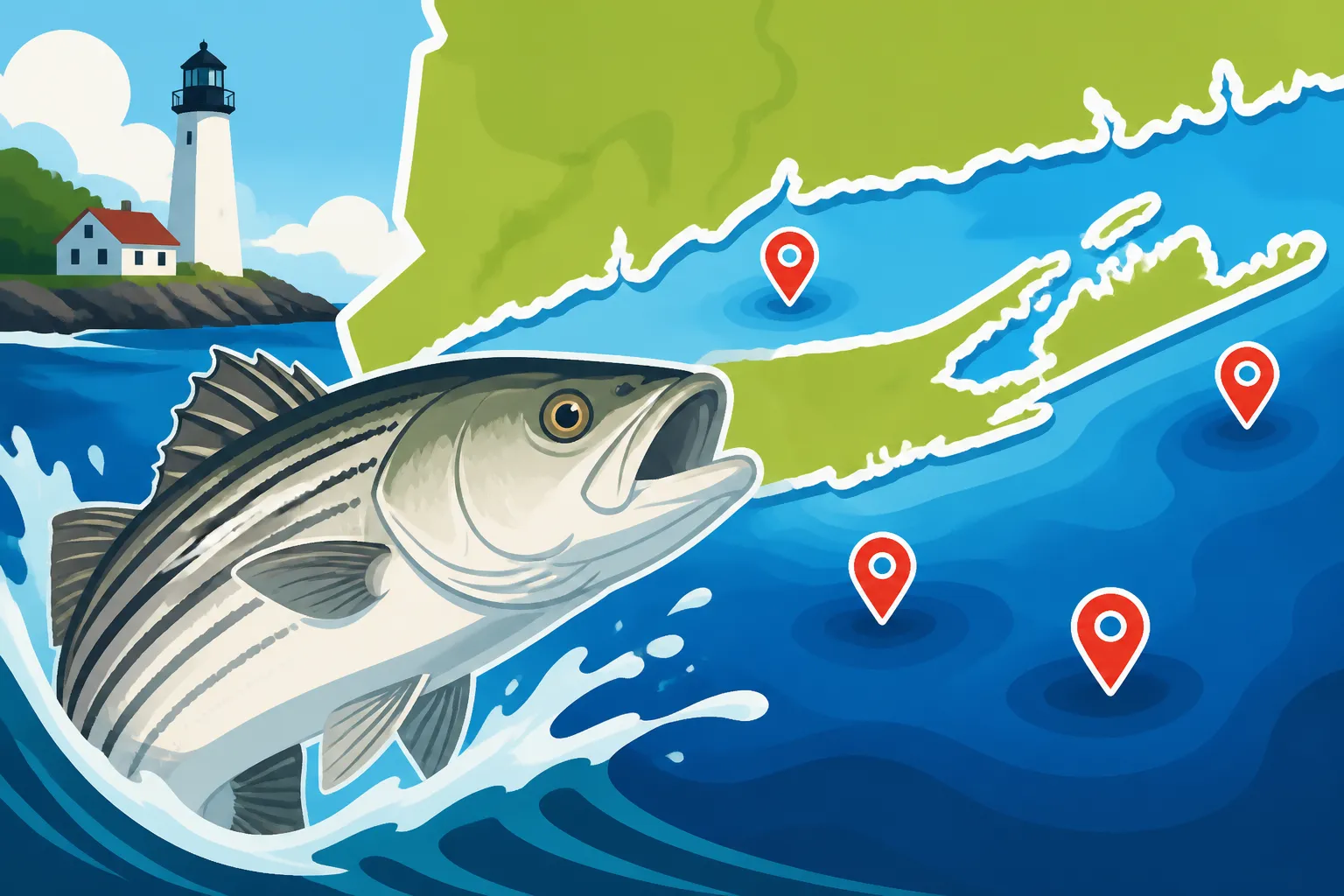
Long Island Sound is a big body of water, stretching over 100 miles. While stripers can be found anywhere, certain areas consistently produce more fish due to a combination of favorable habitat, bait concentration, and current patterns. Breaking the Sound into sections can help narrow down your focus.
Western Long Island Sound: Urban Fishing Opportunities
The western end of Long Island Sound, closer to the New York border and extending east towards Bridgeport and New Haven, offers a unique mix of urban and productive fishing. This area is characterized by numerous harbors, river mouths (like the Housatonic and Norwalk Rivers), and a greater density of man-made structures such as bridges, jetties, and docks. The tidal flow here can be strong, especially around choke points and river entrances.
Hotspots in this region often include the mouths of the Norwalk and Housatonic Rivers, the Bridgeport harbor jetties, and the extensive rocky shoreline stretching eastward. Anglers here can find good fishing for schoolie stripers close to shore and larger fish congregating around deeper channels and reefs. Night fishing is particularly popular and effective in the western Sound, especially around lighted docks and bridges where baitfish gather. Areas like the Thimble Islands also offer excellent structure. For those fishing from shore, a sturdy surf rod and reel combo, often reviewed positively on Amazon, is a must.
Central Long Island Sound: Reefs, Rips, and River Influence
Moving eastward, the central part of Long Island Sound, encompassing areas around New Haven, Guilford, Madison, and Clinton, presents a different fishing landscape. This section features a mix of significant river systems, notably the Connecticut River, and numerous offshore reefs, shoals, and islands. The tidal currents remain strong, creating well-defined rips and feeding zones.
The mouth of the Connecticut River is a monumental hotspot, especially during spring and fall migrations. Stripers stack up here, feeding on an abundance of bait moving in and out of the river. Further east, areas like Hammonasset Point and the string of reefs offshore provide consistent action. The multitude of small islands and rocky outcrops also offer excellent shallow-water opportunities for those willing to explore. Central Sound is also renowned for its capacity to hold large migratory stripers throughout the season. Many of these areas are covered in detail in a comprehensive Long Island Sound Fishing Guide.
Eastern Long Island Sound: Deeper Water and Strong Currents
The easternmost section of Long Island Sound, from Niantic eastward towards Stonington and the Rhode Island border, is characterized by deeper water, stronger currents, and proximity to Block Island and the open Atlantic. This area is often the first to see the arrival of migratory stripers in the spring and the last to hold them in the fall.
Key areas include the notorious "Race" — a powerful rip at the mouth of the Sound where currents converge, concentrating bait and drawing in trophy stripers. Other hotspots include Fishers Island Sound, the waters around the various light towers (e.g., Plum Island Lighthouse), and the numerous rocky ledges and deep-water humps offshore. This region is particularly popular for boat anglers targeting large stripers with both live bait and artificials, and it's where you'll find some of the best Long Island Sound Striped Bass Spots for big fish. The deeper structure and strong current also make it a prime location for other species like blackfish and black sea bass, often requiring similar fishing techniques.
Seasonal Movements and How They Affect Fishing
Striped bass are highly migratory, and their presence in Long Island Sound changes dramatically with the seasons. Understanding these movements is key to knowing when and where to find them. It's a dance dictated by water temperature, available forage, and spawning instincts. This seasonal shift is a core part of Striped Bass Migration Along the Connecticut Coast.
Spring Migration: The Grand Arrival
As winter's chill finally gives way to warmer temperatures, usually in April and May, the first wave of migratory striped bass begins to arrive in Long Island Sound. These are often "schoolie" sized fish, followed by larger spawning-class fish as the water warms further. They push up into the estuaries and river systems, such as the Connecticut River and Housatonic River, to spawn, following schools of herring and shad.
During this period, the focus should be on river mouths, shallow bays, and early-season rocky points. Light tackle fishing with small soft plastics, jigs, and flies can be incredibly effective for the eager schoolies. As larger fish move in, live herring or bunker, or larger artificial lures, become more productive. This is an exciting time, as the fish are hungry and often aggressive after their long migration. It's also when many anglers get their first taste of the season's action, shaking off the winter rust. Remember to check Connecticut Spring Fishing Day and Opening Day Rules to ensure you're fishing legally.
Summer Patterns: Deep Water and Nocturnal Hunts
By June and into the peak summer months of July and August, water temperatures in much of Long Island Sound rise significantly. This often drives larger striped bass into deeper, cooler waters, particularly around offshore reefs, humps, and channels where they can find thermal refuge and continue to feed. While some schoolies might remain in shallower, brackish areas, the trophy hunters often move to depths.
Daytime fishing in summer can be challenging, with stripers becoming lethargic or holding tight to structure. This is when Night Fishing for Striped Bass in Connecticut truly shines. As the sun sets and temperatures drop, big bass move shallower to feed under the cover of darkness. Topwater plugs, eels, and large swimbaits fished during the night can elicit explosive strikes. During the day, trolling deep or jigging over structure become the go-to methods. You'll often find them schooled up in specific areas, especially where current and structure combine to create optimal ambush points.
Fall Blitz: The Feeding Frenzy
The fall run, typically from September through November, is arguably the most exciting time to fish for striped bass in Long Island Sound. As water temperatures begin to cool and baitfish (especially menhaden and mullet) begin their southward migration, stripers go into an intense feeding frenzy to pack on reserves for their own journey south. This is the fabled "fall blitz" that every angler dreams of.
The fish are often widespread, chasing massive schools of bait across the Sound. Look for diving birds, breaking water, and large concentrations of baitfish on your fishfinder. Shore anglers can experience incredible action as schools of stripers push baitfish against the beaches and rockpiles. Boat anglers will often follow the birds and bust up schools of feeding fish, casting a wide variety of lures from poppers to jigs. It's a fast-paced, high-energy time, and knowing Best Techniques for Fall Striped Bass can make all the difference. The fishing remains strong until late fall when the bulk of the migratory fish finally depart for their southern wintering grounds.
Reading the Water: Identifying Productive Striper Spots
Finding striped bass isn't just about knowing where they generally are; it's about being able to "read" the water and identify subtle signs that indicate their presence or imminent arrival. This skill develops over time but relies on understanding a few key environmental cues.
Baitfish Activity: The Ultimate Indicator
Without a doubt, the presence of baitfish is the number one indicator of where striped bass might be. Stripers are constantly on the hunt for food, so if you find their food, you're usually close to the predators. Look for visual signs like nervous water (small ripples not caused by wind), showering baitfish jumping out of the water, or large schools of menhaden "flipping" on the surface.
Your fishfinder is an invaluable tool here. Learn to identify bait balls on your sonar screen. If you see dense schools of bait, especially if there are larger, arc-shaped marks underneath or around them, you're in a prime spot. Don't be afraid to deploy a small cast net or sabiki rig to see what kind of bait is present; matching your lures to the prevalent bait can make a huge difference. Sometimes, even subtle signs like a single "nervous" mullet jumping can indicate a striper is nearby, shadowing the school. Knowing How to Catch Striped Bass in Long Island Sound often starts with locating their food.
Bird Play: Nature's Fishfinder
Seabirds, especially gulls, terns, and ospreys, are often the angler's best friends when it comes to locating striped bass. When these birds are actively diving or circling over a specific area, it almost always means baitfish are being pushed to the surface from below. And what's pushing them from below? Often, it's striped bass.
Look for sustained bird activity, especially birds repeatedly diving into the water. A few birds casually sitting on the water might not mean much, but a frenzy of diving birds is a strong signal. Be mindful, however, as bluefish also create similar feeding frenzies. If you see birds, approach cautiously and quietly to avoid spooking the fish. Sometimes, even though the main blitz might be out of casting range, smaller schools of fish might be pushing bait closer to shore or around nearby structure. This is often the sign of a feeding frenzy in full swing.
Water Temperature and Current: Invisible Influences
While not always visible, water temperature and current are paramount to striped bass location. Stripers are cold-blooded and highly sensitive to temperature changes. They prefer certain temperature ranges for feeding and comfort. During hot summer days, they'll seek out cooler, deeper water or areas with significant current that brings in oxygenated water. In spring and fall, they'll follow the most comfortable temperatures.
Current, as discussed earlier, is their ally for feeding. Look for current breaks, eddies, and seams where fast-moving water meets slower water. These are natural ambush points. Even in seemingly flat water, subtle current lines can be observed by watching how debris or slicks (oily patches on the water's surface, often from feeding fish digesting bait) move. Observing water movement around structure, even subtle changes, can reveal hidden feeding zones. A reliable marine thermometer, like one you can easily acquire on Amazon, can be an excellent tool to gauge conditions and inform your fishing strategy.
Practical Tips for Locating Striped Bass in the Sound
Beyond understanding their habits and habitats, there are practical steps you can take to increase your chances of finding striped bass in Long Island Sound. These involve a mix of technology, preparation, and good old-fashioned angling sense.
Utilizing Marine Electronics: Your Underwater Eyes
Modern marine electronics, particularly a good fishfinder/chartplotter combo, are indispensable tools for serious striper anglers. A chartplotter allows you to identify underwater structure like reefs, humps, and channels, as well as navigate safely. Marking productive spots (wayfinding) on your chartplotter is crucial for building a personal fishing database over time.
Your fishfinder, especially with side-imaging or down-imaging capabilities, can reveal bait balls, individual fish arches, and subtle bottom contours that are otherwise invisible. Learn to interpret what you see on the screen. Adjust your sensitivity and frequency settings to get the clearest picture of the water column and bottom. Don't just motor around randomly; use your electronics to systematically scan promising areas, especially those identified as potential hotspots on your charts. There are many great fishfinders available on platforms like Amazon that offer detailed sonar capabilities.
Scouting and Exploration: Time on the Water
There's no substitute for time spent on the water. While charts and electronics provide a great starting point, actual on-the-water scouting and exploration are how you truly learn a fishery. Pay attention to tides, weather patterns, and how they affect different locations. What worked yesterday might not work today if the conditions have changed.
Don't be afraid to explore new areas, even if they don't look like traditional "hotspots" on a map. Sometimes, a subtle change in bottom contour or an isolated piece of structure can hold fish that others overlook. Watch what other successful anglers are doing (from a respectful distance, of course!), but also develop your own instincts. Keep a detailed logbook of where, when, and how you caught fish, noting conditions like tide, moon phase, bait presence, and water temperature. This data will become invaluable over time.
Tapping into Local Knowledge: The Angler's Network
While some anglers are tight-lipped about their best spots (and who can blame them!), there's a wealth of local knowledge to be gained from tackle shops, fishing forums, and fellow anglers. Tackle shop employees are often on the water frequently or talking to those who are, and they can provide invaluable, up-to-date information on where the fish are biting and what they're biting on. They're often happy to share general areas and techniques.
Engaging with fishing communities, both online and in person, can provide insights into current trends, seasonal patterns, and specific areas that are producing. Just remember to be respectful, share some of your own general observations, and don't expect people to give up their secret honey holes. A polite conversation with a seasoned angler at a boat ramp or fishing pier can often yield golden nuggets of information. Combining this local insight with your own observations and technology will make you a much more effective striper hunter. For example, some forums might discuss How big striped bass get in Long Island Sound and where the trophy fish are being caught.
Gear and Lure Selection: Matching the Hatch and Conditions
Having the right gear and selecting appropriate lures are critical for successfully catching striped bass once you've located them. Your rod and reel should be stout enough to handle strong fish in varying conditions, from casting light soft plastics to throwing heavy plugs or drifting large baits. A good quality braided line is often preferred for its sensitivity and strength.
Lure selection should always consider the prevalent baitfish and the conditions. If stripers are feeding on small silversides, a small jig or soft plastic will be more effective than a large bunker imitation. If they're keying on bunker, then a large swimbait or a live-lined bunker is the way to go. Color choice can also matter, with natural colors often working well in clear water and brighter colors in murky conditions or low light. Always have a variety of lures and baits on hand, stored in tackle boxes that you can easily find on platforms like Amazon, so you can adapt to whatever the stripers are feeding on. Being prepared with Best Lures for Striped Bass in Long Island Sound is half the battle!
Here's a quick comparison of common striper habitats:
| Habitat Type | Best Time to Fish | Key Characteristics | Preferred Methods | Target Size Preference |
|---|---|---|---|---|
| Reefs & Rockpiles | All moving tides, year-round (seasonal peaks) | Underwater structure, current breaks, ambush points | Vertical jigging, live bait, swim shads | Mixed, often larger |
| Estuaries & River Mouths | Spring (spawn), Fall (migration), low light | Brackish water, baitfish highways, shelter | Live bait (herring/bunker), soft plastics, flies | Schoolies to large |
| Beaches & Flats | Dawn, Dusk, Night, specific tidal stages | Shallow water, sandbars, troughs, subtle structure | Topwater plugs, swimbaits, chunk bait, eels | Mixed, wary large |
| Channels & Rips | Strong moving tides, year-round | Turbulent water, current concentration, depth, bait disoriented | Heavy jigs, large swimbaits, live/chunk bait drifting | Often larger, active |
| Bridge Pilings & Jetties | Moving tides, especially low light & night | Man-made structure, current breaks, bait congregation | Live bait, jigs, swimbaits | Schoolies to large |
Disclaimer
This article is for general informational purposes only and does not constitute professional advice. Laws, prices and regulations vary by location and change over time. Consult a qualified professional for guidance on your specific situation.