Best fishing spots in Mohawk Mountain State Park
Ah, the quest for that perfect, serene fishing spot! It's a common dilemma, isn't it? You want to escape the crowds, find a place where the air smells cleaner, and the only sounds are the rustling leaves and the gentle murmur of water. But actually finding those hidden gems, especially within a state park that's more renowned for hiking or skiing, can feel like searching for a needle in a haystack. Many anglers overlook these quieter spots, sticking to the more obvious lakes and rivers, and end up missing out on a truly tranquil experience. This guide is here to unravel the fishing opportunities that await you in and around Mohawk Mountain State Park, helping you discover those peaceful waters and the joy of fishing them.
The Unique Appeal of Fishing Mohawk Mountain State Park
When you think of Mohawk Mountain, visions of pristine ski slopes or winding hiking trails often come to mind. It's a stunning natural area in Litchfield County, particularly beautiful when the leaves change in the fall or after a fresh blanket of snow. But for the discerning angler, it holds a different kind of allure: the chance to connect with nature in a truly intimate way, far from the hustle and bustle of more popular fishing destinations. This isn't where you go to catch a trophy bass from a bustling boat launch; this is where you go for peace, quiet, and the subtle thrill of outsmarting smaller, wilder fish.
Beyond the Trails: Discovering Hidden Waters
Mohawk Mountain State Park, and its larger companion, Mohawk State Forest, is a tapestry of forests, hills, and, importantly for us, numerous small brooks and streams. These aren't the broad, easily accessible rivers you might find elsewhere in Connecticut, but rather intimate waterways that demand a bit more effort to reach. Think of it as an angler's treasure hunt – the reward isn't just a fish, but the entire journey into a quieter part of the park. You'll often find yourself bushwhacking a bit, following faint deer trails, or simply listening for the sound of rushing water to pinpoint these elusive spots. It’s a completely different rhythm of fishing, one that rewards patience and a love for exploration. Many of these brooks cascade down the mountain slopes, eventually feeding into larger tributaries that make their way to the Housatonic River. While they might not be prominently marked on a fishing map, their presence adds a vital ecological dimension to the park, supporting a delicate ecosystem.
What to Expect: Native Trout and Scenic Beauty
Fishing in these smaller, headwater streams typically means targeting trout, especially native brook trout. These beautiful fish, with their distinctive worm-like markings and vibrant colors, are a testament to the clean, cold water they inhabit. They're often smaller than their hatchery-raised cousins you'd find in a stocked pond, but their feisty spirit and the challenge of catching them in tight quarters make them incredibly rewarding. Because these waters are often remote and not heavily trafficked by anglers, the fish can be less pressured, but also require a stealthier approach.
Beyond the fish, the real catch here is the scenery. Imagine casting your line into a crystalline stream, surrounded by towering hardwoods, with sunlight dappling through the canopy. In spring, wildflowers burst forth along the banks. In fall, the foliage explodes in a riot of reds, oranges, and golds, creating a breathtaking backdrop for your angling adventure. It’s an immersive experience that nourishes the soul as much as it excites the angler. You'll often have these spots entirely to yourself, offering a solitude that's hard to find in today's busy world. Remember that while the larger Connecticut DEEP manages areas for Connecticut Trout Season and Stocking Rules, many of these smaller mountain streams are reliant on natural reproduction, making catch-and-release even more crucial to preserve these precious populations.
Prime Fishing Locations Within or Near the Park
While Mohawk Mountain State Park isn't home to a sprawling lake like Candlewood or Bantam, its true fishing charm lies in its network of smaller, wilder waters. These are the kinds of places where you truly earn your catch, and the experience is often more about the journey and the tranquility than sheer numbers or size.
The Feeder Streams and Brooks
Within the boundaries of Mohawk State Forest, which encompasses the park, there are countless small, unnamed brooks and feeder streams. These tiny tributaries often hold populations of wild brook trout. You won't find specific parking areas or designated fishing access points for most of these. Instead, you'll need to consult a detailed topographical map or use a reliable GPS app to identify promising blue lines (streams) that wind through public lands. Access is generally via hiking trails or by simply venturing off-trail where public access is permitted. The key here is patience and a keen eye for subtle signs of fish habitat – small pools, undercut banks, and stretches of riffles that provide cover and oxygen. These are classic "pocket water" fisheries, where each small plunge pool or eddy could hold a wild trout.
It's important to understand that these aren't high-volume fisheries. You might only catch a handful of fish in a day, but each one will feel like a significant accomplishment. Many anglers prefer to use ultralight spinning gear with small spinners or worms, or even better, a light fly rod for delicate presentations. The thrill comes from spotting a native brook trout darting from under a rock or rising to a carefully presented dry fly in a seemingly insignificant little pool. For more on general trout behavior, check out our comprehensive guide on Trout Fishing in Connecticut.
Nearby Opportunities: Connecting to the Housatonic River Valley
While the focus here is on the immediate Mohawk Mountain area, it's impossible to discuss fishing in this region without acknowledging the majestic Housatonic River. The "Housy," as locals affectionately call it, is a stone's throw away from the state park and offers a completely different, yet equally rewarding, fishing experience. The lower sections of the Housatonic, particularly downstream from Falls Village, are renowned for their incredible smallmouth bass fishing and robust trout populations, including holdover browns and rainbows.
If you're in the Mohawk Mountain area and craving a larger river experience after a peaceful morning of small stream exploration, the Housatonic is an excellent choice. It provides ample public access points, from formal boat launches to wade-in spots, and is a fantastic destination for both conventional tackle and fly fishing. While Mohawk Mountain offers the solitude of wild trout, the Housatonic gives you the chance to target larger fish and enjoy a more expansive fishery. If you're considering expanding your horizons to the Housatonic, you might even consider booking a guided trip to learn the ropes. Services listed on platforms like FishingBooker can connect you with experienced guides who know the Housatonic like the back of their hand, providing invaluable local knowledge and increasing your chances of success on this larger, more complex river system. You can easily find options for guided trips on the Housatonic River through FishingBooker if you're looking for expert assistance on these larger waters.
Strategies for Success at Mohawk Mountain
Fishing the intimate streams of Mohawk Mountain State Park requires a different approach than casting into a wide-open lake or a broad river. It's a game of stealth, precision, and understanding the subtle nuances of small water. Forget the heavy gear and noisy approaches; here, quiet is key.
Tackle and Techniques for Small Stream Fishing
For these delicate mountain brooks, ultralight spinning gear or a lightweight fly rod is your best friend. A 2-to-4-pound test line on a small spinning reel, paired with a short, sensitive rod (5-6 feet), will give you the control and feel you need. When it comes to lures, think small: tiny inline spinners like Rooster Tails or Mepps (size 0 or 1), micro-jigs, or even just a small worm on a single hook. The key is to present your offering subtly, letting it drift naturally into pools or under cover.
For fly anglers, a 2 or 3-weight rod (6-8 feet) is ideal. Terrestrial patterns like ant, beetle, or grasshopper imitations work wonderfully, especially in summer. Small dry flies, such as tiny Caddis or Parachute Adams, are effective when trout are actively feeding on the surface. For subsurface action, small nymphs like Pheasant Tail or Hare's Ear, fished with a delicate tight-line or indicator setup, can be deadly. Approach pools cautiously, staying low and using stream-side vegetation for cover. Remember, these wild trout are incredibly wary. Your first cast is often your best chance. For more specific tactics, delve into our guide on Fly Fishing for Trout in Connecticut.
Seasonal Considerations for Anglers
Each season brings its own character to Mohawk Mountain's streams.
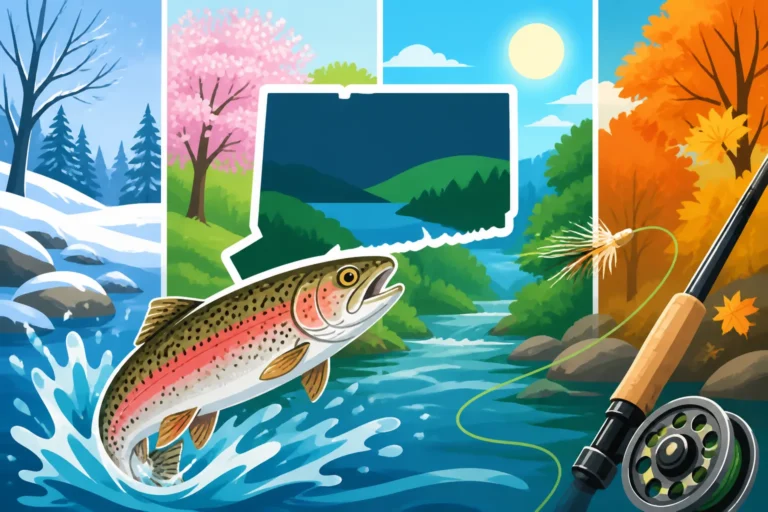
- Spring (April-May): This is often when the water levels are highest and coldest, fueled by snowmelt and spring rains. Trout are typically active, but accessing the streams can be challenging due to runoff and slippery banks. This is prime time for bigger nymphs or small streamers fished deeper in the pools. It's also when many of the larger, stocked trout fisheries in Connecticut have their opening days, so these smaller streams can offer a quieter alternative. For specific insights into this period, refer to Spring Trout Fishing Techniques for Connecticut Streams.
- Summer (June-August): Water levels drop significantly, and temperatures rise. This makes the fish more visible, but also more vulnerable and selective. Focus on early mornings or late evenings when temperatures are cooler. Terrestrial patterns and precise presentations are crucial. Look for shaded areas and deeper pools where trout can find refuge from the heat. Low, clear water demands the utmost stealth.
- Fall (September-November): The cooler temperatures and stunning foliage make fall a magical time to fish. Trout become more active again, preparing for winter. Water levels are usually moderate, offering good access. This is an excellent time for both dry flies (matching late-season hatches) and small nymphs. The vibrant colors of the surrounding forest add an unparalleled beauty to every cast.
- Winter (December-March): Fishing during winter can be tough, with icy conditions and very cold water. Some sections might be completely frozen. However, if open water can be found, particularly on milder days, deep-fished nymphs or small midge patterns can still entice a bite from a lethargic trout. Always prioritize safety in winter conditions, being extremely cautious of ice and cold exposure.
Essential Regulations and Responsible Angling
Before you even tie a knot or make a cast in Mohawk Mountain State Park, it’s absolutely vital to be familiar with Connecticut's fishing regulations. Not only does it keep you on the right side of the law, but it ensures that these beautiful, delicate ecosystems are protected for future generations of anglers.
Navigating Connecticut's Fishing Rules
First and foremost, you need a valid Connecticut fishing license. This is non-negotiable for anyone aged 16 and older. You can purchase one online, at various tackle shops, or at town clerk offices across the state. Make sure you understand the nuances between resident and nonresident licenses. You can find all the details you need in our comprehensive Connecticut Fishing License Guide for 2026. Once you have your license, make sure you know whether you need to print it or if carrying a digital version is acceptable, as detailed in Printing or Carrying a Digital Fishing License in Connecticut.
Beyond the license, Connecticut has specific regulations for trout, including daily creel limits and possession limits. For the small, wild trout streams in areas like Mohawk Mountain, catch-and-release is strongly encouraged, and in some specifically designated "wild trout management areas" or Connecticut Catch and Release Fly Fishing Only Waters, it may even be mandatory. Always consult the current Connecticut Angler's Guide – available on the CT DEEP website – for the most up-to-date information on limits, open seasons, and any special regulations that might apply to specific streams or sections of water. Knowing the Connecticut Daily Trout Limit and Connecticut Trout Limit and Possession Rules is crucial, even if you plan to release everything.
Respecting the Environment and Fellow Anglers
Fishing in a state park, especially in more remote areas, comes with a responsibility to uphold the "Leave No Trace" principles. Pack out everything you pack in, and perhaps even a little extra litter you might find. Avoid trampling delicate stream banks and vegetation, and be mindful of other park users – hikers, birdwatchers, and nature enthusiasts.
Access to many of these smaller streams might involve crossing private land or venturing through areas not explicitly designated for fishing. Always be respectful of private property and only fish in areas where public access is clearly permitted. Parking can sometimes be limited, so be sure to park legally and considerately, not blocking gates or roadways. If you encounter another angler, a friendly nod or a quiet conversation is always appreciated. These smaller, wilder waters are a shared resource, and preserving their pristine nature is up to all of us. For a broader understanding of accessing fishing spots within Connecticut's state system, our Connecticut State Park Fishing Guide offers valuable insights. If you ever find yourself looking for a guided trip in other areas of Connecticut, perhaps on a larger river or a coastal charter, remember that resources like FishingBooker can help you find experienced captains and guides to make the most of your time on the water.
| Target Species | Typical Size (Mohawk Mountain) | Best Method | Notes |
|---|---|---|---|
| Wild Brook Trout | 6-10 inches | Fly fishing, ultralight | Stealth is key, catch-and-release recommended |
| Smallmouth Bass | 8-14 inches (nearby Housatonic) | Spin, fly fishing | More prevalent in larger, adjacent rivers |
| Fallfish | 6-12 inches | Spin, fly fishing, bait | Common in many streams, eager biters |
Disclaimer
The information provided in this guide is for general informational purposes only and is subject to change. Fishing regulations, season dates, and access policies can vary and are often updated by the Connecticut Department of Energy and Environmental Protection (DEEP). Always consult the official Connecticut Angler's Guide and the CT DEEP website for the most current and accurate regulations before planning your fishing trip. Adherence to all local, state, and federal laws is the responsibility of the angler.