How to Catch Largemouth Bass in Connecticut
There's nothing quite like the heart-stopping strike of a big largemouth bass, but for many anglers in Connecticut, consistently finding and landing these elusive green fish can feel like a perpetual puzzle. From navigating dense lily pads to decoding subtle bites, chasing largemouth in our local waters presents unique challenges. This comprehensive guide is designed to cut through the confusion, offering you battle-tested strategies, gear recommendations, and location insights to help you reel in more largemouth bass across the Nutmeg State.
Understanding Connecticut's Largemouth Bass: Habits and Habitats
Largemouth bass are the undisputed kings of our freshwater ponds, lakes, and slower-moving rivers in Connecticut. They're a truly exciting fish to target, known for their aggressive strikes and powerful fights. But to consistently catch them, you first need to understand what makes them tick – their preferred hangout spots, what they're looking for to eat, and how they react to changes in their environment. It’s all about getting inside their "mind," or rather, their instincts.
Largemouth Bass Behavior and Feeding Patterns
These opportunistic predators are masters of ambush. They love cover and structure, using it to hide from their prey and surprise unsuspecting meals. Think dense weed beds, submerged logs, rock piles, docks, lily pads, and overhanging trees – anywhere they can tuck away and wait for a passing snack. Their feeding patterns are heavily influenced by water temperature, light levels, and the availability of forage. In warmer water, they're typically more active and feed aggressively, often at dawn, dusk, or under cloudy skies. They're visual predators, relying on their keen eyesight, but also detect vibrations and scent.
When it comes to diet, Connecticut largemouth bass aren't particularly picky. They'll gorge on everything from baitfish like alewives, shiners, and juvenile panfish, to crayfish, frogs, and even small ducklings or mice that happen to fall into the water. Understanding what local forage is prevalent in a specific body of water can give you a huge advantage when choosing your lures. For example, if a lake is known for a strong population of bluegill, throwing a bluegill-patterned crankbait or swimbait makes a lot of sense. Observing the banks for frogs or minnows jumping can also provide crucial clues.
Ideal Water Conditions and Structure
Largemouth bass thrive in warmer, often stained or murky waters, which provides excellent camouflage for their ambush tactics. They prefer water temperatures generally ranging from 65 to 75 degrees Fahrenheit, but can be caught in much colder or warmer conditions. Their ideal habitats are those with a rich mosaic of structure and cover. "Structure" refers to changes in the bottom contour, like humps, drop-offs, points, and channels. "Cover" refers to physical objects in the water, such as submerged timber, weed lines, docks, lily pads, brush piles, and rock fields.
These elements provide bass with safety from predators, shade from the sun, and prime ambush points. For instance, a long, tapering point that extends into deeper water with scattered rocks and weeds will almost always hold bass. Similarly, the edges of dense lily pad fields, especially where they meet open water or a slight drop-off, are classic largemouth haunts. Understanding how to read the water and identify these features, either visually or with electronics, is fundamental to consistent success. Many anglers even go as far as creating their own sunken brush piles to attract and hold fish, though this requires local knowledge and permission.
Distinguishing Largemouth from Smallmouth Bass
While both are members of the black bass family and excellent sportfish, telling largemouth bass apart from smallmouth bass is pretty straightforward once you know what to look for. And it's important, as they often prefer different habitats and require slightly different fishing approaches. If you're looking to specifically target a species, knowing your target is key. For more detail, check out our guide on Largemouth Bass vs Smallmouth Bass Identification.
The most obvious distinguishing feature is the mouth itself. A largemouth bass, true to its name, has a mouth where the corner of its jaw extends beyond the back of its eye when closed. A smallmouth bass, on the other hand, has a jaw that typically aligns directly under the middle of its eye or doesn't extend past it. Another key difference is their dorsal fin: the largemouth has a deep notch or separation between its spiny front dorsal fin and its soft-rayed rear dorsal fin. The smallmouth's dorsal fin is less deeply notched, appearing more continuous. Finally, largemouth bass often have a distinct dark, horizontal stripe or blotches along their sides, while smallmouth bass tend to have vertical bars or a mottled brown pattern. They also prefer different environments; largemouth typically inhabit warmer, weedier lakes and slow rivers, whereas smallmouth prefer cooler, rocky, clearer waters.
Essential Gear for Connecticut Largemouth Bass Fishing
Stepping into an outdoor store or browsing online for bass fishing gear can be overwhelming. There are endless options, and it feels like everyone has a strong opinion on what's "best." The truth is, you don't need to break the bank to catch largemouth in Connecticut. However, having the right tools for the job will significantly increase your success and enjoyment. Think versatility and durability when building your tackle arsenal.
Rod and Reel Setups for Various Techniques
For largemouth bass, most anglers will benefit from having at least two distinct rod and reel combos, if not more, to cover different techniques.
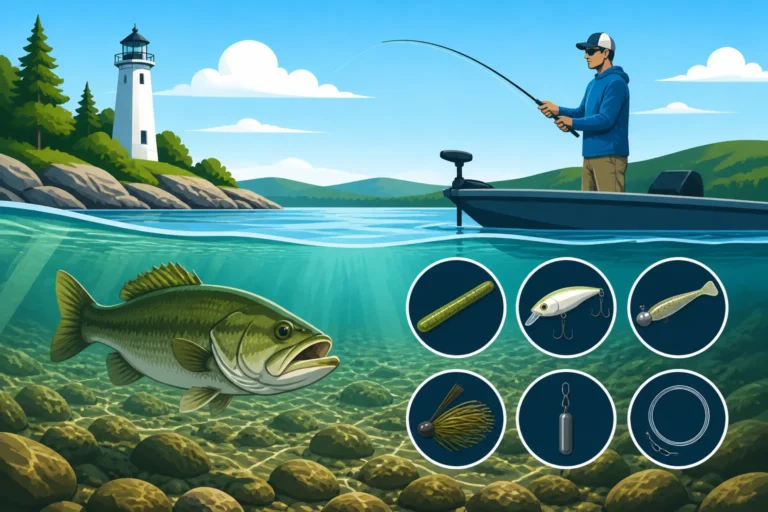
- Medium-Heavy Casting Setup: This is your workhorse for many power fishing techniques. A 6'6" to 7'3" medium-heavy rod with a fast action tip is ideal. Pair this with a baitcasting reel in a 6.3:1 to 7.1:1 gear ratio. This setup is perfect for throwing spinnerbaits, crankbaits, jigs, and larger soft plastics like Texas-rigged worms. The backbone allows for strong hooksets, and the fast tip provides sensitivity for feeling bites and accurate casting.
- Medium-Light or Medium Spinning Setup: For finesse techniques, lighter lures, or fishing with smaller baits, a spinning rod is indispensable. A 6'6" to 7' medium to medium-light rod with a fast action tip and a 2500 or 3000 series spinning reel is a fantastic choice. This setup excels with wacky-rigged worms, drop shots, small jigs, and light topwater lures. It's also often easier for beginners to master casting.
If you're just starting, a versatile medium-heavy spinning combo can actually handle a surprising amount of tasks. However, as you get more serious, having both a casting and spinning setup will open up a wider world of techniques. Look for reputable brands; you can often find great value options from companies like Ugly Stik, Shimano, or Daiwa on platforms like Amazon.
Line Choices: Monofilament, Fluorocarbon, and Braided
The fishing line you choose has a huge impact on how your lure performs, how you feel bites, and ultimately, whether you land the fish. Each type has its own strengths and weaknesses.
- Monofilament: Often called "mono," this is a classic for a reason. It's affordable, easy to tie knots with, and has a good amount of stretch, which can be forgiving when a bass makes a sudden run. However, its stretch can also reduce sensitivity, and it has more memory, meaning it retains coils from the spool. Mono is great for topwater lures because it floats and for crankbaits where the stretch helps prevent hooks from tearing out.
- Fluorocarbon: "Fluoro" is nearly invisible underwater, making it excellent for clear water conditions where bass can be line-shy. It's much more sensitive than mono due to its low stretch, and it sinks, which is beneficial for presentations where you want your lure to get down quickly, like Texas rigs, jigs, or drop shots. The downsides? It's generally more expensive, can be stiffer, and requires careful knot tying.
- Braided Line: Made of multiple strands woven together, braid offers incredible strength for its diameter, has virtually no stretch (maximum sensitivity!), and casts exceptionally well. It's fantastic for fishing in heavy cover where you need to muscle fish out of weeds, or for techniques requiring maximum feel like jigging. Because it's opaque and highly visible, many anglers use a fluorocarbon or monofilament leader (3-6 feet) tied to the braid for invisibility and abrasion resistance. You can find excellent braided lines from brands like PowerPro or Spiderwire on Amazon.
A common approach is to spool your baitcasting reels with 15-20 lb fluorocarbon or 30-50 lb braid with a fluoro leader. Your spinning reels might hold 6-10 lb fluorocarbon, or 10-20 lb braid with a lighter fluoro leader.
Terminal Tackle and Accessories
Beyond rods, reels, and line, you'll need a well-stocked tackle box. This is where the small but mighty components live.
- Hooks: You'll need various types and sizes. Worm hooks (e.g., Extra Wide Gap or EWG hooks) from sizes 2/0 to 5/0 are essential for soft plastic worms and creatures. Jig heads in various weights (1/8 oz to 1/2 oz) and hook sizes (1/0 to 3/0) are crucial for jigs and swimbaits. Offset hooks are key for Texas rigging.
- Weights: Bullet weights (1/8 oz to 1/2 oz) for Texas rigging, drop shot weights, and tungsten weights (which are more sensitive and compact than lead) are important for getting your baits down.
- Swivels and Snaps: While not always necessary for bass, small barrel swivels can prevent line twist, especially with certain crankbaits. Snaps can make changing lures quicker, but many purists tie directly for better action and strength.
- Pliers/Forceps: Indispensable for removing hooks, cutting line, and fixing minor issues.
- Line Cutters/Scissors: A sharp pair of scissors or dedicated line cutters makes clean cuts, especially with braided line.
- Measuring Tape/Scale: For documenting your catches, especially if you're participating in a tournament or just want bragging rights for a Connecticut state record largemouth bass weight.
- Landing Net: A rubberized net is gentle on fish, preventing scale damage, and makes landing bigger bass much safer for both you and the fish.
Having a good selection of these items, organized in a tackle box, will ensure you're ready for any situation on the water.
Prime Largemouth Bass Fishing Locations in Connecticut
Connecticut is blessed with an abundance of freshwater bodies, many of which hold robust populations of largemouth bass. While some spots are famous, others are hidden gems that local anglers guard closely. The key is to explore and find waters that match your preferred fishing style, whether that's from a boat, kayak, or the shore.
Top Lakes and Ponds for Largemouth
Connecticut boasts several fantastic lakes and ponds that are renowned for their largemouth bass fishing. These often feature diverse habitats, ample forage, and good public access.
- Candlewood Lake: Located in western Connecticut, Candlewood is a major player. It's a large, deep lake with incredible structure, including submerged foundations, rock piles, and weed lines. It holds both numbers of bass and true trophy-sized fish. It's a popular spot for tournaments and offers excellent opportunities for both boat and kayak anglers. You can find detailed information in our Candlewood Lake Bass Fishing guide.
- Bantam Lake: Connecticut's largest natural lake, Bantam, is another excellent choice, particularly for its abundant weed growth which largemouth adore. It also has plenty of docks and fallen trees, providing perfect ambush points. Anglers here often do well with frogs, swim jigs, and Texas-rigged plastics around the thick cover.
- Lake Lillinonah and Lake Zoar: These are flow-through lakes on the Housatonic River, offering different characteristics. Lillinonah is known for its strong current areas and varied depths, while Zoar can be a bit more stained and weedy in parts. Both hold quality largemouth, especially around points, coves, and submerged timber.
- Mashapaug Lake: Up in Union, Mashapaug is known for its clear water and deep-water largemouth. It can be challenging, but rewards anglers who fish patiently and understand deep-water structure.
- Lake Wononskopomuc (Lakeville Lake): Another deep, clear lake in the northwest corner, offering good largemouth opportunities, though it often requires a more finesse approach.
These are just a few of the larger, well-known lakes. Don't overlook the myriad of smaller town ponds and reservoirs, many of which are stocked or managed by the CT DEEP and hold excellent populations of bass. Our guide to the Best Bass Fishing Lakes in Connecticut offers even more options.
River and Stream Largemouth Opportunities
While smallmouth bass tend to dominate faster-moving rivers, largemouth bass can be found in the slower, deeper sections of many Connecticut rivers and larger streams, particularly in oxbows, backwaters, and slack-water coves.
- Connecticut River: The state's namesake river offers incredible fishing. Look for largemouth in the vast network of coves, backwaters, and tributaries off the main channel, especially from Hartford south to the tidal influence. Areas with dense lily pads, laydowns, and docks are prime territory. This is where you might also encounter the exciting Connecticut River Striped Bass Fishing in tidal areas.
- Housatonic River (lower sections): Downstream of some of the more famous trout management areas, the Housatonic widens and slows, creating habitat more suitable for largemouth. Look for them in slower pools, eddies, and areas with submerged vegetation.
- Smaller Rivers and Tributaries: Many of Connecticut's smaller rivers and streams, like the Farmington River's slower lower sections or the Quinnipiac River, have stretches with slower current and more structure, where largemouth can thrive. These often provide more intimate fishing experiences away from the crowds. Exploring these areas by kayak or canoe can be incredibly rewarding.
When fishing rivers, pay close attention to current breaks, confluence points, and any significant changes in depth or bottom composition. Largemouth will almost always position themselves out of the main current, waiting for food to be swept by.
Public Access vs. Hidden Gems
Connecticut offers a good amount of public access to its lakes and rivers, often through state boat launches, town parks, or designated fishing areas. The CT DEEP website provides interactive maps and lists of public access points, which is an invaluable resource. Many state parks also have excellent fishing ponds; for a comprehensive overview, see our Connecticut State Park Fishing Guide.
However, some of the most consistent largemouth fishing can be found in lesser-known ponds, small town reservoirs, or private waters where access is limited. These "hidden gems" often see less pressure, allowing bass to grow larger and be less wary. While respecting private property is paramount, doing your research, talking to local tackle shop owners, or joining local fishing clubs can open doors to these fantastic opportunities. Often, these smaller bodies of water require a stealthier approach, perhaps with a kayak or float tube, to avoid spooking the fish. Always verify local regulations and access rules before heading out.
Seasonal Strategies for Connecticut Largemouth Bass
Largemouth bass are cold-blooded creatures, and their behavior is heavily dictated by water temperature and the changing seasons. What works in spring won't necessarily work in summer, and a hot fall bite can quickly turn off with the first hard freeze. Adapting your approach throughout the year is crucial for consistent success on Connecticut waters.
Spring: Pre-Spawn and Spawning Frenzy
Spring is arguably one of the most exciting times to target largemouth bass in Connecticut. As ice melts and water temperatures rise, bass begin to shake off their winter lethargy and move into shallower waters.
- Pre-Spawn (Water Temps 45-55°F): This phase sees bass migrating from their deeper wintering holes to shallower, warmer staging areas. They are hungry and aggressive, trying to pack on weight before the rigors of spawning. Look for them on points, creek channel edges, and secondary breaks leading into shallow coves. Crankbaits, spinnerbaits, and jerkbaits fished slowly are excellent choices for covering water and triggering strikes from these active fish. Fishing just before or after a cold front can be tricky, as outlined in our guide on Cold Front Fishing Tactics for Connecticut Bass, but pre-spawn fish can still be caught with slower presentations.
- Spawning (Water Temps 55-65°F): Once water temperatures consistently hit the mid-50s, male bass move onto shallow flats, bays, and protected coves to fan out circular beds, often near cover like submerged logs or lily pad stems. Females will soon join them. During this time, bass are highly territorial and will strike at anything perceived as a threat to their nest. Sight fishing for bedding bass with soft plastics (like tubes, creature baits, or lizards) can be incredibly effective, but it's also a controversial topic. Many anglers prefer to leave bedding fish alone to ensure successful spawning and future populations. If you do target them, practice immediate and careful catch and release. This period often coincides with the Connecticut Spring Fishing Day and Opening Day Rules for trout, but bass are on their own schedule.
Summer: Deep Water and Weedline Tactics
Summer brings consistently warm water, and while it means longer days to fish, it also often pushes largemouth bass to seek refuge in deeper, cooler water or dense, oxygen-rich cover.
- Early Summer (Water Temps 68-75°F): Bass are often still relatively shallow early in the season, cruising along weed lines, docks, and submerged timber. Topwater lures at dawn and dusk can be incredibly exciting. During the day, flip and pitch jigs or Texas-rigged plastics into heavy cover. As the sun gets higher and temperatures climb, bass will often move to the outer edges of weed beds, deeper humps, or suspended over open water near baitfish schools.
- Mid-Summer (Water Temps 75°F+): This is when the "deep water" bite often kicks in. Bass will retreat to thermoclines in deeper lakes, or seek the coolest, shadiest, and most oxygenated cover they can find in shallower ponds. Look for them on deep points, ledges, humps, offshore weed beds, or beneath docks and overhanging trees. Techniques like drop-shotting, deep-diving crankbaits, or even Carolina rigs become very effective. Frog fishing over dense mats of vegetation is also a fantastic way to target summer bass seeking shade and ambush points within the thick stuff. The heat can be brutal, so remember to hydrate!
Fall: Feeding Blitz Before Winter
As air and water temperatures begin to cool in September and October, largemouth bass enter a fantastic feeding period, often referred to as the "fall turnover" or "feeding blitz."
- Early Fall (Water Temps 60-70°F): Bass, sensing the impending winter, become incredibly aggressive as they chase baitfish that are also moving shallower. They'll often feed heavily in areas rich with dying vegetation, along rocky points, and on flats where baitfish are abundant. Spinnerbaits, chatterbaits, lipless crankbaits, and swimbaits are excellent for covering water and imitating fleeing bait. This is a time when active presentations often outfish subtle ones.
- Late Fall (Water Temps 45-60°F): As temperatures continue to drop, bass will transition to deeper breaks, humps, and channels, but they're still feeding. Their metabolism slows, so presentations need to be slower. Jigs, slow-rolled spinnerbaits, and suspended jerkbaits can be deadly. Look for vertical structure like deep weed edges or rock piles, as bass will hold tight to these features. The baitfish they are targeting will also be schooling up tighter, so finding bait is key to finding the bass.
Winter: Ice Fishing and Cold Water Considerations
While many anglers hang up their bass gear in winter, opportunities still exist for hardy individuals, especially in Connecticut's ice fishing season.
- Open Water (Water Temps below 45°F): If lakes remain unfrozen, bass will be in their deepest wintering holes, often suspended or tucked tight to bottom structure like rock piles or channel bends. A very slow, vertical presentation with small jigs, spoons, or blade baits is required. Bites will be extremely subtle.
- Ice Fishing: Once safe ice forms, targeting largemouth through the ice is a unique challenge. They're not as active as pike or crappie, but they can be caught. Look for them near the deepest parts of weed lines or along abrupt drop-offs. Tip-ups set with live shiners or small jigs tipped with a grub or a small piece of worm can entice a strike. Always prioritize safety on the ice; learn about safe ice thickness and be aware of changing conditions.
Regardless of the season, understanding Best Time of Year to Fish in Connecticut can greatly enhance your success, but always be ready to adapt to local conditions.
Top Techniques and Lures for Connecticut Largemouth Bass
There are countless ways to catch a largemouth bass, and much of the fun comes from experimenting with different techniques and lures. Having a versatile arsenal and knowing when and where to deploy each will make you a much more effective angler. The key is to match your presentation to the conditions and the bass's mood.
Casting and Pitching Soft Plastics
Soft plastics are arguably the most versatile and effective lures for largemouth bass, mimicking everything from worms and lizards to crayfish and baitfish.
- Texas Rigging: This is the bread and butter of soft plastic fishing. A bullet weight is threaded onto the line, followed by an offset worm hook (e.g., a 3/0 or 4/0 EWG hook). The hook point is then buried into the plastic, making it weedless. This setup is fantastic for fishing in weeds, brush, or heavy cover. Worms (like Zoom Trick Worms or Berkley PowerBait worms), creature baits (like a Strike King Rage Craw), and lizards are all excellent choices. Cast or pitch them into cover, let them sink, and work them slowly along the bottom with hops and drags. The weight of the bullet sinker helps the lure penetrate cover.
- Carolina Rigging: Often used for fishing deeper water or covering open flats, a Carolina rig uses a heavier "egg" or "barrel" weight (1/2 oz to 1 oz) followed by a bead, a swivel, and then a 2-4 foot fluorocarbon leader with a small worm hook. This rig allows your plastic bait to float freely above the bottom, giving it a natural, enticing action. It's excellent for fishing points, humps, and deep weed edges.
- Wacky Rigging: This simple but deadly technique involves hooking a straight-tailed worm (like a Senko or Yum Dinger) through its center, allowing both ends to wiggle seductively as it sinks. It's often fished weightless or with a small nail weight inserted into one end. Wacky rigs are fantastic for finicky bass in clear water, around docks, or over sparse cover. The subtle, shimmying fall is often irresistible.
Crankbaits and Spinnerbaits: Covering Water
When bass are active and scattered, or you need to quickly locate fish, crankbaits and spinnerbaits are your go-to options for covering water efficiently.
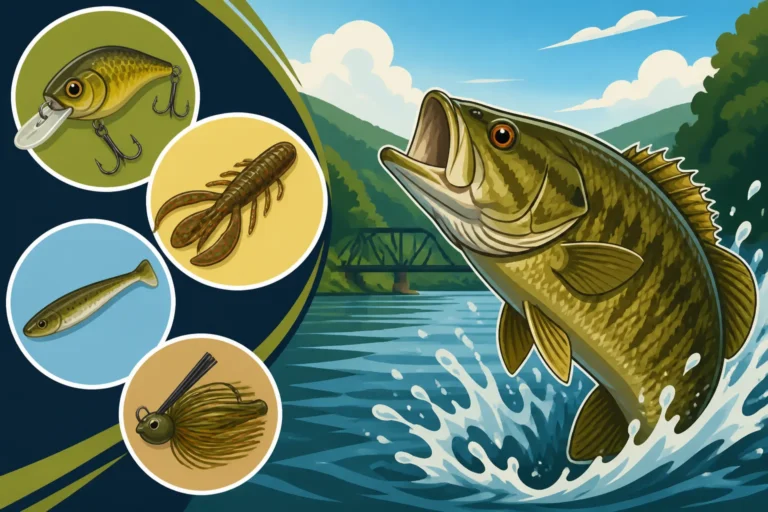
- Crankbaits: These hard-bodied lures come in various shapes, sizes, and diving depths. Shallow-diving crankbaits are great for ripping through sparse weeds or bumping off shallow cover. Medium-diving crankbaits (like those from Rapala or Strike King) are versatile for fishing points and intermediate depths. Deep-diving crankbaits are essential for targeting bass on offshore humps, ledges, or channels in summer. The key is to select a crankbait that dives to the depth where the bass are holding and to "deflect" it off structure, which often triggers reaction strikes. Look for bright, flashy colors in stained water, and more natural patterns in clear water.
- Spinnerbaits: Consisting of a wire frame with one or more spinning blades and a weighted head with a skirted hook, spinnerbaits (such as those by Booyah or War Eagle) are incredibly effective in many situations. The flash and vibration mimic baitfish, and their weedless design makes them excellent for fishing through cover like weeds, submerged brush, and standing timber. Slow-rolling them along the bottom, burning them over submerged grass, or bumping them off stumps are all highly productive retrieves. Colorado blades provide more thumping vibration, while willow leaf blades offer more flash and a faster retrieve.
Topwater Excitement and Frog Fishing
Nothing beats the adrenaline rush of a largemouth exploding on a topwater lure. These lures are fished on the surface, creating commotion that draws bass up from below.
- Poppers and Walkers: Poppers (like a Heddon Pop-R) create a "splashing" or "chugging" sound, mimicking a struggling baitfish. Walkers (like a Zara Spook) have a side-to-side "walk-the-dog" action that's highly enticing. Both are fantastic during low-light conditions (dawn, dusk, cloudy days) or when bass are feeding aggressively in shallower water.
- Frogs and Toads: Hollow-bodied frogs (such as a Spro Bronzeye Frog) are designed to be fished over dense mats of lily pads, duckweed, or matted grass – places where other lures would snag instantly. Their weedless design allows them to glide over the cover, and when a bass strikes, it's often a violent explosion. Soft plastic toads are similar but often fished with a standard worm hook or belly-weighted hook for a faster, buzzing retrieve just under the surface. This is heavy cover fishing at its best, so stout tackle is a must.
Jigging and Finesse Tactics
When the bite gets tough, or bass are pressured, turning to jigs and finesse techniques can often unlock stubborn fish.
- Jigs: Bass jigs come in various styles (flipping jigs, football jigs, swim jigs) and are incredibly versatile. They typically consist of a weighted head, a weed guard, and a skirt, to which you add a soft plastic trailer (like a craw or grub). Flipping and pitching jigs into heavy cover is a go-to for many pros. Football jigs are excellent for fishing rocky bottoms or deep humps. Swim jigs are retrieved steadily through weeds, mimicking baitfish or crawfish. Jigs are slow, methodical presentations that often entice larger, wary bass.
- Drop Shot: The drop shot rig is a Japanese finesse technique that has taken the bass world by storm. It involves tying a hook directly to the main line, and then a weight (often a cylindrical drop shot weight) to the tag end of the line, anywhere from 6 inches to several feet below the hook. This allows your soft plastic worm or creature bait to hover suspended in the water column, right in the bass's face, with subtle movements. It's deadly for deep, clear water, around docks, or when bass are lethargic.
- Ned Rig: This ultra-finesse technique uses a small, mushroom-shaped jig head (often 1/16 to 1/8 oz) paired with a small, buoyant soft plastic worm (usually 2.5-3 inches long). The combination creates a unique stand-up presentation on the bottom. It's incredibly effective for tough bites, clear water, and cold water conditions. This rig might look small, but it catches surprisingly big bass!
For all these techniques, you can find a vast array of options from brands like Strike King, Gary Yamamoto, Z-Man, and Googan Baits, many of which are readily available on Amazon. Remember that the "best" technique is always the one that the fish are biting on that day.
Tips for Locating and Targeting Trophy Largemouth
Catching a largemouth bass is fun, but landing a true "hawg" – a bass weighing 5 pounds or more – is an angler's dream. While luck plays a small role, consistently catching trophy largemouth in Connecticut requires a focused approach, patience, and a deep understanding of their behavior. These larger fish are often older, wiser, and much more elusive.
Reading the Water and Identifying Key Structures
Trophy bass don't just hang out anywhere; they have specific preferences. Your ability to "read the water" and identify prime real estate will be your biggest asset.
- Isolated Cover: While smaller bass might group up in large weed beds, a true trophy often claims an isolated piece of cover for itself. This could be a lone stump at the edge of a channel, a single large boulder on a flat, or the only dock in a vast open area. These isolated features offer an unchallenged ambush point and a sense of security. Take the time to meticulously fish around every angle of such features.
- Major Drop-offs and Ledges: In larger, deeper lakes like Candlewood, significant depth changes are crucial. Bass will often hold along the edges of these drop-offs, moving up and down to feed. Look for irregularities along these edges, like a small point or a sudden bend, which can concentrate fish. Electronic depth finders and side-imaging sonar are invaluable tools for identifying these subtle nuances.
- Transition Zones: Big bass often position themselves in areas where different types of habitat meet, creating a "transition zone." This could be where rock meets sand, weeds meet open water, or a shallow flat transitions into a creek channel. These zones offer a variety of food sources and cover options within a short distance, making them highly attractive. For more on finding the right spots, explore our guide to the Best Fishing Lakes in Connecticut.
Understanding Forage and Their Influence
Larger bass need larger meals to sustain their growth. Therefore, understanding the primary forage in a body of water and how that forage behaves is critical.
- Baitfish Schools: If a lake has a healthy population of alewives, shiners, or juvenile panfish, trophy bass will follow these schools. Look for signs of baitfish on your sonar, or observe birds diving and active surface commotion. When bait is present, bass often feed aggressively. Matching your lure size and color to the local baitfish (e.g., using a large swimbait or a big crankbait that mimics an alewife) can be incredibly effective.
- Crayfish: In many Connecticut lakes and rivers, crayfish are a primary food source for big bass, especially in rocky areas. Bass will gorge on them. Jigs with craw trailers, football jigs, and crankbaits that mimic crayfish are excellent choices when bass are feeding on these crustaceans. Pay attention to rocky points, humps, and rip-rap areas where crayfish typically reside.
- Larger Prey Items: Don't underestimate a big bass's willingness to eat something substantial. Frogs, snakes, and even small rodents can be on the menu. This is where big topwater frogs, large soft plastic creature baits, or even specific swimbaits come into play. Targeting areas where such prey is abundant, like lily pad fields or grassy banks, can be highly productive.
Boat vs. Shore: Adapting Your Approach
Whether you're fishing from a boat or the shore significantly impacts your access and strategy for trophy bass.
- Boat Fishing: A boat (whether a bass boat, jon boat, or even a small aluminum boat with a trolling motor) offers the ultimate advantage, allowing you to quickly move between spots, explore vast areas, and precisely position yourself. With electronics, you can scan for structure, drop-offs, and bait schools. This mobility is crucial for chasing actively feeding fish or dissecting specific pieces of cover. Focus on offshore structure, deep weed lines, and secluded coves that might be inaccessible from shore.
- Shore Fishing: While more limited in mobility, shore anglers can still catch trophy bass, especially on smaller ponds, reservoirs, or areas with good public access. The key is to be stealthy, make accurate casts, and fish thoroughly. Focus on visible cover like docks, fallen trees, brush piles, and the edges of weed beds within casting distance. Early morning and late evening often yield the best results from shore, as bass move shallower under low light. Walking the bank with a few versatile lures and focusing on productive stretches can be surprisingly effective. Check out our guide on Best Shore Fishing Spots in Connecticut for some prime locations.
No matter your preferred method, patience is a virtue when targeting trophy largemouth. They are often solitary and may not feed constantly, so presenting your lure repeatedly and precisely to high-potential areas is often the key.
Conservation and Responsible Largemouth Bass Angling in CT
As anglers, we have a responsibility to protect the resources we cherish. Responsible angling practices ensure that future generations can enjoy the thrill of catching largemouth bass in Connecticut as much as we do today. This involves understanding and adhering to regulations, practicing proper catch and release, and doing our part to protect their habitats.
Catch and Release Best Practices
Many trophy largemouth bass are caught and released, which is fantastic for maintaining healthy populations of larger fish. However, "release" doesn't just mean throwing the fish back; it means doing so in a way that maximizes its chances of survival.
- Minimize Handling Time: The less time a bass is out of water, the better. Have your camera ready if you want a photo, but make it quick.
- Wet Hands: Always wet your hands before touching a fish. Dry hands can remove the protective slime coat, making the fish vulnerable to disease.
- Support the Fish: If taking a picture, support the fish horizontally with one hand under its belly and the other gently gripping the lower jaw. Avoid holding large fish vertically by just the jaw, as this can damage their spine and internal organs.
- De-hook Gently: Use pliers or forceps to quickly and carefully remove the hook. If a fish is deeply hooked, especially in the gills, it might be best to cut the line as close to the hook as possible. Barbless hooks can make de-hooking much easier and less traumatic for the fish.
- Revive If Necessary: If a bass looks stressed or lethargic, hold it gently in the water by its tail and move it back and forth to force water over its gills until it swims away strongly on its own. For more general advice on fishing ethics, refer to Connecticut Fishing Regulations Explained.
Understanding Regulations and Limits
Connecticut has specific regulations in place to manage largemouth bass populations, and it's every angler's responsibility to know and follow them. These regulations can vary by body of water, so always check the latest Connecticut Angler's Guide published by the CT DEEP.
- Size Limits: There might be minimum length limits in place, meaning you cannot keep a bass shorter than a certain size. For instance, many lakes have a 12-inch minimum length limit.
- Daily Creel Limits: This refers to the maximum number of bass you can keep in a single day. Often, this is a limit of 6 bass per person.
- Special Regulations: Some specific lakes or ponds might have "special regulations" that differ from the statewide rules, such as slot limits (where only fish within a certain size range can be kept, or fish outside a certain size range must be released) or catch-and-release only rules. Always check for signs at the boat launch or consult the CT DEEP guide.
- Fishing License: Remember, anyone 16 years of age or older needs a valid Connecticut Fishing License Guide for 2026 to fish in Connecticut waters. Make sure you purchase and carry your license as required.
Failing to adhere to these regulations can result in fines and other penalties, as detailed in our guide on Fishing Without a License in Connecticut: Penalties. It's not worth the risk, and it ultimately harms the resource.
Protecting Habitats for Future Generations
Beyond catch and release and regulations, long-term conservation relies on protecting the habitats that largemouth bass call home.
- Prevent Pollution: Never litter. Take out everything you bring in, and if you see trash, pick it up. Fishing lines, plastic baits, and other debris can harm fish and wildlife.
- Avoid Spreading Invasive Species: Invasive aquatic plants and animals can decimate native habitats and outcompete native fish. Always clean, drain, and dry your boat, trailer, and gear thoroughly between fishing trips, especially when moving between different bodies of water. This prevents the spread of species like zebra mussels or Eurasian watermilfoil.
- Report Violations: If you witness someone violating fishing regulations or harming the environment, report it to the CT DEEP Environmental Conservation Police. They are on the front lines protecting our natural resources.
By practicing these responsible angling ethics, we contribute to healthy, thriving largemouth bass populations and ensure that the joys of fishing continue for years to come.
Largemouth Bass Lure Comparison Table
To help you quickly decide which lure to tie on, here's a handy comparison of some of the most effective largemouth bass lures, along with their ideal conditions and characteristics.
| Lure Type | Best Conditions | Typical Depth Range | Key Characteristics | Retrieve Style |
|---|---|---|---|---|
| Texas Rigged Worm | Heavy cover (weeds, brush), sensitive bite, clear/stained water | Bottom to Mid-water | Weedless, natural presentation, mimics worms, crawfish, lizards. Extremely versatile. | Drag, hop, twitch, let sink. |
| Jig (Flipping/Pitching) | Heavy cover, cold water, targeting big bass | Bottom | Weedless, compact, mimics crawfish or baitfish. Excellent for precision presentations. | Flip/pitch into cover, let sink, subtle hops/shakes. |
| Crankbait (Deep-Diving) | Offshore structure, ledges, humps, covering open water | Mid-water to Deep | Creates vibration and flash, mimics baitfish. Dives to specific depths. | Steady retrieve with pauses, deflect off structure. |
| Spinnerbait | Weeds, stained water, windy conditions, active fish | Shallow to Mid-water | Flash and vibration attract fish, relatively weedless. Effective for covering water. | Steady retrieve, slow roll, "burn" over cover. |
| Hollow Body Frog | Dense matted vegetation, lily pads, heavy topwater bite | Surface | Weedless, mimics frog or struggling critter. Exciting topwater blow-ups. | Walk-the-dog, pop, pause over open pockets. |
| Drop Shot Rig | Clear water, deep water, pressured fish, finesse bite | Suspended in water | Natural, hovering presentation, mimics small baitfish or worms. Maximizes sensitivity. | Subtle shakes, slight lifts, keep weight on bottom, retrieve slowly. |
| Ned Rig | Cold water, tough bite, ultra-finesse, clear water | Bottom | Small, subtle, buoyant plastic stands up. Irresistible to finicky bass. | Short hops, drags, dead-stick. |
Disclaimer
The information provided in this guide is for general informational purposes only and is subject to change. Fishing regulations, season dates, and license requirements are set by the Connecticut Department of Energy and Environmental Protection (DEEP) and can be updated annually. Always consult the official Connecticut Angler's Guide or the CT DEEP website for the most current and accurate regulations before heading out to fish. Adherence to all local, state, and federal laws is the sole responsibility of the angler.