Best charters offering instructional fly casting lessons
It’s a familiar frustration for many fly anglers: you’ve watched all the YouTube videos, read the books, and spent hours in the backyard whipping a line around, but that perfect loop still feels elusive. Or maybe you've been fishing for years, but certain conditions – a tricky wind, tight casting quarters, or needing more distance – consistently hold you back. You want to improve, you want to feel more confident and connected to your rod, but knowing where to get personalized, expert guidance can feel like searching for a needle in a haystack. This comprehensive guide is here to help you navigate the world of Connecticut fishing charters that specialize in instructional fly casting lessons, ensuring you find the perfect mentor to elevate your game.
Why Seek Instructional Fly Casting Charters?
Let's be honest, fly casting looks easy when a seasoned pro does it, but the reality is often much different. There’s a subtle dance between rod, line, and leader that takes more than just brute force or a quick flick of the wrist. Many anglers hit a plateau, struggling with common issues like tailing loops, insufficient distance, or inaccurate presentations. This is where a dedicated instructional charter truly shines, offering more than just a day on the water; it's an investment in your skills that pays dividends for every future fishing trip.
Beyond the Basics: Refining Your Cast
Even if you can get a fly out there, there's always room for improvement. Instructional charters go far beyond teaching you the very first steps. They can meticulously break down your current casting stroke, identify subtle flaws you might not even realize you have, and provide targeted drills to correct them. Think about it: a small adjustment in your grip, the timing of your stop, or the plane of your cast can dramatically improve your line speed, accuracy, and overall efficiency. These lessons aren't just for beginners; intermediate and advanced anglers often seek out instruction to master specific casts like the double haul for longer distances, specialized roll casts for tight situations, or curve casts to avoid drag. It's about turning a functional cast into an art form, making your time on the water more productive and enjoyable.
Imagine trying to fish a particularly tricky section of the Farmington River Trophy Trout Stream Rules where overhanging branches demand a precise roll cast, or needing to reach a rising trout on the far bank of a wide pool. Without the right technique, these scenarios can quickly become frustrating rather than fun. A dedicated instructor can show you how to read the water and execute the perfect cast to overcome these obstacles, adding a whole new dimension to your angling repertoire.
Mastering Connecticut's Unique Waters
Connecticut boasts an incredible diversity of fishing environments, from the narrow, intimate trout streams of the Litchfield Hills to the expansive tidal flats of Long Island Sound Fishing Guide. Each environment presents its own unique casting challenges, and a generic casting lesson won't fully prepare you. An instructional charter in Connecticut will not only teach you the mechanics of casting but also how to adapt those mechanics to the specific conditions you'll encounter here.
For example, learning to handle the wind that often whips across a large lake like Candlewood or the shoreline of Long Island Sound requires different techniques than casting on a sheltered river. Your guide can teach you how to "punch" a fly through the wind, how to present a large streamer to a hungry striped bass in a strong current, or how to delicately drop a tiny dry fly onto a glass-smooth pool on one of Connecticut's premier trout streams. They'll also discuss fly selection and how your leader and tippet choice impacts your cast. This localized expertise is invaluable, giving you practical, real-world skills that make a direct impact on your success rate in our local fisheries. Knowing how to adapt your cast on the fly is a game-changer when conditions aren't perfect, which, let's face it, is most of the time.
The Confidence Boost for Every Angler
There’s a profound difference between trying to cast and knowing you can cast. When you're constantly fighting your line, struggling with accuracy, or feeling embarrassed by your performance, it takes a toll on your overall enjoyment of the sport. An instructional charter provides a safe, encouraging environment to learn and practice without judgment. You get immediate, personalized feedback, allowing you to correct mistakes in real-time.
This focused attention builds confidence like nothing else. Suddenly, those intimidating stretches of water or challenging fish species don't seem so daunting. You’ll approach each cast with a sense of purpose and control, knowing you have the skills to present your fly effectively. This renewed confidence translates into more relaxed, enjoyable fishing trips, and ultimately, more fish caught. It frees you up to focus on the whole experience – reading the water, spotting fish, and appreciating the natural beauty around you – instead of constantly battling your own casting mechanics. It's truly a transformative experience for many anglers, especially if you've been stuck in a rut for a while.
What to Look for in a Connecticut Fly Casting Charter
Finding the right instructional charter isn't just about picking the first name you see. It requires a bit of research to ensure you're getting quality instruction tailored to your needs. The goal is to find a guide who not only knows how to cast but also knows how to teach, and can adapt their methods to your individual learning style and skill level.
Certified or Experienced Instructors
While formal certifications aren't always a requirement for being an excellent guide, they often indicate a commitment to teaching excellence. Look for guides who hold certifications from reputable organizations like Fly Fishers International (FFI) as Certified Casting Instructors (CCI) or Master Certified Casting Instructors (MCCI). These certifications mean they've passed rigorous tests demonstrating both their casting proficiency and their ability to effectively teach others.
However, many exceptional guides may not hold such certifications but possess decades of on-the-water experience and a natural knack for instruction. When researching, pay close attention to their bio and client testimonials. Do they specifically mention their experience in teaching fly casting? Do past clients praise their patience, clarity, and ability to break down complex techniques? A guide who has spent countless hours on Connecticut's Best Fly Fishing Rivers in Connecticut and patiently guided newcomers through their first trout hook-up is often an excellent choice. Don’t hesitate to call potential guides and chat about their teaching philosophy before booking; a good fit for instruction is paramount. Platforms like FishingBooker often allow you to read detailed profiles and reviews of guides, which can highlight their teaching abilities.
Tailored Lesson Plans
One-size-fits-all instruction rarely works for fly casting. Everyone comes with different experience levels, physical capabilities, and learning styles. The best instructional charters will offer or custom-design a lesson plan that specifically addresses your goals and challenges.
Before you even step on the boat or wade into the river, a good instructor will take the time to understand what you want to achieve. Are you a complete beginner who needs to learn the basic pick-up and lay-down? Are you an intermediate angler struggling with line management or needing to learn a specific specialty cast? Or are you advanced, seeking to perfect your double haul for distant saltwater targets like those found in Striped Bass Fishing in Long Island Sound? They should ask about your current skill level, what frustrations you're experiencing, and what you hope to accomplish by the end of the session. A truly personalized lesson will often involve starting with an assessment of your current casting, then moving into targeted drills and practical application on the water. This ensures that every minute of your time is spent on improving your specific areas of need.
Equipment Provided and Recommended
For many beginners, investing in a full fly fishing setup before even knowing if they like the sport can be a significant barrier. A great instructional charter will often provide all the necessary equipment, including rods, reels, lines, and even flies. This allows you to try out different setups and focus solely on the casting mechanics without worrying about gear.
Beyond providing the basics, a knowledgeable guide can offer invaluable advice on purchasing your own equipment. They can recommend rod weights and actions suitable for Connecticut’s various fisheries, suggest appropriate fly lines for different casting styles, and even point you towards local fly shops like UpCountry Sportfishing on the Farmington or Housatonic River Outfitters, where you can get hands-on with gear. They'll explain why a 5-weight might be perfect for Fly Fishing for Trout in Connecticut but a 9-weight is essential for chasing stripers. This guidance can save you from making costly mistakes and ensure you invest in gear that truly matches your newfound skills and fishing aspirations. Be sure to check what's included when you're looking at Connecticut Fishing Charter Cost Guide to avoid any surprises.
Finding the Right Instructional Charter in Connecticut
So, you're ready to improve your fly casting and explore Connecticut's fantastic fisheries with new skills under your belt. The next step is actually finding that perfect guide. It might seem daunting, but there are several reliable avenues to explore.
Online Platforms and Directories
In today's digital age, online platforms are often the first stop for finding any kind of fishing charter, and instructional fly casting lessons are no exception. Websites like FishingBooker specialize in connecting anglers with guides, offering a wide array of options and helpful filters. You can search specifically for guides who list "fly fishing lessons" or "casting instruction" in their services. These platforms typically feature detailed guide profiles, including their areas of expertise, photos, pricing structures, and, most importantly, client reviews.
When using these sites, make sure to read those reviews carefully. Look for feedback that specifically mentions the guide's patience, teaching ability, and how effectively they communicated casting techniques. Some guides might be excellent at catching fish but less adept at breaking down the mechanics for a student. FishingBooker, for example, allows you to filter by location and activity, making it easier to pinpoint guides operating in areas like the Housatonic or Farmington River, or those specializing in saltwater fly casting lessons for Long Island Sound. This makes comparing different options much more straightforward, especially when trying to understand what Best Guided Trips for Beginners in Connecticut might look like.
| Instructional Charter Search Method | Pros | Cons | Best For |
|---|---|---|---|
| Online Platforms (e.g., FishingBooker) | Wide selection, reviews, easy comparison | Can feel impersonal, less direct interaction initially | Comparing multiple options, reading feedback |
| Local Fly Shops | Hyper-local knowledge, trusted recommendations | Limited to local network, may have fewer options | Getting insider tips, personalized gear advice |
| Word-of-Mouth | Highly trusted, personal endorsement | Limited reach, relies on your network | Finding truly exceptional, hidden gem guides |
| Direct Guide Websites/Social Media | Direct communication, full portfolio | Requires more individual research | Checking specific guide's style and availability |
Local Fly Shops and Word-of-Mouth
Before the internet made everything instantly searchable, local fly shops were (and still are) the lifeblood of the fly fishing community. These shops are treasure troves of hyper-local knowledge and often have direct relationships with the best local guides and instructors. Step into a shop like Compleat Angler in Darien, Connecticut Outfitters in Wethersfield, or Housatonic River Outfitters in Cornwall, and strike up a conversation. Tell them what you’re looking for – instructional fly casting – and they’ll likely point you toward guides they know and trust.
The advantage here is the personal recommendation; these are people who know the guides personally and can vouch for their teaching skills. Similarly, word-of-mouth recommendations from fellow anglers are incredibly valuable. If a friend or acquaintance raves about a guide who helped them finally "get it," that's a strong endorsement. These often lead to finding guides who are truly passionate about teaching and have a track record of producing confident, skilled casters. Plus, these local shops are often great resources for Fly Patterns for Connecticut Trout Streams and learning about local conditions.
Direct Contact with Guides
Once you’ve narrowed down a few potential guides, whether through online research or recommendations, the next crucial step is to reach out to them directly. This is your opportunity to have a conversation, ask specific questions, and get a feel for their personality and teaching style.
Don't be shy about inquiring about their instructional philosophy, how they structure a lesson, what equipment they provide, and what waters they typically fish for instruction. For example, you might ask: "Do you focus primarily on dry land instruction before moving to the water, or do you prefer to teach directly on the river?" Or, "I'm really struggling with my double haul; how would you typically address that?" A good guide will be happy to discuss these details and reassure you that they can meet your needs. Pay attention to how quickly they respond, the clarity of their answers, and whether they seem genuinely interested in helping you improve. This direct interaction is key to ensuring you find a guide who is not only skilled but also a good match for your learning style, ensuring that your What to Expect on a Connecticut Fishing Charter is a positive one.
What to Expect During Your Instructional Fly Casting Lesson
You've found your guide, booked your lesson, and the day is finally here! Knowing what to expect can help ease any pre-lesson jitters and ensure you make the most of your time on the water. These aren't just fishing trips; they are structured learning experiences designed for maximum benefit.
On-Water vs. Off-Water Instruction
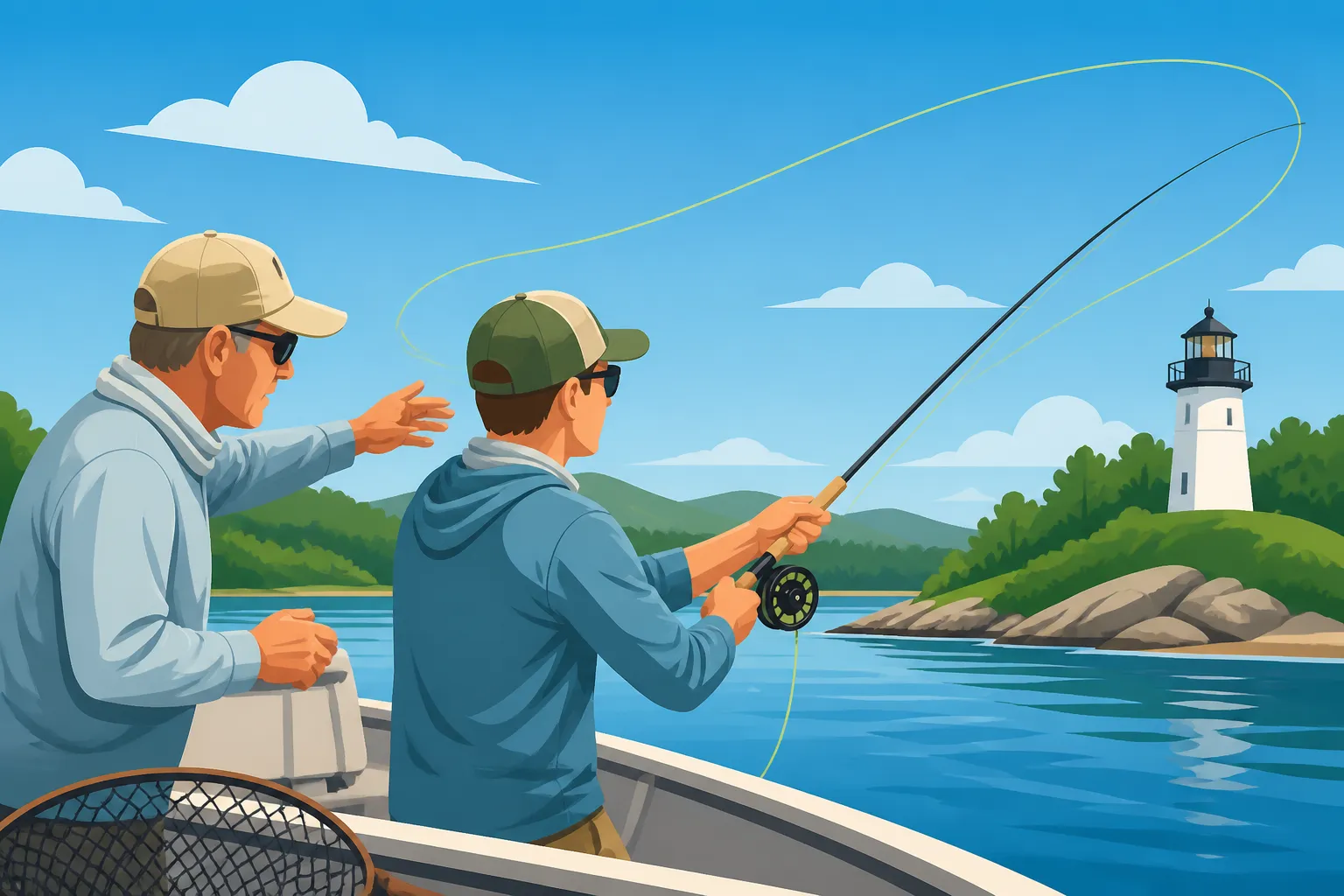
Instructional fly casting lessons often combine both off-water (or "dry land") and on-water components. Your guide might start the session on a grassy area, away from the distractions of moving water and potential fish. This allows them to focus purely on your casting mechanics, using visual aids and verbal cues without the complications of fishing. Here, you'll work on grip, stance, the casting stroke, timing, and loading the rod. This foundational work is crucial for building good habits before adding the challenge of real fishing scenarios.
Once you’ve established a solid understanding of the mechanics, the lesson will typically transition to the water. This is where theory meets practice. You'll apply what you've learned in a real fishing environment, whether it's on a quiet pond, a local trout stream like those mentioned in Best Trout Streams in Connecticut, or even the shores of Long Island Sound. Your guide will help you adapt your cast to current, wind, and obstacles, teaching you how to read the water and present your fly effectively. They'll also often demonstrate Wading Techniques for Connecticut Trout Streams or proper boat etiquette, depending on the venue. This blended approach ensures you grasp both the theoretical "how-to" and the practical "when-to" and "where-to."
Typical Session Flow and Duration
The exact flow of your lesson will depend on its duration, your starting skill level, and your specific goals. However, a general framework often includes:
- Assessment and Goal Setting: The guide will observe your current casting and discuss your objectives for the day.
- Dry Land Instruction: Focusing on core mechanics, drills, and correcting fundamental flaws. This might involve different types of casts like the basic overhead, roll casts, or even learning the intricacies of the single or double haul.
- On-Water Application: Moving to the water to apply the techniques in a fishing context. This could involve targeted practice casts, fishing specific spots, and learning proper line management. If you're on the Housatonic River Fishing Guide, for example, they might show you how to mend your line to avoid drag in different current seams.
- Feedback and Refinement: Throughout the session, your guide will provide constant, constructive feedback, helping you make real-time adjustments. They'll likely demonstrate techniques themselves, offering clear visual examples.
Lessons can range from a half-day (typically 3-4 hours) to a full-day (6-8 hours). A half-day is excellent for focused, intensive instruction on a few key areas, especially for beginners or those targeting specific casting issues. A full-day provides more time for comprehensive instruction, practice, and actual fishing, allowing for deeper immersion and application of skills. For instance, Best Guided Fly Fishing Trips on the Farmington River might offer different durations depending on the season and target species. When booking, consider your stamina and attention span to choose the duration that best suits you.
Post-Lesson Practice and Follow-Up
The learning doesn't stop when the lesson ends! A good instructional guide will often provide you with "homework" – specific drills or practice routines to continue working on your casting. They might recommend places where you can practice on your own, or suggest additional resources like books or videos that align with what you learned.
Some guides even offer follow-up support, whether it's through a quick email exchange to answer questions that arise later, or the option to book a subsequent session to build upon your progress. This continued engagement is incredibly valuable for solidifying your new skills and ensuring that your investment in instruction translates into lasting improvement. Remember, fly casting is a perishable skill, and consistent practice is key to mastery. Your guide isn't just teaching you for one day; they're equipping you with the tools and knowledge to become a lifelong learner and a more proficient angler. The insights gained during these lessons are designed to set you up for success, whether you're tackling Connecticut Trout Season and Stocking Rules or going after a new species.
Disclaimer
This article is for general informational purposes only and does not constitute professional advice. Laws, prices and regulations vary by location and change over time. Consult a qualified professional for guidance on your specific situation.