Best small boat charters for light tackle fishing
There’s a unique thrill that comes from feeling every head shake, every powerful run, and every subtle nibble when you're out on the water. For many anglers, the heavy gear and crowded decks of a big party boat just don't offer that kind of intimate connection. If you're chasing that pure, unadulterated fishing experience, where the fight is fair and the focus is on finesse, then a small boat charter specializing in light tackle fishing in Connecticut might just be your dream trip. This guide will walk you through why small boats and light tackle are a match made in angling heaven for our diverse Connecticut waters, helping you find that perfect personalized adventure.
Understanding Light Tackle Fishing
Light tackle fishing isn't just a style; it's a philosophy. It’s about balancing the playing field, making the catch more sporting, and truly feeling the fish at the end of your line. Instead of overpowering a fish with heavy gear, you rely on skill, precision, and the sensitive response of lighter equipment. It's exhilarating and, frankly, often far more effective in many of Connecticut's inshore and freshwater environments.
The Appeal of Light Tackle: Why It's So Rewarding
Imagine being able to feel a striped bass inhale your lure, or a feisty bluefish thrash against a rod that bends almost to the water's surface. That's the core appeal of light tackle. It's an active, engaging form of fishing that demands your full attention. You're not just cranking a reel; you're dancing with the fish, anticipating its moves, and reacting to every subtle nuance. For many seasoned anglers, the real joy isn't just the catch, but the entire battle fought on equal terms. This style of fishing makes even smaller fish feel like giants, turning an ordinary outing into a memorable contest. It heightens the senses, demanding better casting, more sensitive retrieves, and a deeper understanding of how fish react. It's a genuine test of skill and patience.
When you're fighting a fish on light gear, there's a certain vulnerability that makes the victory sweeter. You're not just reeling in; you're working the rod, adjusting drag, and making micro-decisions with every pump and sweep. It’s a full-body experience that connects you directly to the underwater world. This is especially true when targeting spirited fish like striped bass or bluefish in Long Island Sound, where their sheer power can truly test your light setup. You learn to appreciate the strength of the fish and the capabilities of your equipment in a way that heavier gear simply doesn't allow.
Gear Basics for Light Tackle Angling
So, what exactly constitutes "light tackle"? Generally, it refers to rods and reels designed for lighter line, often in the 6-to-15-pound test range for inshore saltwater or even lighter for freshwater. The rods are typically lighter in power and faster in action, allowing for greater sensitivity and the ability to cast smaller lures or baits with accuracy. Reels are usually smaller spinning or baitcasting models, matching the rod's specifications. The goal is to present a more natural, subtle offering to the fish and to enjoy the fight without overwhelming the fish too quickly.
For inshore saltwater pursuits like Striped Bass Fishing in Long Island Sound or chasing Fluke Fishing in Long Island Sound, you might use a 7-foot medium-light to medium power spinning rod, paired with a 2500 or 3000 series reel spooled with 10-15 pound braided line and a fluorocarbon leader. Lures are often smaller soft plastics, jig heads, bucktails, or light plugs that mimic local baitfish. For targeting Blackfish Tautog Fishing in Connecticut around structure, you might go slightly heavier on the leader but keep the rod sensitive enough to feel those delicate taps. In freshwater, for species like smallmouth or largemouth bass, rods can be even lighter, often 6-8 pound test line, focusing on finesse baits.
Here’s a quick overview of typical gear differences:
| Feature | Light Tackle Setup (Small Boat) | Heavy Tackle Setup (Large Boat) |
|---|---|---|
| Rod | Lighter power (medium-light to medium), fast action, flexible | Heavier power (medium-heavy to heavy), stiff, often longer |
| Reel | Smaller spinning (2500-4000 series) or baitcasting | Larger spinning (5000+ series) or conventional offshore reels |
| Line Test | 6-20 lb braid, often with fluorocarbon leader | 30-80 lb mono or braid, heavy leader |
| Lures/Bait | Smaller jigs, soft plastics, light plugs, live bait | Large jigs, heavy plugs, umbrella rigs, chunk bait, big live bait |
| Sensitivity | Very High – feel subtle bites and every head shake | Moderate – designed for brute force, less finesse |
| Target Fish | Schoolie stripers, fluke, blackfish, bluefish, bass, trout | Trophy stripers, tuna, sharks, cod, large offshore species |
| Fight | More sporting, requires skill and finesse, longer fights | Overpowering the fish, shorter, more direct fights |
Why a Small Boat is Your Best Bet for Light Tackle in Connecticut
Connecticut's coastline, rivers, and lakes offer an incredible variety of fishing environments. From the vastness of Long Island Sound to the intricate estuaries, shallow coves, and winding rivers, no single type of boat can do it all. This is precisely where small boat charters shine, especially when you pair them with light tackle techniques. They provide unmatched versatility and a much more personal experience.
Accessing Shallow and Tight Spots
One of the biggest advantages of a small boat, typically 18 to 25 feet, is its ability to navigate waters that larger vessels can't even dream of entering. Think about the shallow flats of the lower Connecticut River, the intricate coves and marsh edges along the shoreline, or even the upstream reaches of tidal rivers like the Housatonic or Thames. These areas are often prime feeding grounds for striped bass, bluefish, and even resident species like largemouth bass that move in and out with the tides. A smaller boat, with its shallower draft and greater maneuverability, can quietly slip into these "skinny water" locations, giving you direct access to untouched fishing grounds.
This ability to get into tight spaces and shallow water is crucial for light tackle success. You can position the boat precisely to cast to a schooling pod of fish or target a specific piece of structure without spooking your quarry. For instance, when the striped bass are pushing baitfish up against a rocky shoreline in Niantic or working the oyster beds near Milford, a small boat can get you right where you need to be. Larger, deeper-drafting boats would be stuck in the main channel, missing out on some of the most exciting light tackle action. It also means less travel time to productive spots, maximizing your actual fishing time.
Enhanced Feel and Connection to the Water
There's something about being closer to the water's surface, in a smaller craft, that amplifies the fishing experience. You feel the subtle sway of the tide, hear the birds more clearly, and sense the life buzzing beneath the surface in a way that's often dulled on a bigger boat. This enhanced connection extends to the fish itself. When you're standing on a small, nimble boat, every lunge and twist of a fighting fish is transmitted through the deck, making the battle feel even more visceral. The minimal presence of a small boat also means less disturbance to the marine environment, allowing for a more natural approach to fishing.
This direct connection is invaluable for light tackle anglers. You become more attuned to what’s happening underwater. The subtle vibrations of your lure, the change in current, and those almost imperceptible bites become much clearer. It's a holistic experience where the boat, the rod, and the angler work in concert. Imagine drifting silently along a grassy bank, hearing the faint slurp of a striped bass on the surface, and then making a precise cast with your light gear. The anticipation and the eventual hook-up are intensified by the intimate setting. It's truly a sensory experience that makes you feel part of the environment, rather than just an observer.
Personalized Experience with Your Guide
Booking a small boat charter usually means a more intimate group size, often just one to four anglers, and sometimes even a one-on-one session with the captain. This is a game-changer for light tackle fishing. Your guide isn't just a boat driver; they become a dedicated mentor, coach, and fishing buddy. They can focus entirely on your needs, offering personalized instruction on casting techniques, lure presentation, knot tying, and fish fighting strategies tailored to light tackle. If you're new to light tackle or want to refine your skills, this focused attention is invaluable.
The guide on a small boat can quickly adapt to changing conditions, move between spots efficiently, and genuinely work to put you on fish. They can show you specific techniques for How to Catch Striped Bass in Long Island Sound using lighter gear or demonstrate the best way to present a jig for Blackfish (Tautog) Fishing in Connecticut in a particular spot. This level of customization is difficult to achieve on a larger, more crowded charter. It fosters a relaxed, friendly atmosphere where you can ask questions, learn new skills, and truly enjoy the camaraderie of a shared passion. Platforms like FishingBooker often highlight guides who specialize in these intimate, instructional trips, allowing you to choose a captain whose style matches your learning preference.
What Species Are Perfect for Small Boat Light Tackle in Connecticut?
Connecticut's waters are teeming with fish that are absolutely thrilling to catch on light tackle from a small boat. While many people think of light tackle as purely a freshwater pursuit, it's incredibly effective and exciting in the inshore saltwater realm too.
Inshore Gems: Striper, Bluefish, Fluke, and Tautog
When you think of Connecticut light tackle fishing, the first fish that often comes to mind is the striped bass. While trophy stripers can demand heavier gear, the abundant schoolie and mid-sized stripers that frequent our estuaries, rivers, and nearshore reefs are absolutely perfect for light tackle. Their powerful runs and aggressive strikes are amplified by sensitive gear, turning every fish into a memorable battle. Picture casting small soft plastics into a tidal rip, feeling that distinct "thump," and then watching your rod double over as a feisty 28-inch striper takes off. This kind of action is what keeps anglers coming back.
Bluefish are another fantastic target. While they can be notoriously destructive on lures, their sheer ferocity and aggressive nature make them a blast on light gear. A 5-pound bluefish on a medium-light spinning rod feels like a heavyweight champion, ripping line off the reel with surprising speed. For bottom dwellers, Fluke Fishing in Long Island Sound and Blackfish (Tautog) Fishing in Connecticut also provide excellent light tackle opportunities. You need sensitive rods to detect their subtle bites (especially for tautog!), but once hooked, these fish put up a surprisingly strong fight, hugging the bottom or making quick, powerful bursts. Many small boat charters specialize in these inshore species, providing all the necessary light tackle gear and expertise.
Freshwater Adventures: Bass and Pickerel
While saltwater dominates much of the charter scene, Connecticut's larger lakes and rivers also offer incredible light tackle opportunities from small boats. Lakes like Candlewood Lake, Bantam Lake, or Lake Lillinonah are renowned for their smallmouth and largemouth bass populations. A small boat allows you to quietly work shorelines, weed beds, and submerged structures where these fish ambush their prey. Using light spinning or baitcasting gear with finesse baits, jigs, or small crankbaits can lead to some truly exhilarating battles with hard-fighting bass.
Even chain pickerel, often overlooked, provide fantastic light tackle action, especially in the cooler months or in weedy shallow ponds. Their aggressive strikes and aerial acrobatics make them surprisingly fun on lighter rods. Imagine casting a small spoon or spinnerbait into a lily pad field from your small boat and having a long, toothy pickerel smash it. The advantage of a small boat in these freshwater environments is similar to saltwater: access to tight spots, minimal disturbance, and the ability to get up close and personal with the fishing grounds. For an overview of prime spots, check out guides like Best Fishing Lakes in Connecticut or Best Fishing Rivers in Connecticut.
Finding the Best Small Boat Charters for Light Tackle Fishing in Connecticut
So, you're convinced that a small boat light tackle adventure is for you. Now, how do you go about finding the perfect charter in Connecticut? It's not as hard as you might think, but a little research goes a long way.
Key Questions to Ask Potential Captains
Before booking, don't be shy about asking questions. A good captain will appreciate your engagement and be happy to discuss their approach. Here's a list of essential questions to consider:
- What size is your boat and what is its maximum capacity? This confirms it's a small boat and helps you understand the group size.
- Do you specialize in light tackle fishing? Some captains prefer heavier gear; make sure their style aligns with yours.
- What species do you primarily target with light tackle? This ensures they're going after the fish you're interested in.
- What kind of rods, reels, and lines do you provide? Ask for specifics if you're particular about gear.
- Are you comfortable teaching light tackle techniques to beginners or those looking to improve? If instruction is important, confirm it.
- What areas do you typically fish? This helps you understand their local knowledge and access to specific fishing grounds.
- What happens in case of bad weather? Understand their cancellation or rescheduling policy.
- What should I bring? This often covers food, drinks, appropriate clothing, and sunglasses. For more detail, see What to Bring on a Connecticut Fishing Charter.
Asking these questions helps you set expectations and ensures you're booking with a captain whose approach to light tackle fishing aligns perfectly with your goals for the trip. It also helps avoid any surprises once you're out on the water.
Where to Look and Book Your Trip
Connecticut has a fantastic community of charter captains, many of whom run smaller boats and specialize in light tackle. The best place to start your search is online. Websites like FishingBooker are excellent resources, allowing you to filter by boat type, target species, and even preferred fishing techniques like light tackle. You can read reviews from other anglers, see photos of previous catches, and compare different captains. FishingBooker also often lists the type of boat (center console, bay boat, etc.) and its length, which is key for finding those true small boat experiences.
Beyond online platforms, don't underestimate the power of local connections. Stop by your local bait and tackle shops in coastal towns like Old Saybrook, Niantic, or Norwalk. Shop owners are often well-connected and can recommend reputable local guides. Word-of-mouth from fellow anglers is also invaluable; if someone had a great light tackle experience, they'll be eager to share. You can also look into specific guides specializing in Best Guided Fly Fishing Trips on the Farmington River or Best Guided Fly Fishing Trips on the Housatonic River if fly fishing with light gear is your passion. Remember to also check for necessary permits and certifications for the captain, which is typically covered by their commercial license, but it's good to be aware of Licensing Requirements for Connecticut Charter Captains.
What to Expect on Your Small Boat Light Tackle Trip
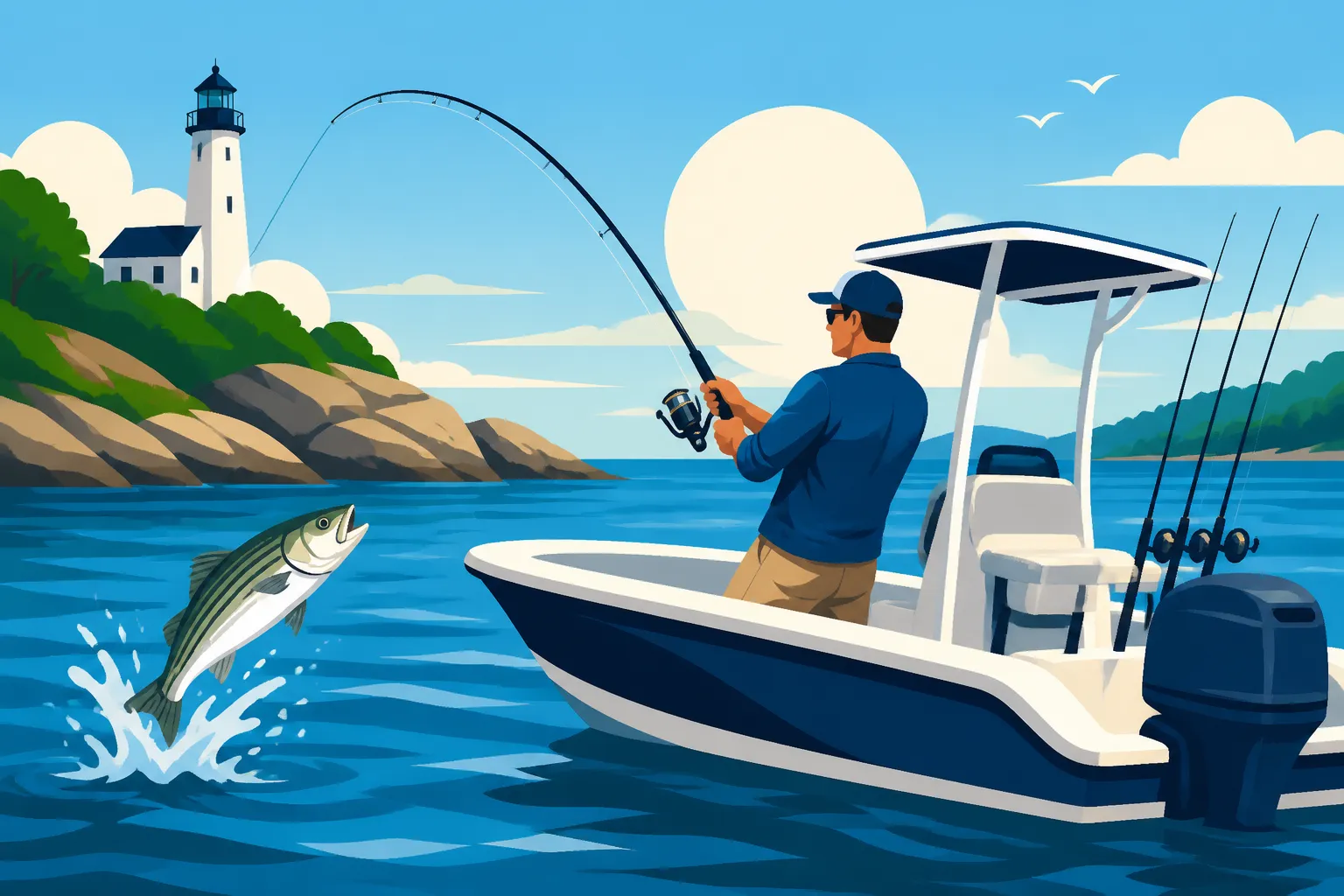
When you step aboard a small boat for a light tackle charter, you're signing up for an intimate, focused fishing experience. Expect a comfortable, agile boat designed to get into the heart of the action. The captain will likely be very hands-on, offering advice, pointing out subtle signs of fish, and guiding you through techniques. There won't be a crowd, so you'll have plenty of space to cast and fight your fish without tangling lines with other anglers.
You'll spend more time actively fishing and less time traveling or waiting. The focus will be on strategy, presentation, and the thrill of the fight. Whether you're targeting striped bass with soft plastics, jigging for fluke, or drifting live bait for blackfish, the emphasis will be on technique and the sporting challenge. It's an excellent opportunity to learn, refine your skills, and truly appreciate the art of fishing. Don't forget your polarized sunglasses and a hat, and consider checking out Tipping Etiquette for Connecticut Fishing Charters so you're prepared. You'll likely leave with not just fish, but a deeper understanding of our beautiful Connecticut waters and a heightened appreciation for the subtle art of light tackle angling.
Disclaimer
This article is for general informational purposes only and does not constitute professional advice. Laws, prices and regulations vary by location and change over time. Consult a qualified professional for guidance on your specific situation.