What a Connecticut guide provides versus a charter boat
Many anglers in Connecticut dream of hitting the water, but when it comes to booking a professional outing, a common head-scratcher arises: should you go with a fishing guide or a charter boat? It’s easy to feel overwhelmed by the options, not quite knowing the nuances that differentiate these services. This guide is here to untangle that confusion, laying out exactly what you can expect from both a Connecticut fishing guide and a charter boat so you can confidently pick the perfect adventure for your next trip.
Navigating Connecticut's Waters: Charters vs. Guides
When you start looking into professional fishing trips in Connecticut, you'll quickly encounter two main categories: charters and guides. While both put you on fish with experienced professionals, they offer distinctly different experiences tailored to different types of fishing and different angler preferences. Understanding these fundamental differences is key to making the right choice for your next outing, whether you’re a seasoned pro or just getting your feet wet.
What Defines a Connecticut Fishing Charter?
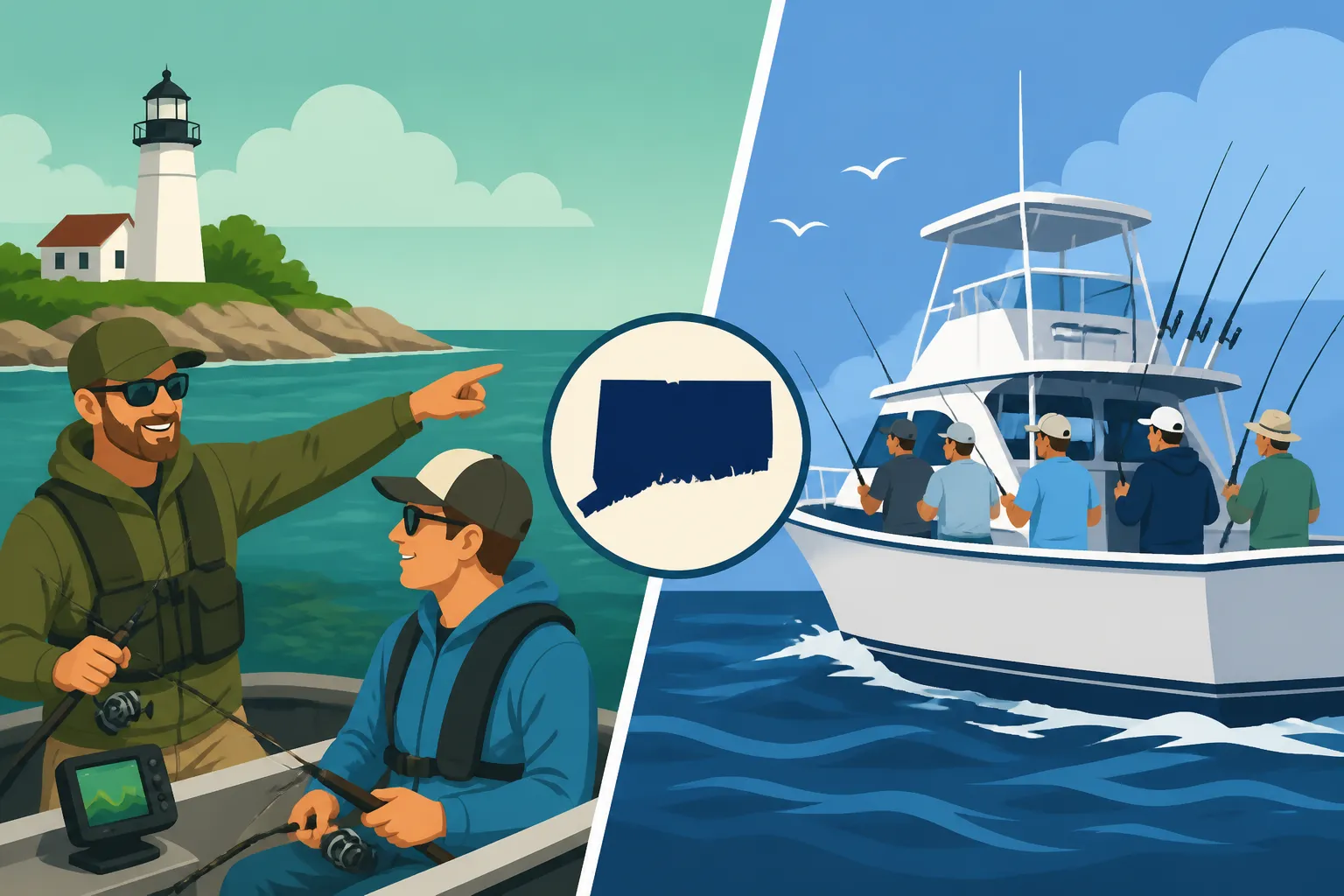
A Connecticut fishing charter typically involves a larger vessel, often a center console, walk-around, or even a small sportfishing yacht, designed to carry multiple passengers, usually 4-6 but sometimes more, out onto the open waters. Think Long Island Sound Fishing Guide, the ocean, or the expansive lower reaches of the Connecticut River. These trips are generally focused on targeting saltwater species like striped bass, bluefish, fluke, black sea bass, and sometimes even venturing further offshore for tuna or shark, though the latter is less common from most CT ports. The emphasis here is often on the catch – putting clients on a good number of fish, sometimes for the dinner table. The captain and often a mate will handle most of the boat operation, rigging, and fish handling, allowing passengers to focus primarily on reeling in their catch.
Charter boats are equipped for power fishing, often employing trolling, heavy jigging, or bait fishing techniques over large areas. They have the range and seaworthiness to handle various weather conditions and access deeper waters or distant fishing grounds. For many, a charter is a quintessential saltwater experience – feeling the spray, battling a strong fish in open water, and enjoying a day out with a group of friends or family. These trips can range from half-day excursions to full-day adventures, often departing from coastal towns like Old Saybrook, Niantic, Stonington, or Norwalk. When researching options, a platform like FishingBooker can help you browse the diverse range of charter options available across the state's coastline.
What Defines a Connecticut Fishing Guide Service?
In contrast, a Connecticut fishing guide service typically operates smaller vessels – drift boats, rafts, jon boats, or smaller motorboats – or even focuses entirely on wade fishing. These services cater to fewer anglers, often just one or two, creating a much more intimate and personalized experience. Guides primarily focus on freshwater environments: the renowned trout streams like the Housatonic River Fishing Guide or the Farmington River West Branch Trout Fishing, the numerous lakes and ponds for bass or pike, or even specific sections of larger rivers for smallmouth bass or shad. The guide's role is much more hands-on and instructional, often teaching specific techniques such as fly fishing, light tackle spin fishing, or specialized jigging.
The emphasis with a guide is less about filling a cooler and more about the process of fishing – learning new skills, understanding fish behavior, reading the water, and appreciating the natural environment. You might spend a day perfecting your roll cast for brown trout, understanding seasonal patterns for Largemouth Bass Fishing in Connecticut, or learning how to effectively drift nymphs in a riffle. Guides often possess deep, localized knowledge of specific stretches of water, their currents, hidden structures, and the resident fish populations. This type of trip is ideal for anglers looking to improve their skills, explore less accessible waters, or simply enjoy a quiet, focused day on the water with expert guidance.
The Experience: What to Expect on Each Trip
Beyond the type of boat and water, the actual experience of a charter versus a guide service differs significantly in terms of provisions, the level of instruction, and the overall dynamic of the outing. Knowing these details upfront can help set your expectations and ensure you pick a trip that aligns with your personal fishing goals and comfort level.
Charter Boat Provisions and Passenger Experience
When you book a Connecticut fishing charter, you can generally expect a good deal of the practicalities to be taken care of. Most charters provide all the necessary fishing gear, including rods, reels, terminal tackle, and bait. Safety equipment like life jackets, first-aid kits, and communication devices are always on board and up to Coast Guard standards. Many captains will also clean and bag your catch at the end of the day, a huge bonus after a successful outing! You might just need to bring your own food, drinks, sunscreen, and appropriate clothing for the weather. For a full rundown on what to pack, check out What to Bring on a Connecticut Fishing Charter.
The experience on a charter is often more communal. You'll be sharing the boat with other anglers, whether they're part of your private group or other individuals on a "head boat" or open party trip. The crew's main goal is to get everyone hooked up, and they'll work hard to keep lines in the water and untangle snags. While they'll offer tips and assistance, it's generally not an in-depth instructional clinic. The atmosphere can be lively, especially when the fish are biting, with shouts of "Fish on!" and the camaraderie of shared success. It's an excellent option for beginners who want to experience the thrill of saltwater fishing without needing to invest in all the gear or learn complex techniques. For more details on what your trip might look like, see What to Expect on a Connecticut Fishing Charter.
Guide Service Gear and Personalized Instruction
With a Connecticut fishing guide, the experience is far more individualized and often heavily focused on education. Guides typically provide specialized gear that might be too expensive or specific for a recreational angler to own, such as high-quality fly rods, waders, specific fly patterns, or custom-tied lures. For instance, a fly fishing guide on the Farmington River will have a vast array of flies tailored to current hatches and water conditions, something most casual anglers couldn't replicate. If you're looking to learn more about specific techniques, exploring resources like Fly Fishing for Trout in Connecticut can give you a taste of the learning curve.
Your guide acts as a personal coach, instructor, and local expert rolled into one. They'll teach you casting techniques, how to "read" river currents, identify insect hatches, or understand where bass hold in a lake. The pace of the trip can be adjusted to your skill level and learning speed. If you're struggling with a cast, the guide will dedicate time to helping you improve. If you want to understand why certain lures work in specific conditions, they'll explain the intricacies. The conversation is often one-on-one or with a very small group, allowing for deeper dives into strategy and technique. It's a truly immersive learning experience, perfect for those who want to deepen their understanding and proficiency in a particular type of fishing.
Key Differences in Focus and Function
The core distinctions between a charter and a guide service boil down to their operational scale, the type of waters they fish, and the primary objectives of the outing. These differences directly impact the kind of adventure you'll have and the skills you'll develop, or the fish you'll take home.
Trip Scope, Target Species, and Group Size
A major differentiator is the scope of the fishing trip. Charter boats, by virtue of their size and design, are built for covering larger expanses of open water. This means they are almost exclusively focused on saltwater fishing in Long Island Sound Fishing Guide or the lower reaches of major tidal rivers. Their target species are typically larger, migratory fish or schooling fish found in marine environments: striped bass, bluefish, fluke, black sea bass, and sometimes cod in deeper waters. These trips often involve motoring significant distances to reach productive fishing grounds, such as reefs, wrecks, or channels. Group sizes are generally larger, accommodating anywhere from 4 to 10+ anglers, which can make for a lively party atmosphere but less individualized attention. If your dream is to battle a big striper far from shore with a group of friends, a charter is likely your best bet. Finding a reliable charter for these types of trips is easy on platforms like FishingBooker, where you can filter by species and location.
Guide services, on the other hand, operate on a much more localized and intimate scale. They are the specialists of Connecticut's freshwater fisheries, including its famous trout streams, serene lakes like Best Fishing Lakes in Connecticut for bass and pike, and smaller rivers for smallmouth bass. Their vessels, if used, are typically smaller, allowing access to tighter spaces, shallower waters, or even non-motorized sections of rivers. The emphasis is on specific, often technical, fishing methods relevant to these environments, such as fly fishing, ultralight spinning, or specific lure presentations. Group sizes are intentionally kept small – often 1 or 2 anglers – to maximize individual attention and minimize disturbance to sensitive fishing areas. This allows for a deep dive into the nuances of a particular fishery or technique, making it ideal for learning and honing skills.
Cost, Customization, and Educational Emphasis
The financial outlay and the level of customization also distinguish these two services. Generally speaking, a Connecticut fishing charter, while potentially having a higher overall trip cost, might offer a lower per-person rate if you're splitting the cost among a larger group. The cost covers the boat, fuel for significant travel, gear, bait, and the captain and crew's expertise. Charters often run on a more fixed schedule and routine, hitting known spots for target species. While you can communicate your preferences, the overall strategy is often dictated by what the captain knows will put fish in the boat for the group. The educational component, if present, is usually incidental – quick tips on how to hold the rod or retrieve a lure, rather than dedicated instruction. For a breakdown of typical prices, refer to the Connecticut Fishing Charter Cost Guide.
| Feature | Fishing Charter | Fishing Guide Service |
|---|---|---|
| Typical Waters | Long Island Sound, tidal rivers, open ocean | Freshwater rivers, lakes, ponds, small streams |
| Vessel Type | Larger boats (center consoles, sportfish) | Smaller boats (drift boats, kayaks) or wade fishing |
| Group Size | 4-10+ anglers (private or open party) | 1-3 anglers (highly personalized) |
| Primary Focus | Catching fish (quantity, specific species) | Instruction, learning techniques, intimate experience |
| Gear Provided | Rods, reels, bait, tackle, safety equipment | Specialized rods/reels, flies, lures, waders, safety |
| Instruction Level | General tips, assistance with fishing | In-depth teaching, hands-on coaching, water reading |
| Cost Structure | Per trip (higher total, lower per person in group) | Per day (often higher per person, very specialized) |
| Fish Cleaning | Often provided by crew | Less common, focus on catch & release or personal handling |
| Ideal For | Groups, casual anglers, targeting big saltwater fish | Solo anglers, skill development, exploring specific fisheries |
A guide service, on the other hand, typically has a higher per-person cost, reflecting the individualized nature of the outing. However, this cost often includes highly specialized gear (like premium fly fishing setups), bait or custom flies, and the guide's undivided attention. The level of customization is far greater; you can often discuss specific techniques you want to learn, target species you're interested in, or particular stretches of water you wish to explore. The entire day can be structured around your learning objectives. The educational emphasis is paramount, making it an investment in your fishing skills rather than just a trip to catch fish. For those looking to learn, Best Guided Trips for Beginners in Connecticut highlights many excellent options.
Deciding Which Adventure is Right for You
Ultimately, the choice between a Connecticut fishing charter and a guide service comes down to your personal goals for the day, your budget, and the kind of fishing experience you're hoping for. There's no single "better" option; only the right fit for you and your crew.
When a Charter Delivers the Ideal Outing
A fishing charter is an excellent choice if your primary goal is to target impressive saltwater species, enjoy a fun day on the water with a group, or simply experience the thrill of offshore or nearshore fishing without the hassle of bringing your own boat and gear. If you're planning a corporate outing, a bachelor party, or a multi-generational family trip where some members are less experienced, a charter can be perfect. The crew will take care of the heavy lifting, allowing everyone to relax, enjoy the ride, and hopefully reel in some fantastic fish. It's often the go-to for catching dinner, especially popular species like Striped Bass Fishing in Long Island Sound or Fluke Fishing in Long Island Sound.
You might also opt for a charter if:
- You have a larger group (more than 3-4 people).
- You want to explore the vastness of Long Island Sound.
- You're less interested in learning intricate techniques and more focused on action and camaraderie.
- You want a chance at larger, migratory saltwater fish.
- You prefer having a crew handle all the rigging, baiting, and fish cleaning.
Many anglers use platforms like FishingBooker to find and book the perfect charter, comparing options based on target species, boat size, and departure location. For those truly focused on specific marine adventures, exploring Best Inshore vs Offshore Charters in Connecticut can further refine your choice.
When a Guide Offers the Perfect Learning Expedition
A fishing guide service is ideal for those seeking a more focused, educational, and intimate fishing experience. If you're a passionate angler looking to hone your skills, learn new techniques like fly casting, or delve deep into the ecology and strategy of a particular fishery, a guide will provide unparalleled value. Solo anglers or very small groups (2-3 people) will benefit most from the guide's undivided attention and personalized instruction. It's also the best way to access more remote or technically challenging freshwater areas, like the famed trophy trout sections of the Farmington River.
Consider a guide service if:
- You're a solo angler or a small group looking for personalized instruction.
- You want to learn or refine specific techniques, such as Fly Fishing for Trout in Connecticut or how to fish for Smallmouth Bass Fishing in Connecticut.
- You're interested in freshwater fishing in rivers, streams, or smaller lakes.
- You value the educational aspect and understanding the "why" behind fishing strategies.
- You want to explore specific, technical waters where localized knowledge is crucial.
- You prefer a quieter, more focused outing with nature.
Whether you're after the thrill of a big saltwater catch or the satisfaction of mastering a new technique in a pristine river, Connecticut offers fantastic opportunities. Knowing the distinctions between a charter and a guide ensures your next fishing trip is exactly the adventure you've been dreaming of.
Disclaimer
This article is for general informational purposes only and does not constitute professional advice. Laws, prices and regulations vary by location and change over time. Consult a qualified professional for guidance on your specific situation.